


Single Wall
Oven Repair
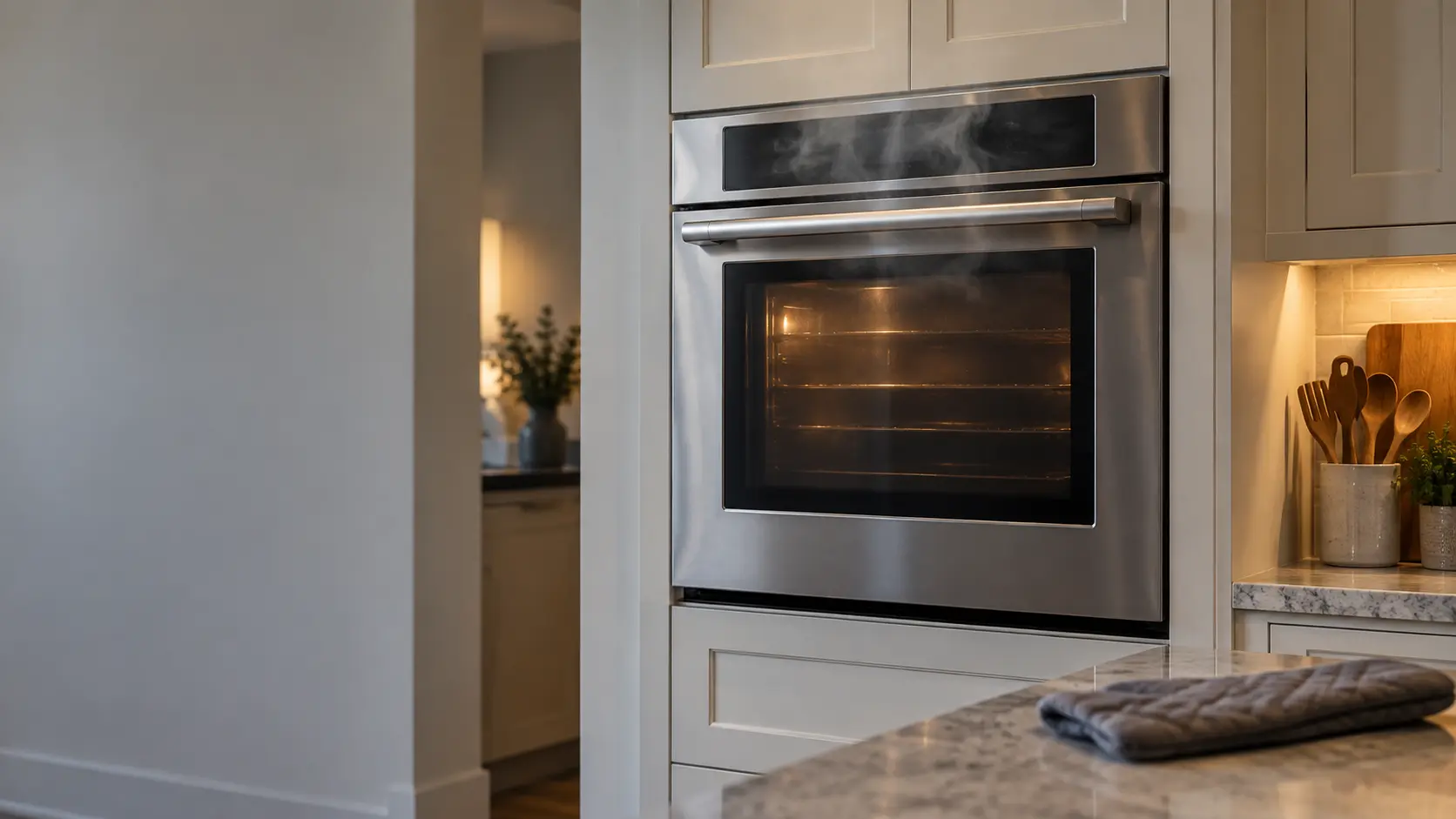
One oven cavity set into a cabinet at chest height, with its own controls above the door and nothing to cook on above it.
Mon–Sat, 8am–8pm
- 4 things that fail on it
- 28 makes build it
- 6 problems it shows
Book a visit
Three short steps, about a minute.
or call (844) 407-1890
Loading appointment form…
The appointment form couldn’t load. Please try again.
Is yours
a single?
A single wall oven is one baking cavity built into a tall cabinet or under a counter, apart from whatever the family cooks on. Most are electric and run on their own 240-volt circuit, with a bake element under the floor of the cavity, a broil element at the top and, on many models, a fan with a third element at the back for convection. A smaller number burn gas through a bake burner and a broil burner lit by a glowing igniter. Because the cavity sits at eye level and the cabinet hides everything but the door and the control panel, single wall oven repair is mostly work on the heat sources, the temperature sensor, the door and the electronics packed behind the panel.
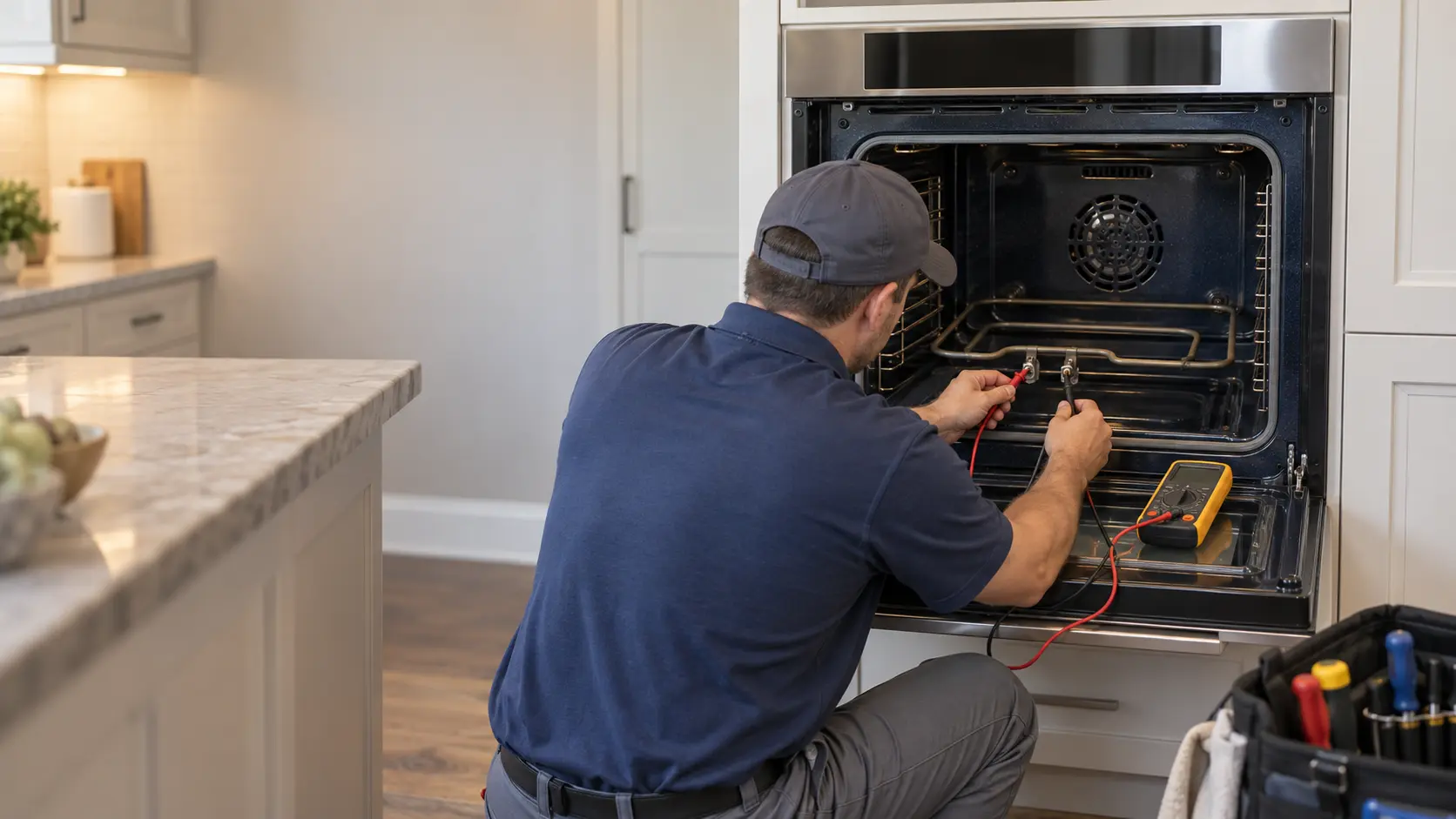 What fails on a single wall oven
How to tell
The oven door opens at roughly waist or chest height out of a cabinet, and there is no second door above or below it.
The controls sit in a strip above the door rather than on a knob panel at the front of a cooking surface.
The whole appliance is framed by trim that is screwed into the cabinet, so the sides and back are never visible.
The model and serial label is usually printed on the frame behind the door, visible once the door is open.
Not yours?Double wall ovenSteam ovenSpeed oven
What fails
on this design.
On a single wall oven: the bake or broil element, the temperature sensor, the door lock after self-clean, the control board and touch panel.
The problems it showsThe bake or broil element
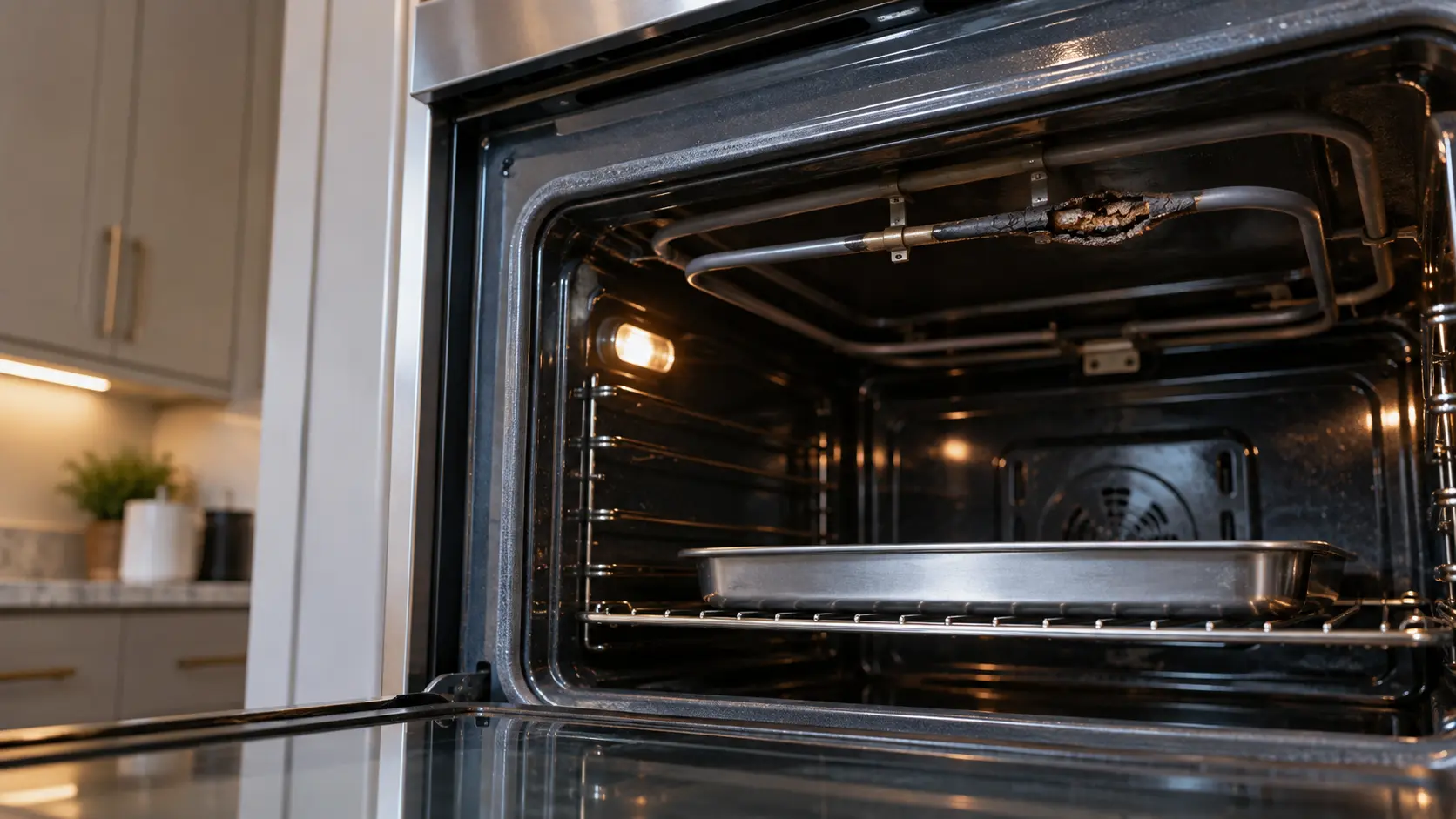
An element that has blistered or split stops glowing, and the oven either never reaches its set heat or browns only from one side. On ovens with a hidden element the break is out of sight under the floor panel.
The temperature sensor
A thin probe on the back wall reports the heat to the control. When its reading drifts, cakes come out pale or burnt at the same dial setting, and many controls post a sensor code.
The door lock after self-clean
The motorized latch that holds the door shut during the cleaning cycle can stall in the locked position, leaving the oven closed long after it has cooled.
The control board and touch panel
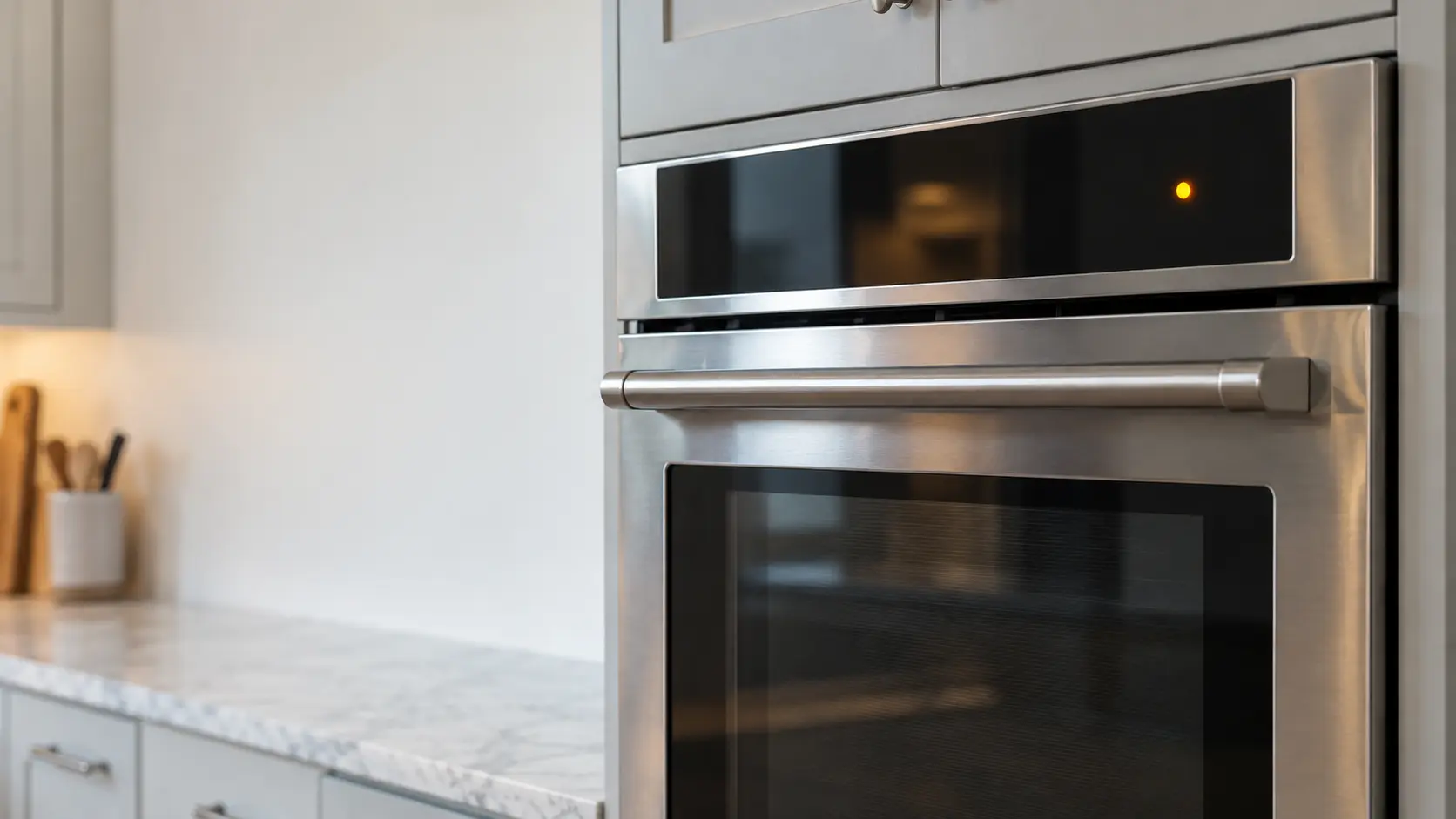
Heat rising out of the vents above the door is hard on the electronics. Keys that stop answering, a blank display or a relay that sticks on are the typical results.
Getting at it,
and whether to.
Elements and the temperature sensor are changed from inside the cavity once the racks and the rear panel are out, so most of these repairs never move the oven.
What repairs costOn the visit
- The control board is reached from the front on many models by lifting the trim above the door, and from the back on others, which means sliding the oven out of its cutout.
- Pulling the oven out takes two people and a padded surface to set it on, because the screws that hold it in the cabinet are the only thing keeping it level.
- Power is cut at the breaker before any panel is opened, since a wall oven is hard-wired to a junction box inside the cabinet rather than plugged in.
Repair or replace
Elements, sensors, igniters, door hinges, gaskets and locks are modest parts and almost always worth replacing on a single wall oven. The awkward part of replacement is the cabinet: a new oven has to match the old cutout, and a mismatch can mean cabinet work on top of the purchase. That keeps repair the better answer on most ovens, until the control board is no longer made or the cavity itself is rusted through.
Book a visit for a single wall ovenThe problems
it shows.
On a single wall oven, most often oven not heating.
All problems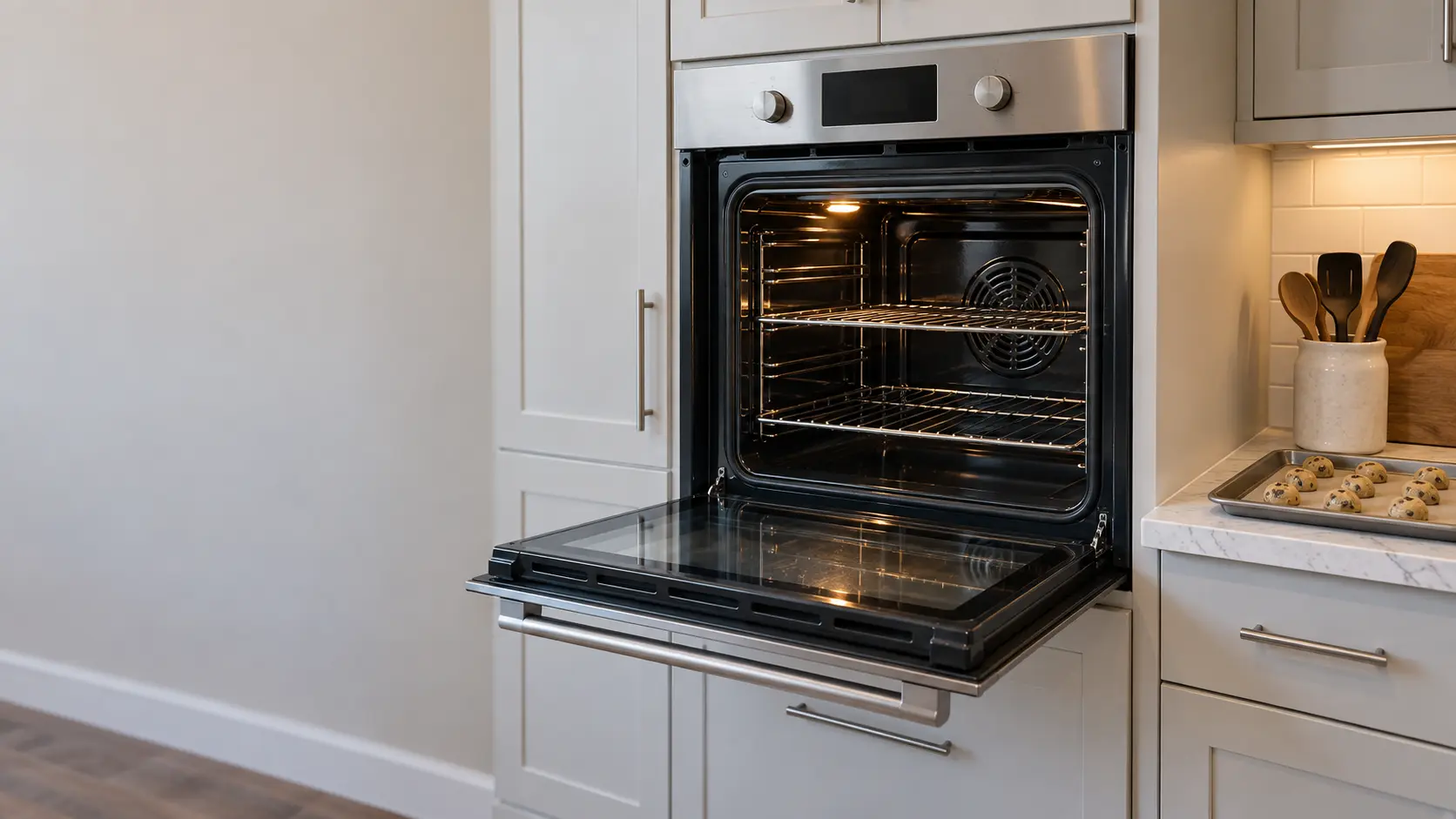


Who builds
a single.
28 of the makes on this site build a single wall oven. Each mark opens that make's own page.
All 30 brandsSingle wall oven repair,
where we come out.
9 metros, each with its own page.
All service areasTampa BayFL · 31 areas
Miami / South FloridaFL · 47 areas
New York MetroNY · 75 areas
HoustonTX · 36 areas
ChicagoIL · 50 areas
Los AngelesCA · 95 areas
San DiegoCA · 31 areas

Questions about
single wall ovens.
My single wall oven heats, but only from the top. What broke?
Why does my oven bake hotter or cooler than the number I set?
Can a new wall oven go into my old cutout?
Is it safe to keep using the oven if one element glows orange in spots?
Why does the fan keep running after I turn the oven off?
Back to your everyday
Is it a single wall oven?
Say so when you book — it changes what the technician brings and how the visit is planned.