


Speed
Oven Repair
A compact built-in oven that combines convection heat with microwave energy in one cavity to cook in a fraction of the usual time.
Mon–Sat, 8am–8pm
- 4 things that fail on it
- 12 makes build it
- 6 problems it shows
Book a visit
Three short steps, about a minute.
or call (844) 407-1890
Loading appointment form…
The appointment form couldn’t load. Please try again.
Is yours
a speed?
A speed oven pairs a convection element and fan with a microwave system in one compact cavity, so it can roast, bake, broil or simply heat food fast. It is usually built in at eye level, often stacked above a full wall oven or beside a steam oven. Inside, it carries two sets of parts: the ordinary oven parts, meaning elements, a fan and a temperature sensor, and the microwave parts, meaning a magnetron, a high-voltage transformer, a capacitor and the door switches that keep the microwaves inside. Speed oven repair has to treat both, and the high-voltage side is work for a technician only, because the capacitor can hold a dangerous charge after the power is off.
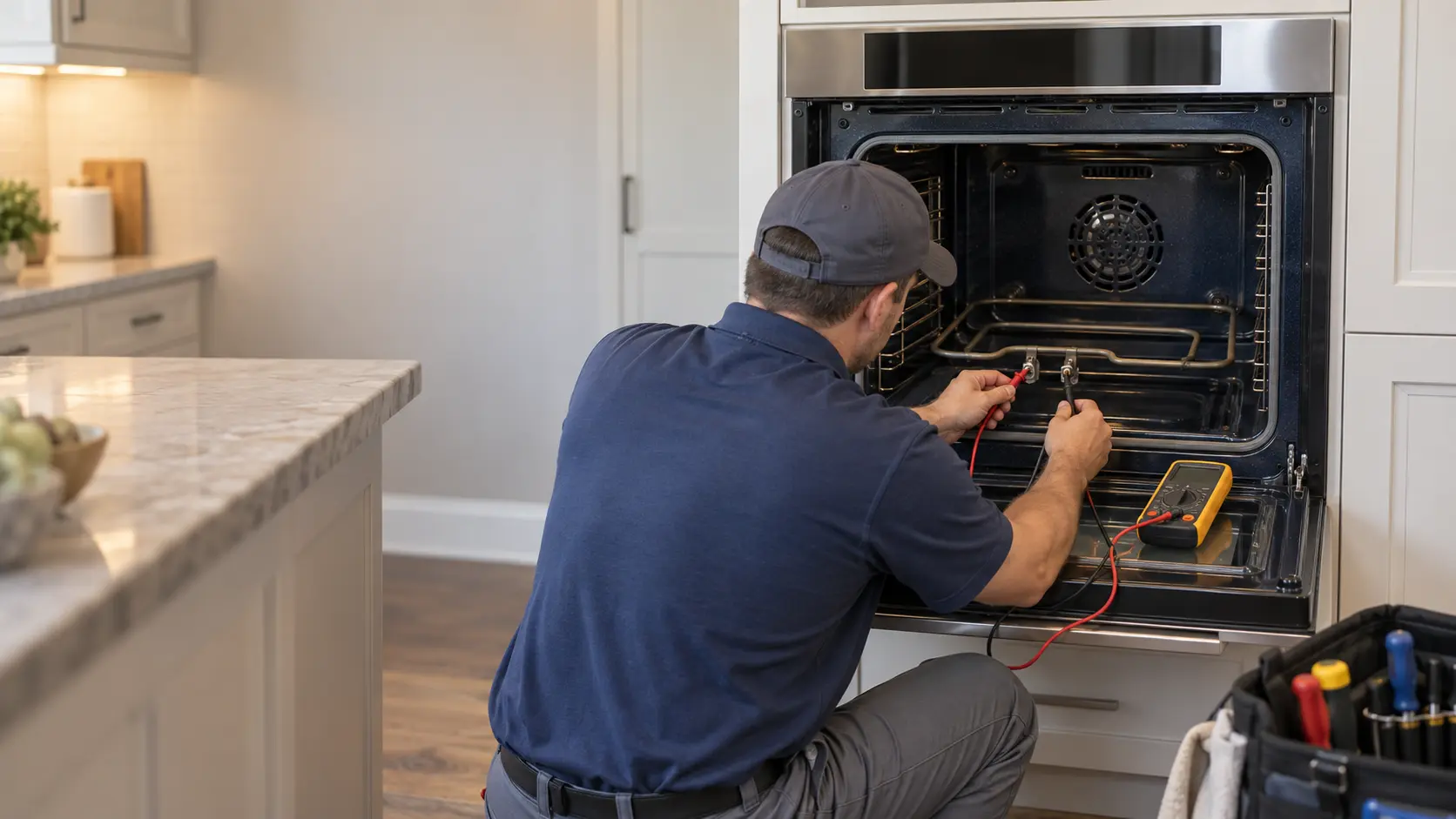 What fails on a speed oven
How to tell
The oven is about half the height of a regular wall oven, with one door, and is built into a cabinet rather than hung under one.
The menu offers a combination or speed setting next to plain convection and plain microwave cooking.
The cavity may have a turntable or a flat ceramic floor, and a metal rack that is only used for certain modes.
It is often installed directly above a full wall oven or a warming drawer, with trim that matches the oven below.
What fails
on this design.
On a speed oven: the magnetron and high-voltage parts, the door switches, the convection element and fan, the control and touch panel.
The problems it showsThe magnetron and high-voltage parts
When the fan runs and the light is on but food stays cold in the microwave or speed setting, the magnetron, the diode, the capacitor or the transformer has usually failed.
The door switches
Two or three switches confirm the door is shut before the microwave side can start. A worn switch stops the oven from starting, and a failed one can blow the main fuse the moment the door opens.
The convection element and fan
The heating side can fail on its own. Food then cooks through in speed mode but never browns, or the oven will not bake at all.
The control and touch panel
A dense board runs both systems at once. Keys that no longer respond or a display that goes dark are common, especially where steam from the oven below rises into the cabinet.
Getting at it,
and whether to.
Almost every speed oven repair means sliding the unit forward out of its cabinet, since the high-voltage parts and the board sit behind the cavity walls.
What repairs costOn the visit
- The high-voltage capacitor is discharged and tested before anything inside the housing is touched, every time.
- After any work on the microwave side, the door is checked for leakage with a meter and the door switches are tested in order before the oven goes back in.
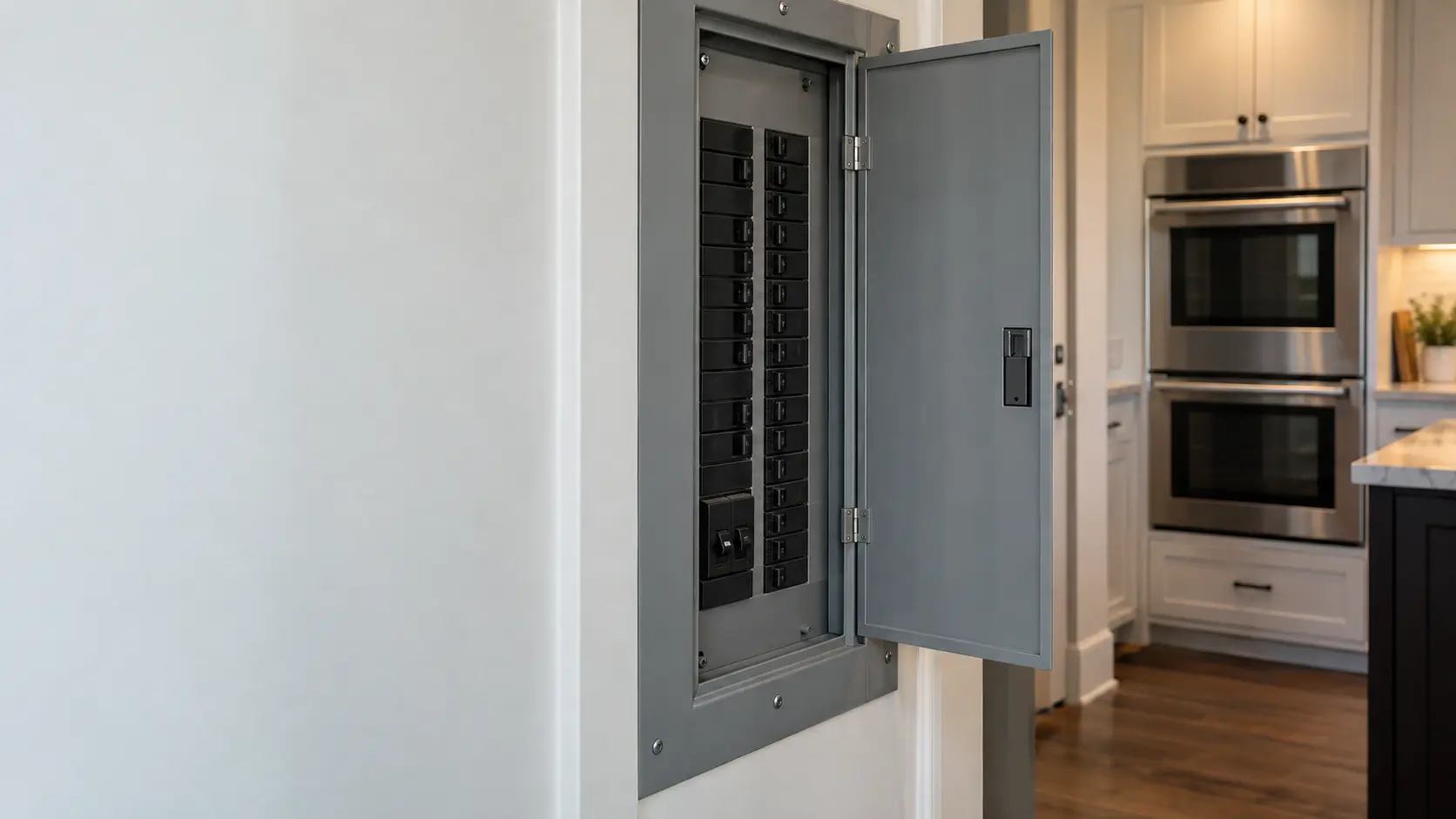
- The breaker is switched off before the unit is pulled out, and the supply cord or junction box is checked for heat damage while it is exposed.
Repair or replace
Speed ovens sit in a premium, custom-fit spot, and the cabinet is sized to the unit, so replacing one is rarely simple. Door switches, fuses, fans and elements are inexpensive, and a magnetron is a routine part on most models. The balance shifts when a high-voltage failure comes together with a failed control board on an older unit, or when the model is no longer supported and parts cannot be had.
Book a visit for a speed ovenThe problems
it shows.
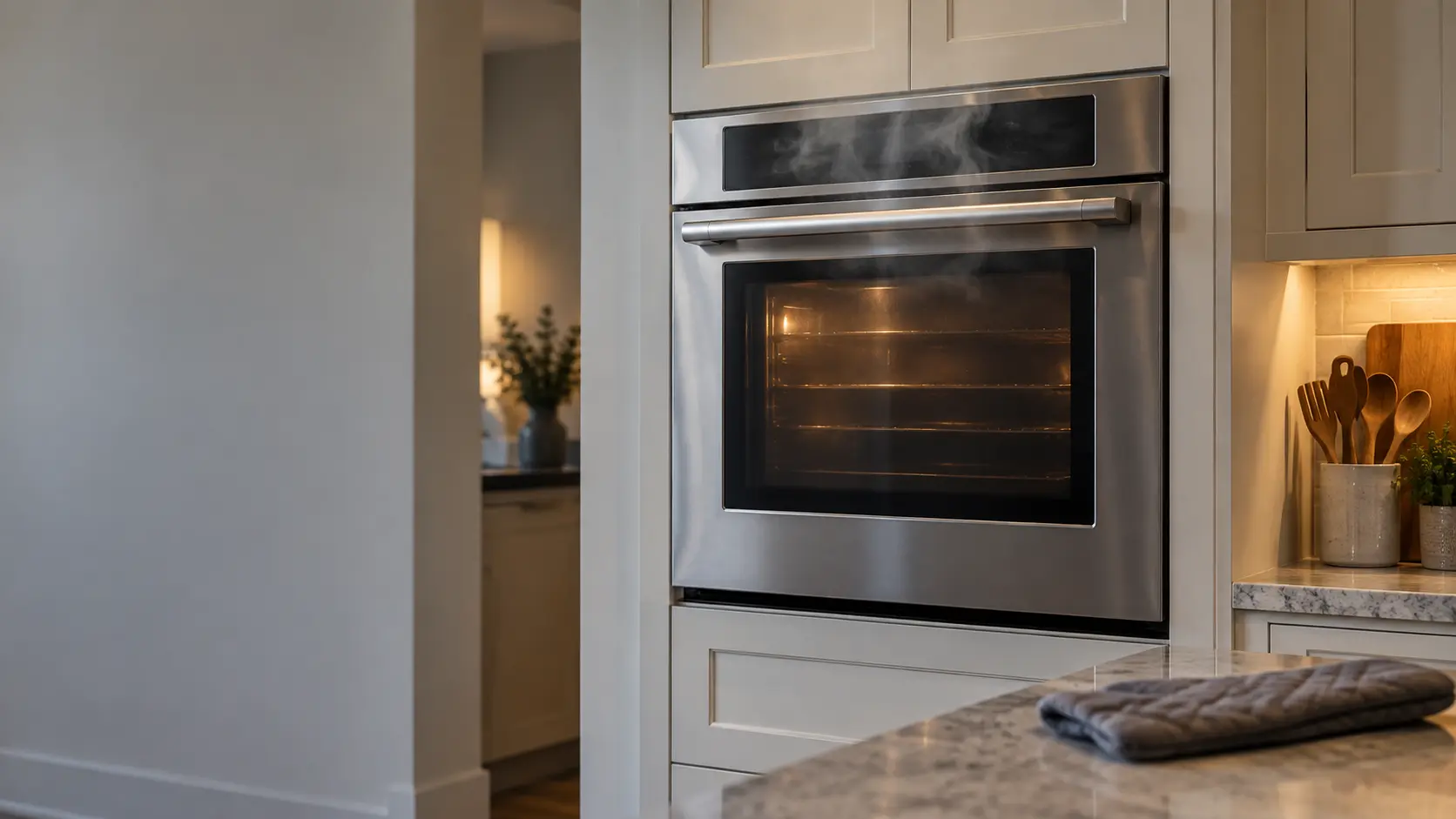
On a speed oven, most often oven not heating.
All problems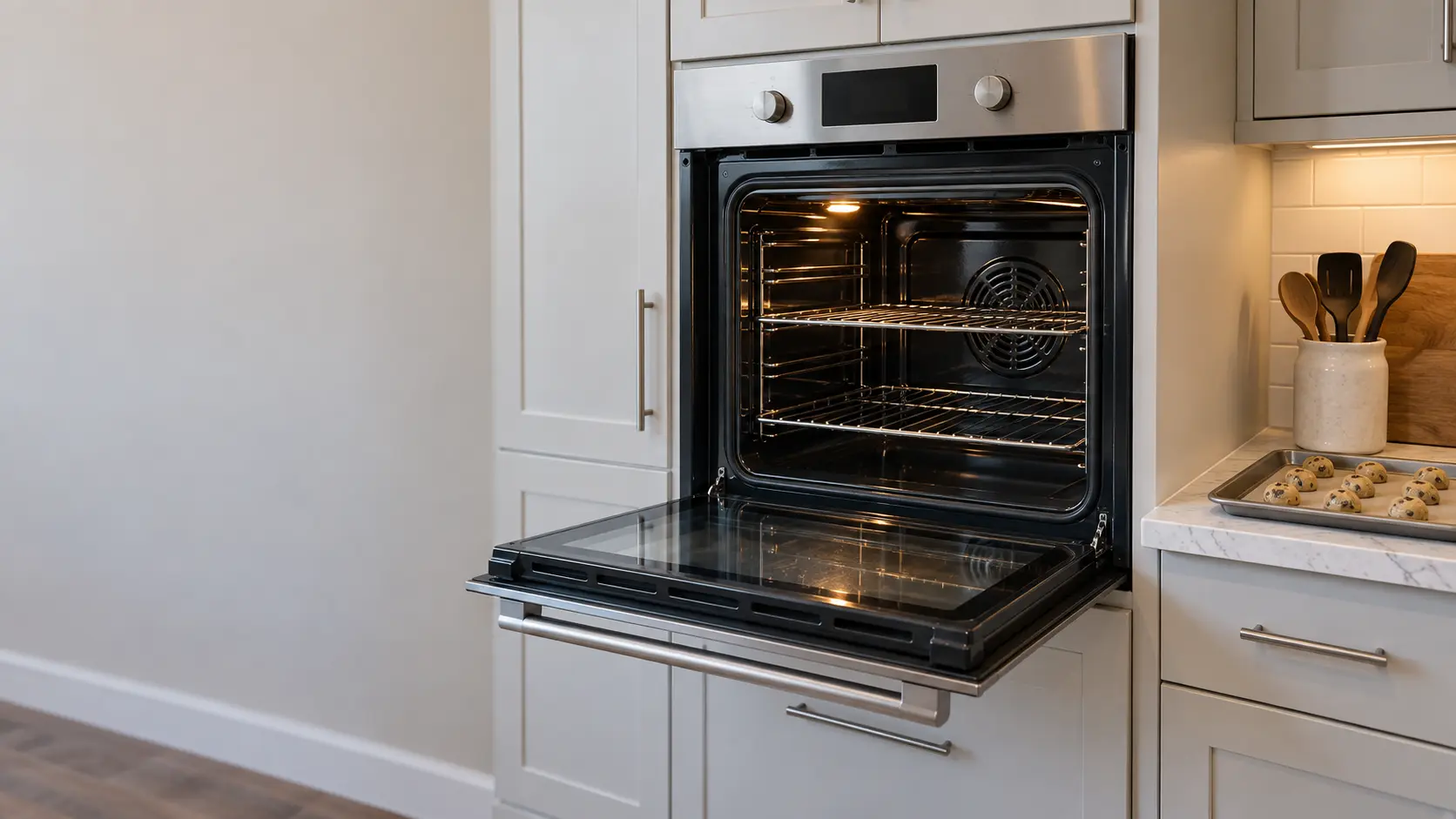

Who builds
a speed.
12 of the makes on this site build a speed oven. Each mark opens that make's own page.
All 30 brandsSpeed oven repair,
where we come out.
9 metros, each with its own page.
All service areasTampa BayFL · 31 areas
Miami / South FloridaFL · 47 areas
New York MetroNY · 75 areas
HoustonTX · 36 areas
ChicagoIL · 50 areas
Los AngelesCA · 95 areas
San DiegoCA · 31 areas

Questions about
speed ovens.
My speed oven runs but the food is still cold. What failed?
Is it dangerous to open up a speed oven myself?
Why does my speed oven blow a fuse when I open the door?
My speed oven cooks fast but never browns anything. Why?
Can the speed oven above my wall oven be repaired without removing the oven below?
Back to your everyday
Is it a speed oven?
Say so when you book — it changes what the technician brings and how the visit is planned.