


Double Wall
Oven Repair
Two full oven cavities stacked in one tall cabinet, sharing one control panel and one power supply but heating on their own.
Mon–Sat, 8am–8pm
- 4 things that fail on it
- 23 makes build it
- 6 problems it shows
Book a visit
Three short steps, about a minute.
or call (844) 407-1890
Loading appointment form…
The appointment form couldn’t load. Please try again.
Is yours
a double?
A double wall oven stacks two full-size cavities in one frame, one above the other, so a roast and a tray of cookies can cook at different settings at once. Each cavity has its own bake and broil elements, its own temperature sensor and often its own convection fan, while a single control board and a single power connection serve both. Double wall oven repair starts by working out whether a problem sits in one cavity or in the parts they share: a dead element touches one oven, a failed board or a tripped supply touches both. The weight and height of the unit also shape the visit, since the pair is far heavier than a single oven.
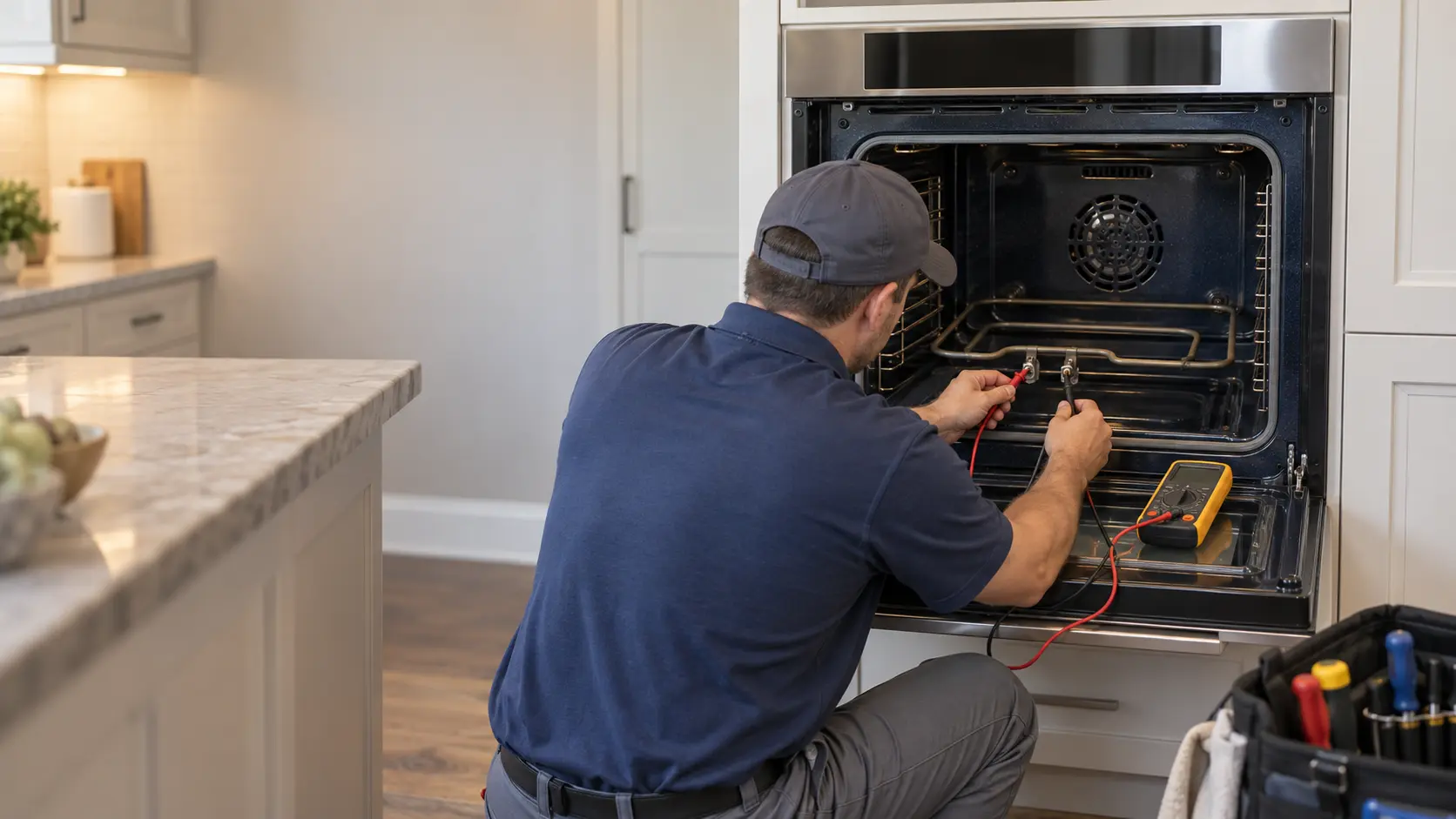 What fails on a double wall oven
How to tell
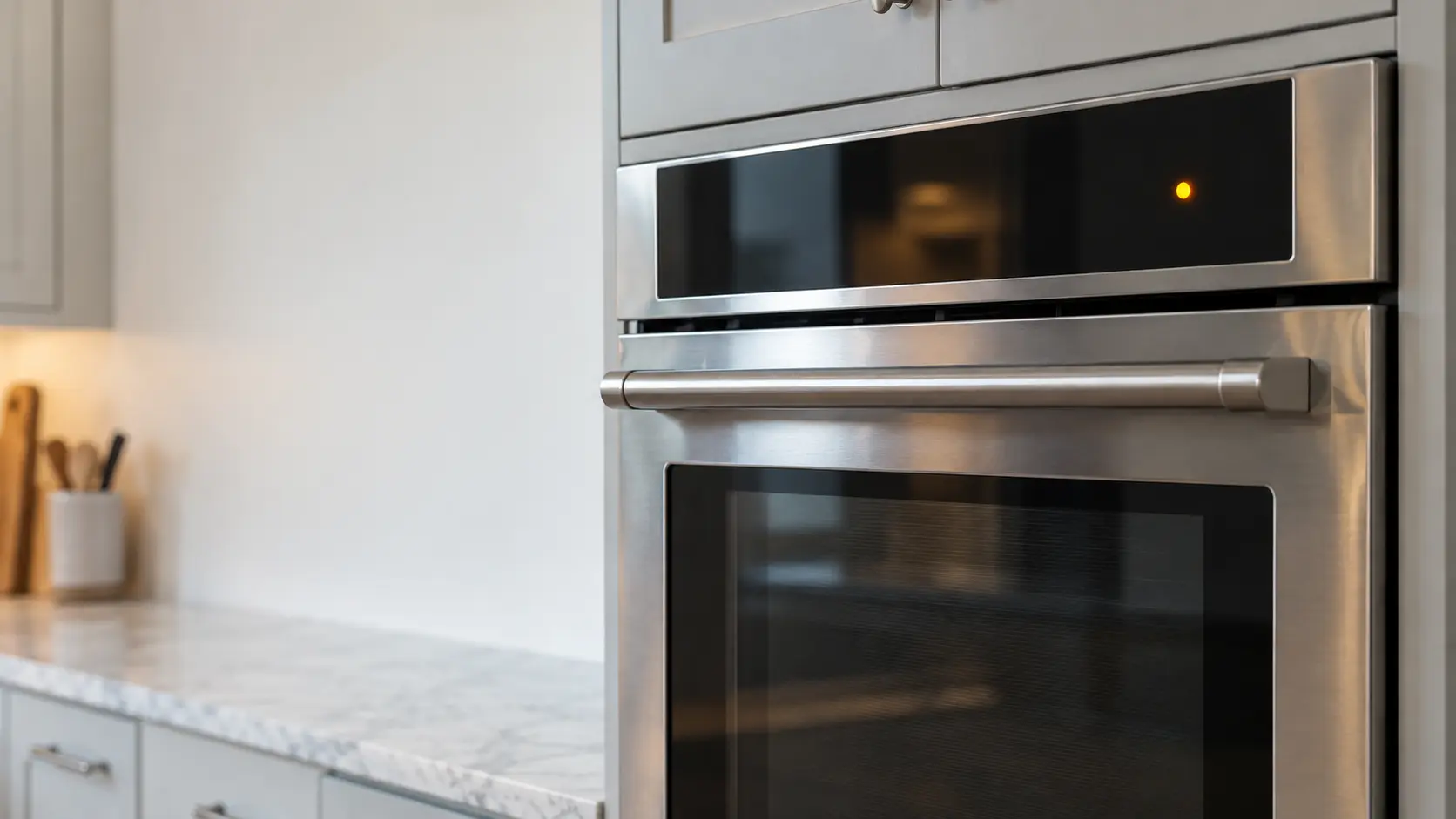
Two oven doors of the same width sit one above the other in a single tall cabinet.
One control panel above the top door runs both cavities, with separate keys or menus for the upper and lower oven.
Both doors carry their own window and handle, and each cavity has its own light.
The unit fills most of the cabinet's height, usually with a drawer or a panel below it at floor level.
Not yours?Single wall ovenSteam ovenSpeed oven
What fails
on this design.
On a double wall oven: one cavity that will not heat, the lower oven's door lock, the shared control board, cooling fan and thermal cutoff.
The problems it showsOne cavity that will not heat
When only the upper or only the lower oven stays cold, the cause is almost always in that cavity: an element, its sensor or the relay on the board that feeds it.
The lower oven's door lock
Each cavity has its own lock for self-clean. The lower one runs hotter for longer in a stacked unit, and its latch is the one most often stuck shut.
The shared control board
One board drives both cavities, so a failure there can shut down both ovens at once, or leave keys for one oven dead while the other keeps working.
Cooling fan and thermal cutoff
Two cavities put a lot of heat into one cabinet. A slow or stopped cooling fan lets the controls overheat, and a thermal cutoff then shuts the whole unit off mid-bake.
Getting at it,
and whether to.
Work inside either cavity is done with the unit in place, after both doors are lifted off their hinges to give room and protect the glass.
What repairs costOn the visit
- When the board or the wiring at the back must be reached, the pair slides out onto a platform or a sturdy cart, since it is too heavy to lower to the floor by hand.
- The cabinet's base must carry the full weight of the unit, so any sag or loose shim found underneath is pointed out before the oven goes back in.
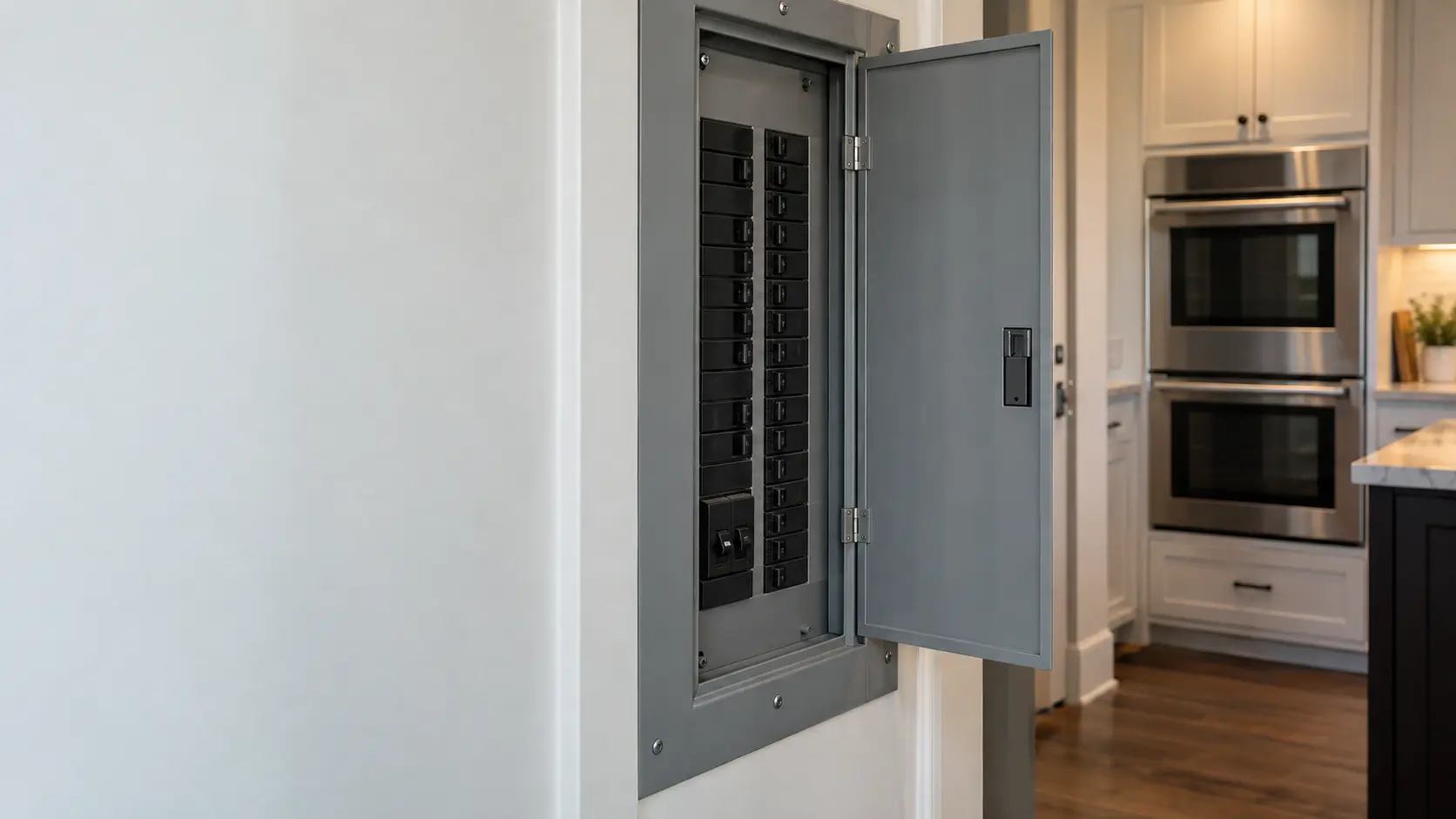
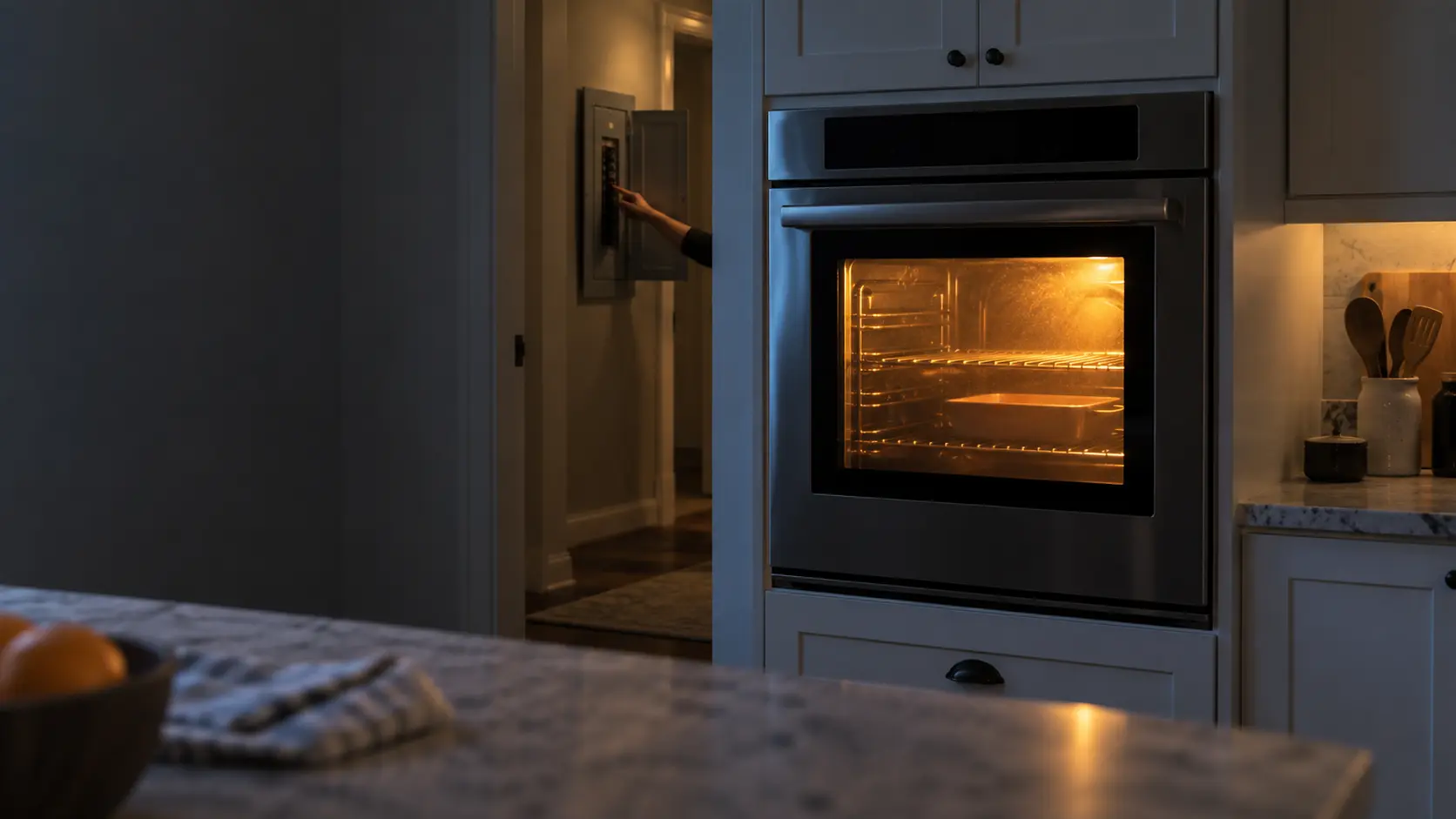
- The breaker for the oven circuit is switched off and tested dead before any wiring is touched, because the unit has no plug to pull.
Repair or replace
A double wall oven is expensive to replace and tied to a tall cabinet built around it, so repair wins in most cases. Elements, sensors, locks and fans are common parts. The harder call comes when the shared control board has failed on an older model and the board is no longer made: then both cavities go with it, and a new oven, with the cabinet opening measured first, may be the sounder choice.
Book a visit for a double wall ovenThe problems
it shows.
On a double wall oven, most often oven not heating.
All problems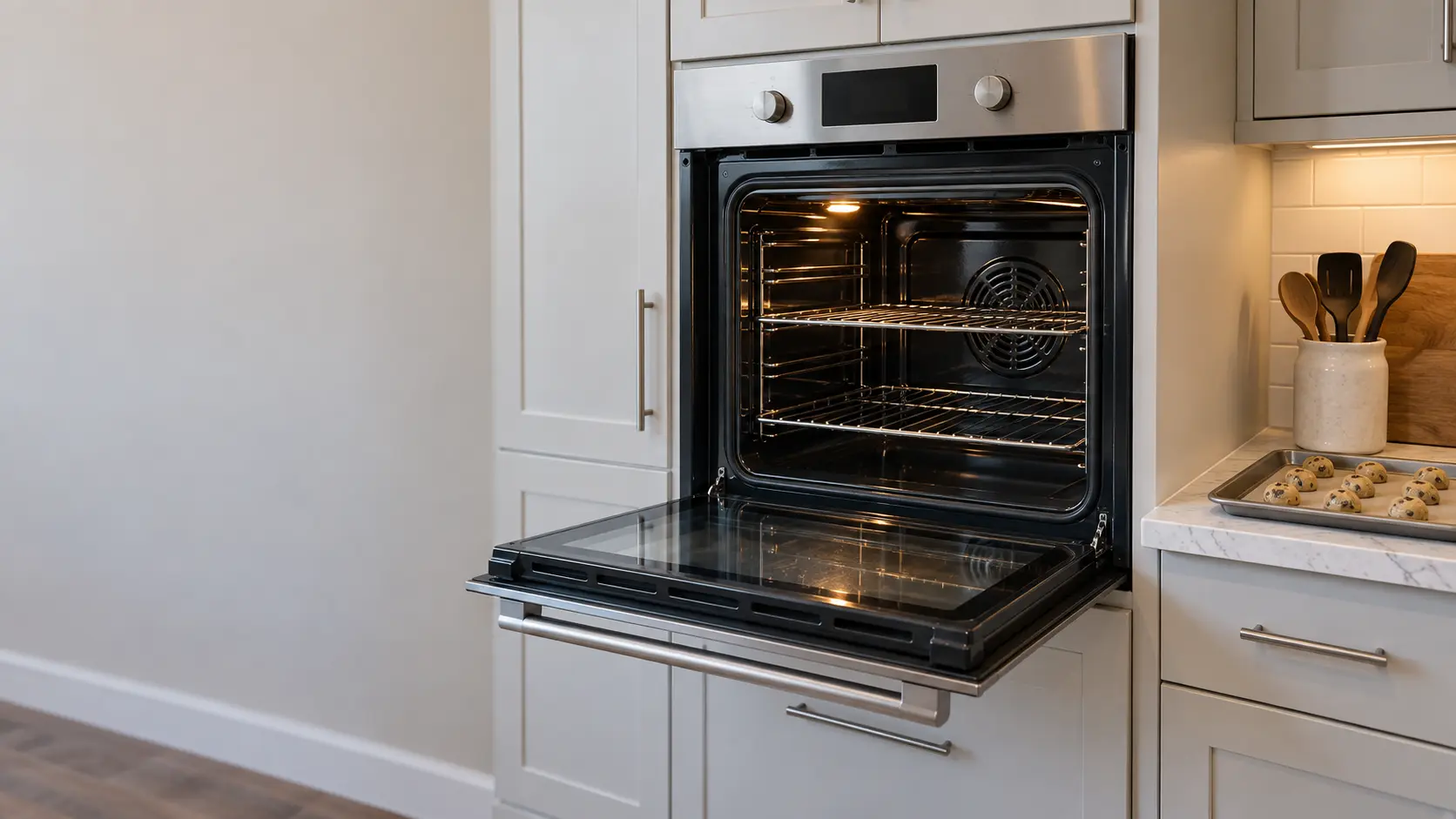

Who builds
a double.
23 of the makes on this site build a double wall oven. Each mark opens that make's own page.
All 30 brandsDouble wall oven repair,
where we come out.
9 metros, each with its own page.
All service areasTampa BayFL · 31 areas
Miami / South FloridaFL · 47 areas
New York MetroNY · 75 areas
HoustonTX · 36 areas
ChicagoIL · 50 areas
Los AngelesCA · 95 areas
San DiegoCA · 31 areas

Questions about
double wall ovens.
Only the lower oven of my double wall oven works. Is the board bad?
Can I run self-clean on both ovens at the same time?
Why does my double oven trip the breaker when both ovens are on?
Does the whole unit have to come out of the wall for a repair?
Is it worth fixing a double wall oven that is fifteen years old?
Back to your everyday
Is it a double wall oven?
Say so when you book — it changes what the technician brings and how the visit is planned.