

When to stop using the oven
Gas, fire and burn safety
guides.
What to do if you smell gas, why smoke behind the door means keep it shut, and how to switch an oven off safely when its controls will not.
Mon–Sat, 8am–8pm
- Three guides
- Read before you book
- Says where to stop
Book a visit
Three short steps, about a minute.
or call (844) 407-1890
Loading appointment form…
The appointment form couldn’t load. Please try again.
Gas, fire and burn safety,
guide by guide.
This section is for the moments when an oven stops being a cooking question: a smell of gas in the kitchen, flames behind the door glass, a cavity that will not switch off, or a meal you are not sure is cooked through. The action comes first in every guide below, and the reasons come after it.
All 18 guides
Gas Smell at the Wall Oven: Get Out, Then Call
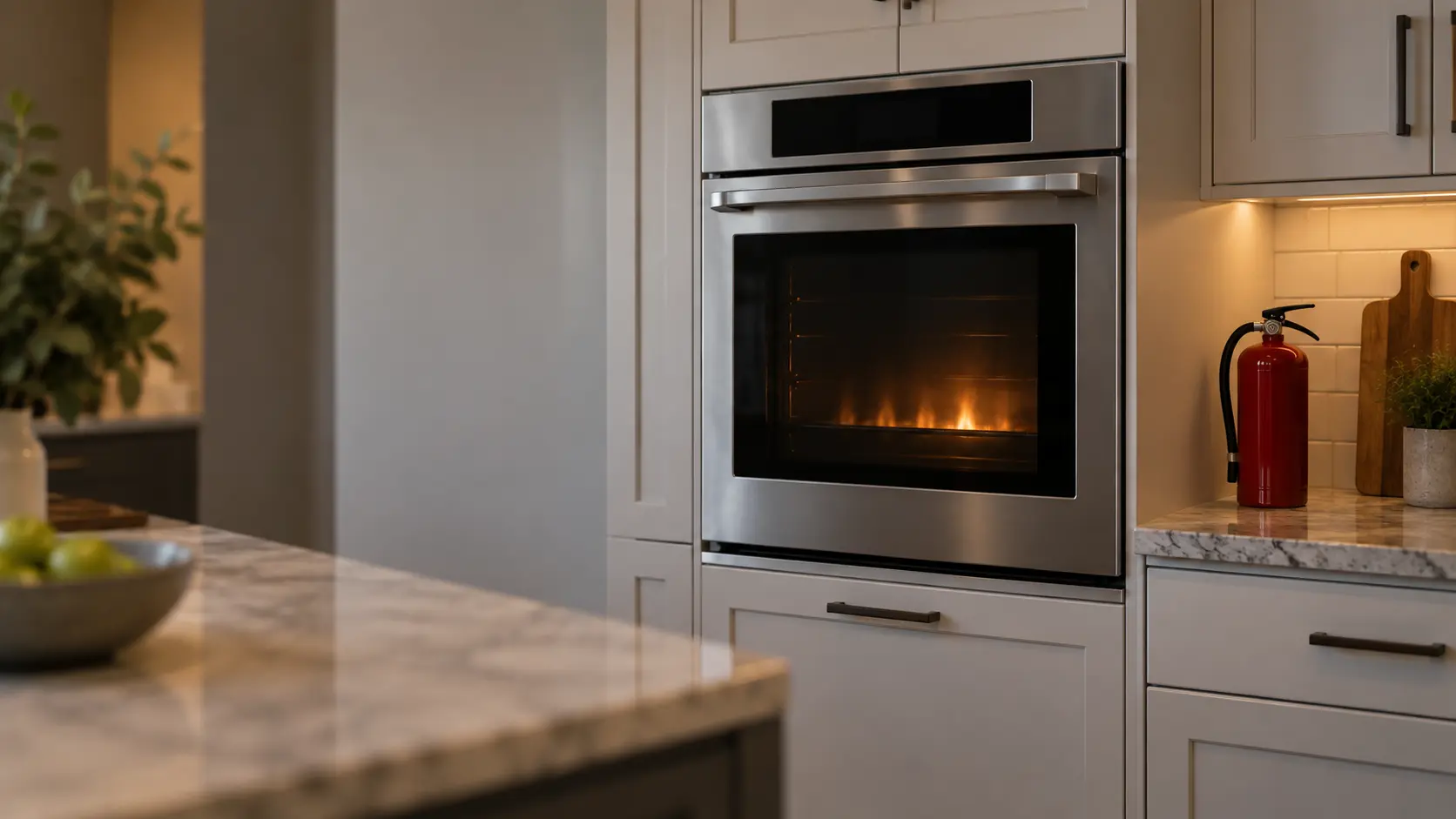

When to stop using the oven.
A wall oven puts either a gas supply or one of the heaviest circuits in the house behind a cabinet face, and runs hotter than anything else in the home. The rules that follow from that are short and do not bend: for gas, everyone leaves and the utility is called from outside; for fire, the door stays shut and the heat goes off; for food, the thermometer in the meat decides, not the display.
Read these before anything goes wrong, especially after moving somewhere with a gas wall oven or buying your first built-in model. None of them asks you to open a panel, and every one says plainly where the owner's part ends.
Not sure where to start?The short answerGas Smell at the Wall Oven: Get Out, Then Call
An oven gas smell, like sulfur or rotten eggs near a gas wall oven, means leaving the house at once without switching anything on or off, then calling 911 and the gas utility from outside.
The short answerFlames Inside the Oven: Keep the Door Shut and Cut the Heat
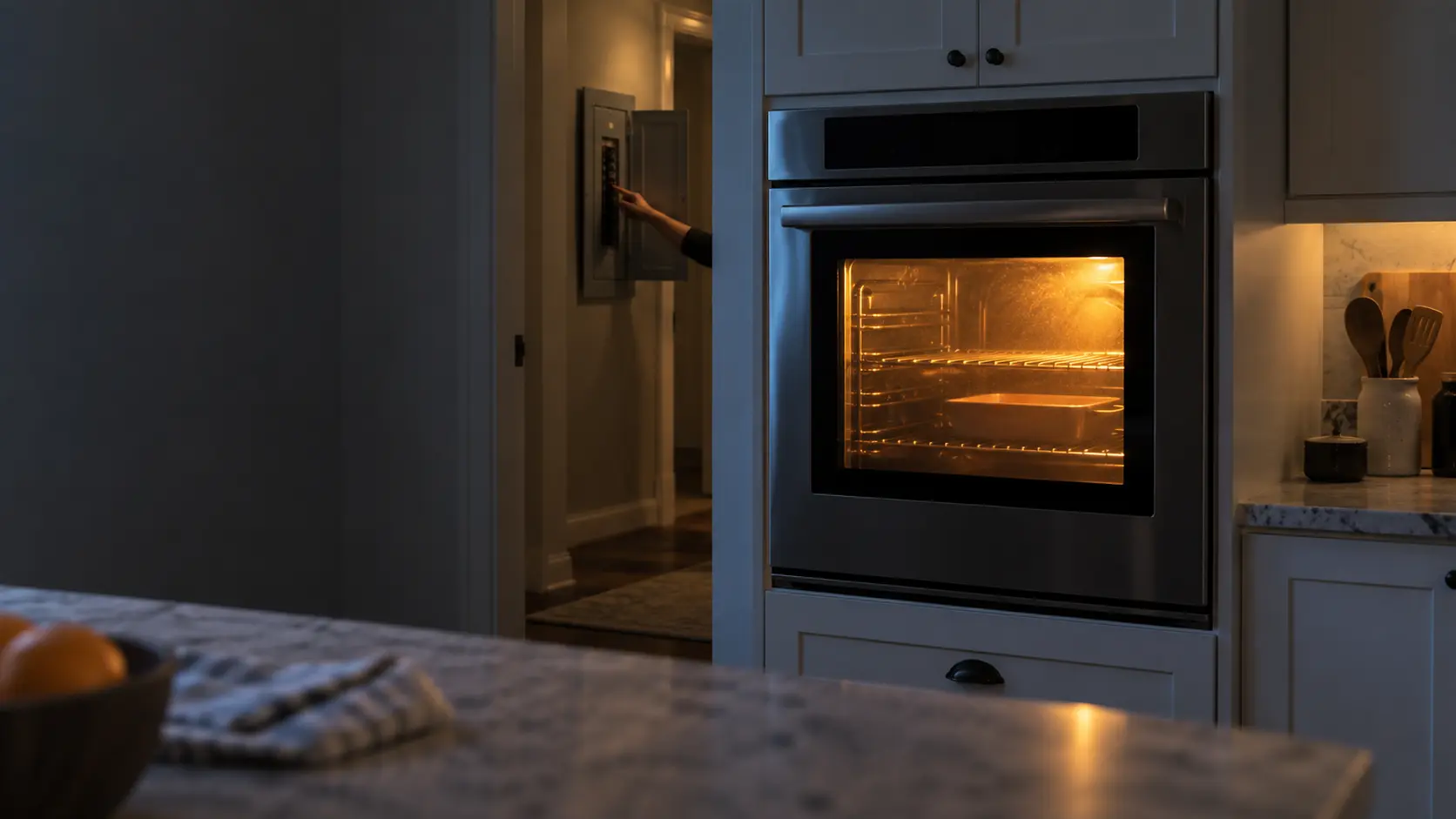
For an oven fire, keep the door shut and turn the oven off, which smothers the flames by cutting off air; if you can, switch the oven's circuit off at the breaker.
The short answerSafe Internal Temperatures, and What the Oven Display Cannot Tell You
The USDA's safe minimum internal temperature is 145°F with a 3-minute rest for whole cuts of beef, pork, veal and lamb, 160°F for ground meats and egg dishes, 165°F for all poultry, leftovers and casseroles, and 145°F for fish.
When reading
is not enough.
If the checks in these guides did not settle it, the visit picks up from there, stop by stop.
What repairs cost- 01Heat it up first
- 02The cost before the work
- 03Parts in the van
- 04Repaired, then tested hot
The problems
these answer.
Each has a page of its own, with the causes in the order worth checking.
All 17 problems

Questions about
gas, fire and burn safety.
What should I do first if I smell gas near my wall oven?
Where do the food temperatures in these guides come from?
Will a technician come out for a gas smell?
The other
sections.
Split by what you are trying to find out rather than by which part of the appliance it concerns.
All guides


Back to your everyday
Let’s get your oven working again.
Three short steps online, or one call. Tell us what you are seeing and pick a window that works.