
Sort the symptom before you suspect a part
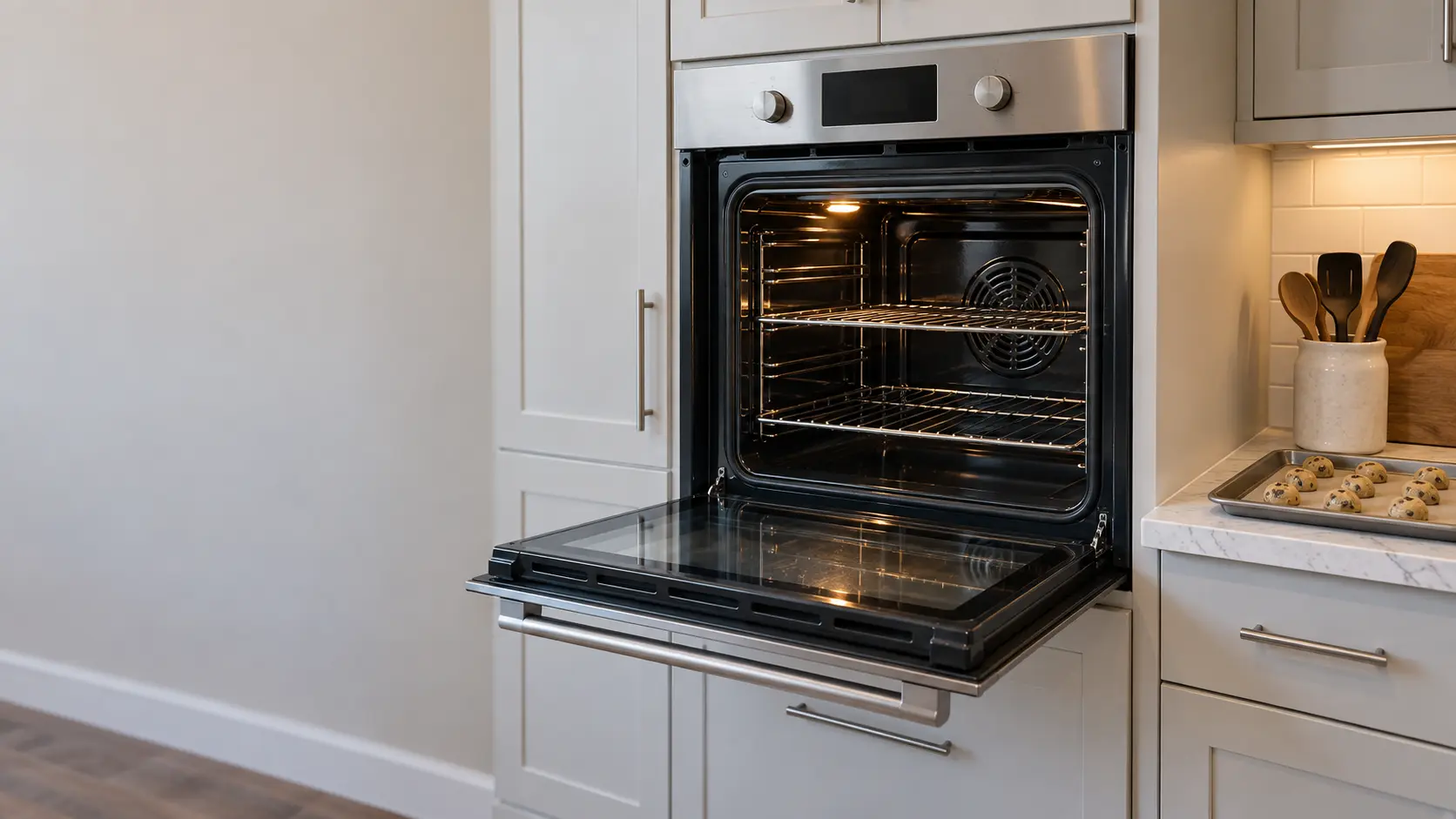
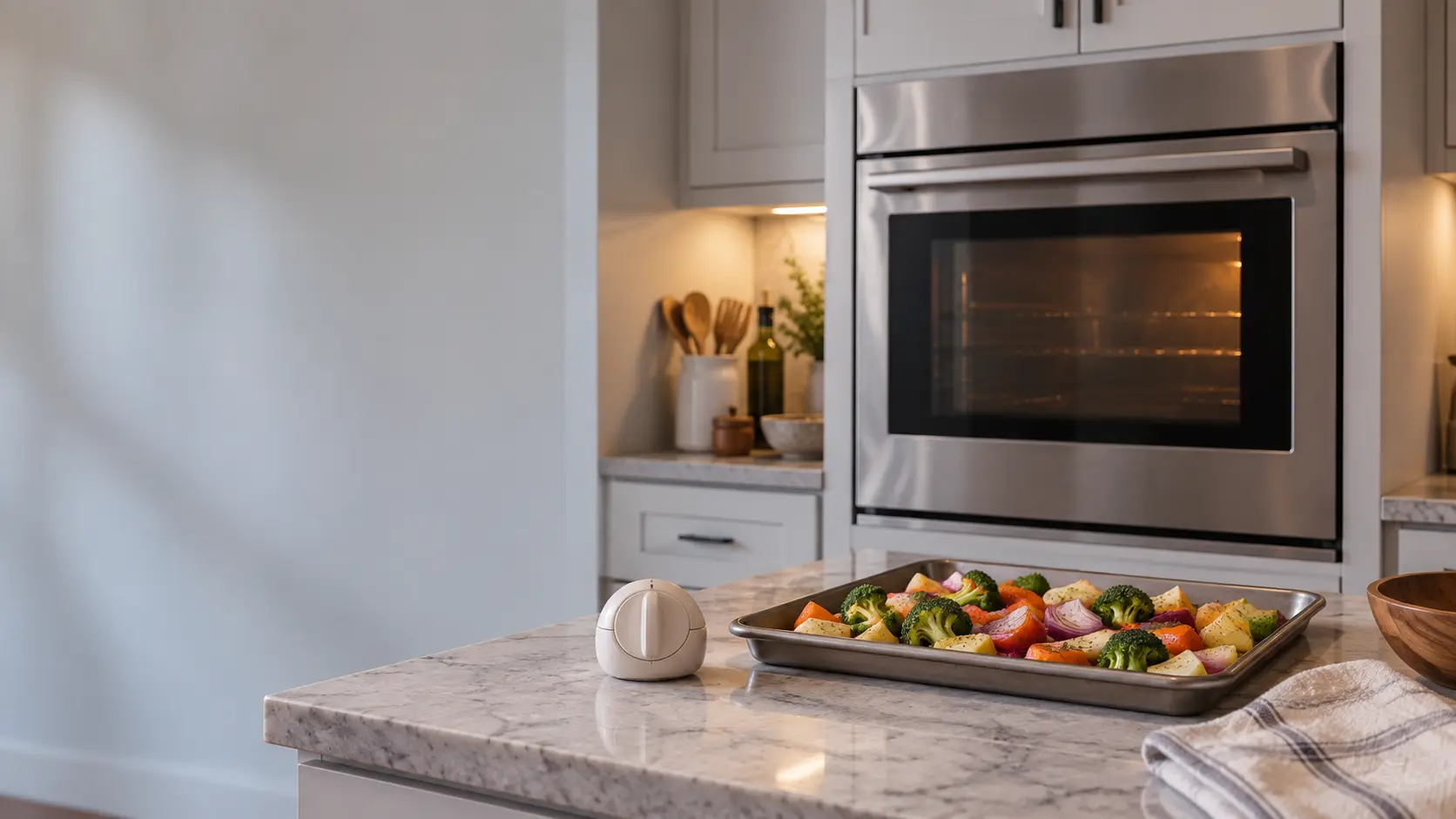
An oven won't heat in several different ways, and each one points at a different stretch of the path from the breaker panel to the cavity. Before touching anything, set the oven to bake at 350°F with the door closed and watch it for ten minutes. Note what the display does, whether you hear the soft click of a relay, and whether any heat at all comes out when you crack the door.
Most cases fall into one of these patterns:
- The display is dark and no key does anything: power, a panel lock or a sleeping Sabbath mode.
- The display counts up and shows preheating, but the cavity stays cool: an element, an igniter, a relay or one half of the circuit.
- It warms slowly and never reaches the set heat: a partly failed element, low supply voltage or an open door seal.
- Broil glows red but bake stays cold, or the reverse: one heat source has failed and the other is fine.
- On a double wall oven, one cavity heats and the other does not: the power and the control are working, so look at that cavity's own parts.
Power: the oven's own circuit and its breaker
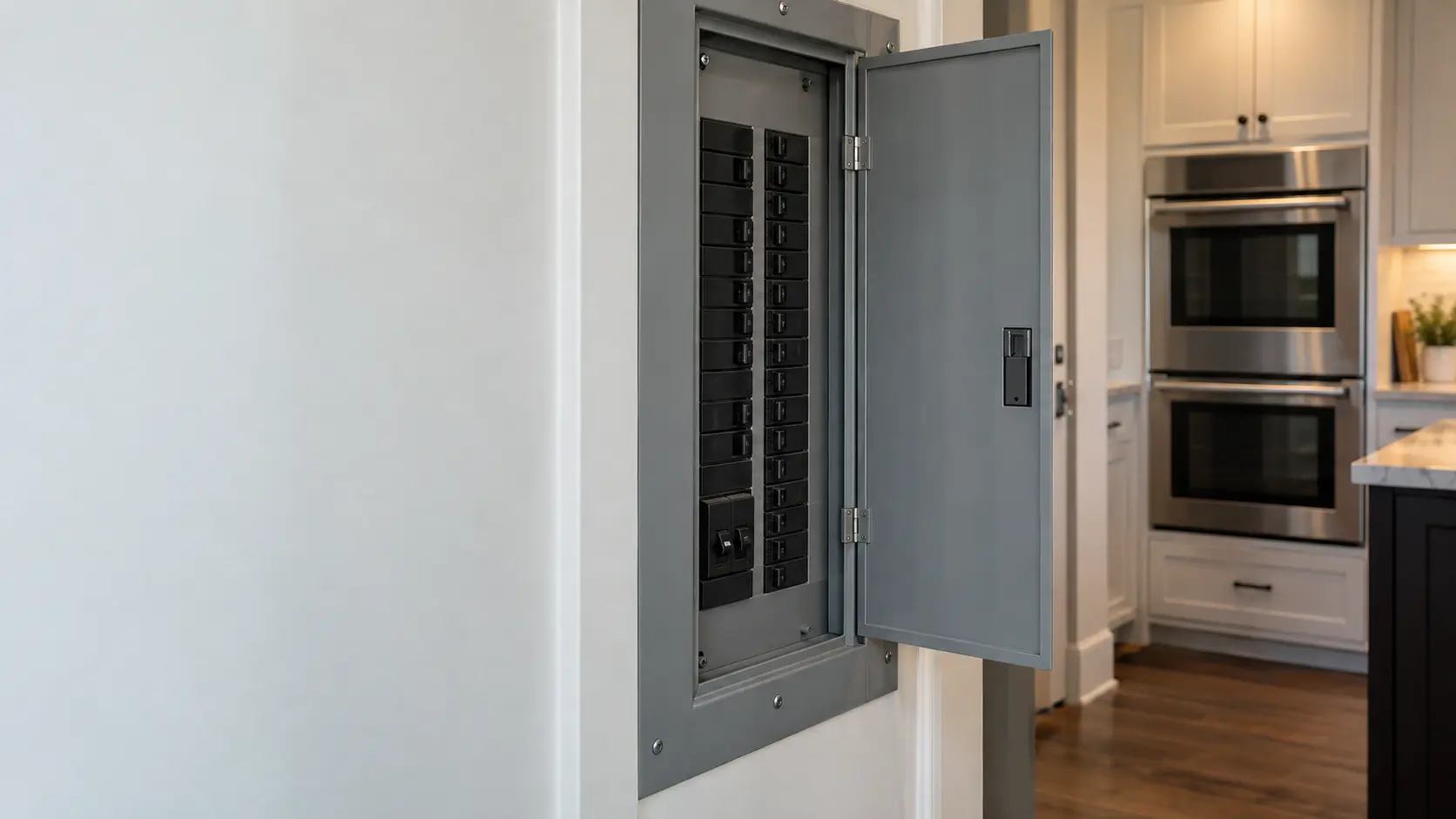
A wall oven is wired into a junction box inside the cabinet rather than plugged into an outlet, and it has a dedicated circuit at the panel. Whirlpool's installation guidance calls for a separate 30-amp circuit for models rated at 7.2 kW and below at 240 volts, and a separate 40-amp circuit for larger ones. An oven that shares a circuit, or sits on a breaker too small for it, trips under load or never gets enough current to heat.
The breaker for an electric oven is a double handle, one for each 120-volt leg of the supply. If only one side has tripped, the display and the light can keep working while the elements, which need both legs, get nothing. Switch the whole double breaker firmly off, then back on, rather than trusting that a handle in the middle position is still on.
After a storm or a power outage
Electronic controls can latch onto a glitch when the power returns unevenly. Whirlpool's advice for a wall oven that stops baking after an outage is to switch its breaker off for one full minute, switch it back on and watch the control for another minute before setting a bake. That clears many stubborn displays without anyone opening a panel.
An oven that never heated since it went in
If the oven is new and has never baked properly, suspect the connection before the oven. Whirlpool lists loose terminal nuts, wires on the wrong terminals and a supply that does not match the rating plate as reasons a freshly installed oven stays cold. Checking that work means opening the junction box, and that is a job for an electrician with the breaker off.
Source: Whirlpool — Oven not preheating, wall oven — Separate 30-amp circuit up to 7.2 kW at 240 V, 40-amp for 7.3 to 9.6 kW; wiring and a tripped breaker keep the element off

Settings that keep the elements off on purpose
Modern controls include several modes whose whole job is to stop the oven heating, and each can be switched on by accident with a long press or a cleaning cloth dragged across the glass. Whirlpool describes a demo or showroom mode that lets a store run the display without firing the elements; a display reading "Showroom Mode" or offering a product video is the giveaway.
Work through the likely ones before anything else:
- Control lock: a padlock symbol or "Loc" on the display, usually cleared by holding the named key for about three seconds.
- Delay start or a cook timer: the oven is waiting for a start time you did not mean to set.
- Sabbath mode: the display may go dark or stop showing the temperature while the oven waits.
- A self-clean that has not fully unlocked: the door stays latched and baking is refused until it cools.
Sabbath mode on a double wall oven
GE notes that on its double wall ovens Sabbath mode switches on for both cavities at once, even if only one is being used, and that the display stops showing temperature changes while it runs. An owner who finds both ovens unresponsive after a holiday often has only to turn the mode off from the settings menu described in the manual.
Source: Whirlpool — Bake cycle not working, wall oven — Demo mode, control lock, breaker off one minute after an outage, loose terminals on a new installation
Electric heat sources: the elements and what switches them
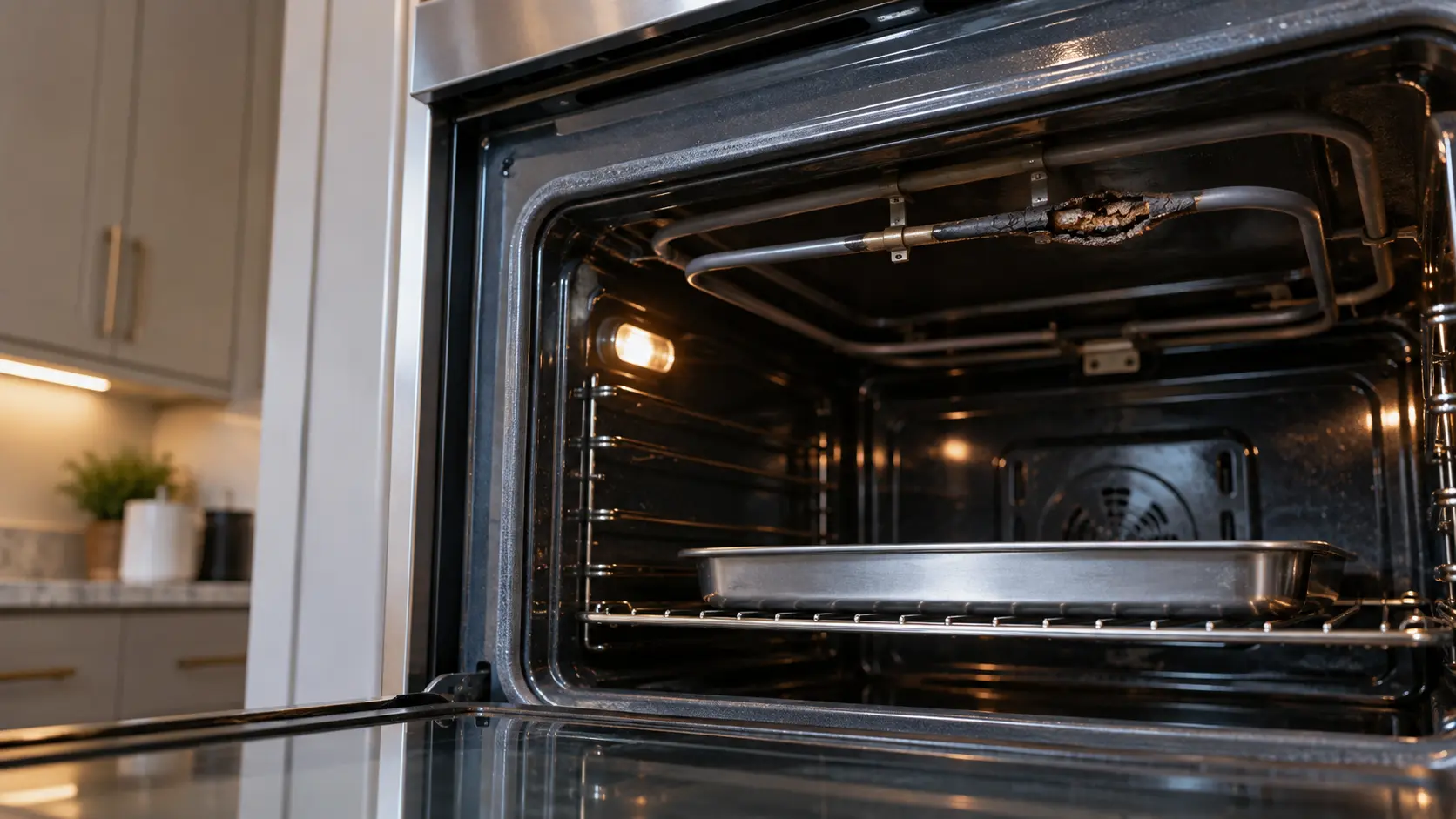
With power confirmed and no mode in the way, look at the heat sources. The broil element across the top of the cavity is always visible; turn on broil for two minutes and it should glow orange along its full length. A dark section, a blister or a split in the sheath means it has burned through. Do the same with bake: an exposed bake element on the floor should glow, while a hidden one under a smooth floor panel only warms the panel.
If both elements are intact and neither heats, the failure lies in the parts that feed them: the temperature sensor on the back wall that tells the control how hot the cavity is, the relays on the control board that switch each element, or a thermal fuse that has opened after the oven overheated. These are diagnosed with a meter behind the panels, with the breaker off.
Gas wall ovens
A gas wall oven lights its bake burner with a hot-surface igniter that glows orange and lets the gas valve open once it is hot enough. An igniter that has weakened with age can glow and still never open the valve, so the oven stays cold and nothing smells of gas. If you do smell gas at any point, stop, leave the house and call the gas utility from outside; gas parts are never an owner's repair.
Steam and speed ovens behave differently
A combi-steam oven that refuses to heat is often refusing to start a program: an empty water tank, a drip tray that is not seated or a descaling reminder can halt a steam mode while plain convection still works. Try a dry convection setting first. If that heats normally, the heating side is sound and the problem sits in the steam system.
A speed oven that combines convection with microwave power usually runs its convection element and its microwave section from separate parts. If the convection side stays cold but reheating still works, the element, its fan or its relay is the suspect, not the whole appliance.