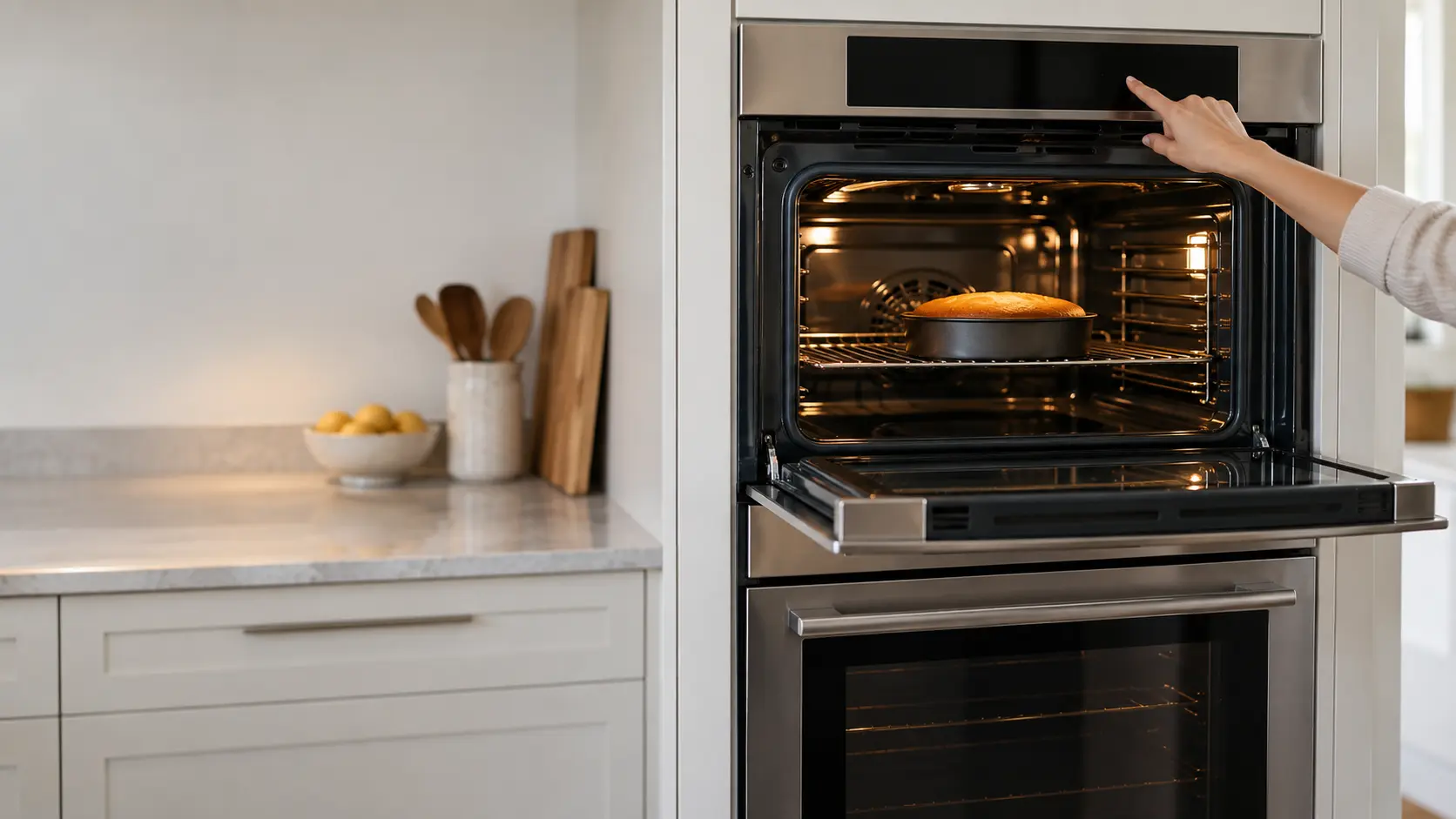
A new oven, or an old one that has drifted
Start with the history. If the complaint began the week a new wall oven went in, the oven may be accurate and simply different. GE and Whirlpool both say a new oven can cook faster or slower than the one it replaced, and a new cavity is often larger, better sealed or heated by a hidden element. Recipes tuned over years on an old oven that ran hot will come out pale in an accurate one.
If the same oven has baked the same recipes well for years and has recently started to overbake or underbake, drift is the likelier story. Whirlpool notes that oven temperature can shift as ovens get older. Drift is usually gradual and steady, a few degrees at a time, which is exactly the kind of error the calibration setting is designed to take out.
Signs it runs hot
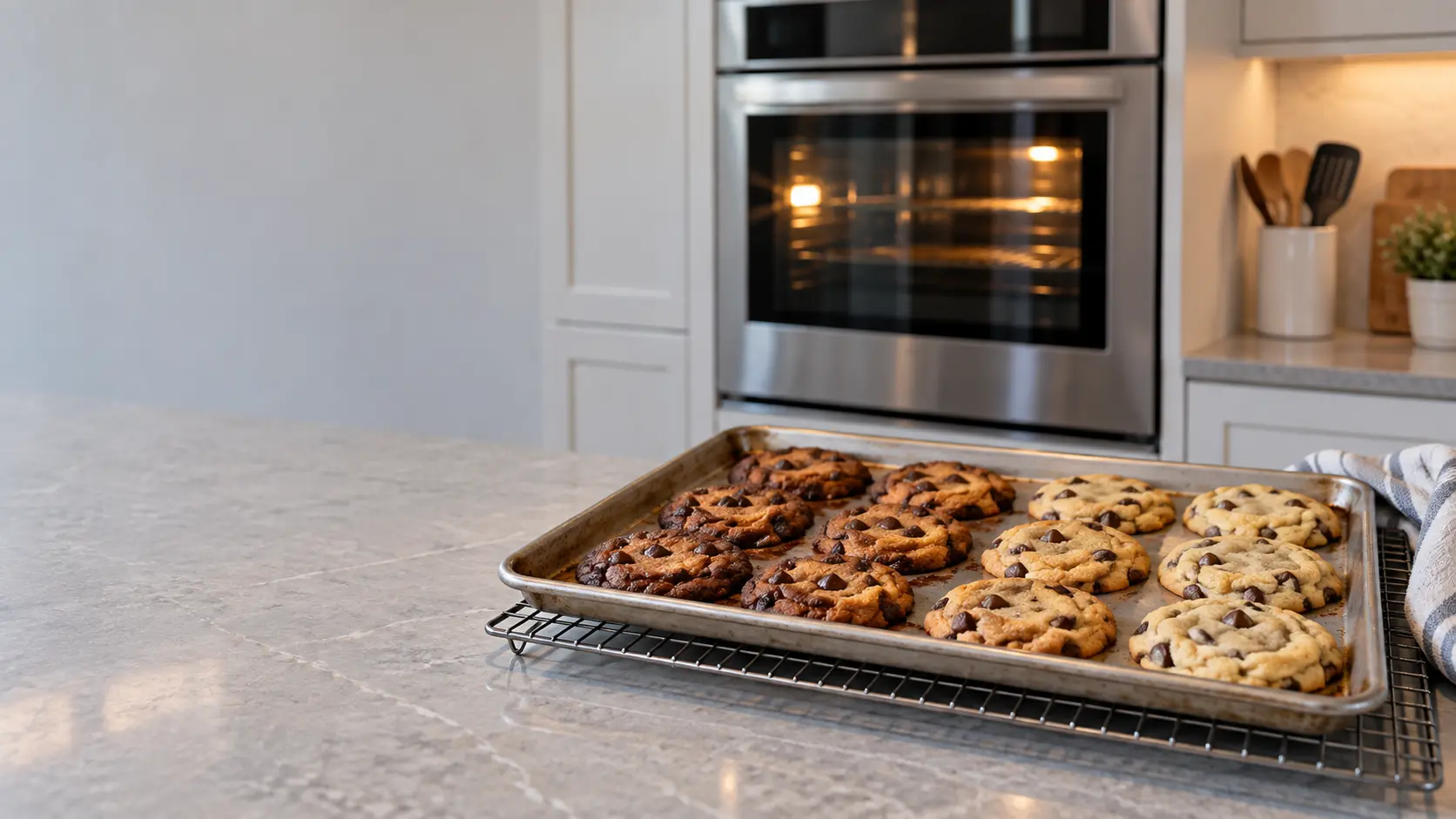
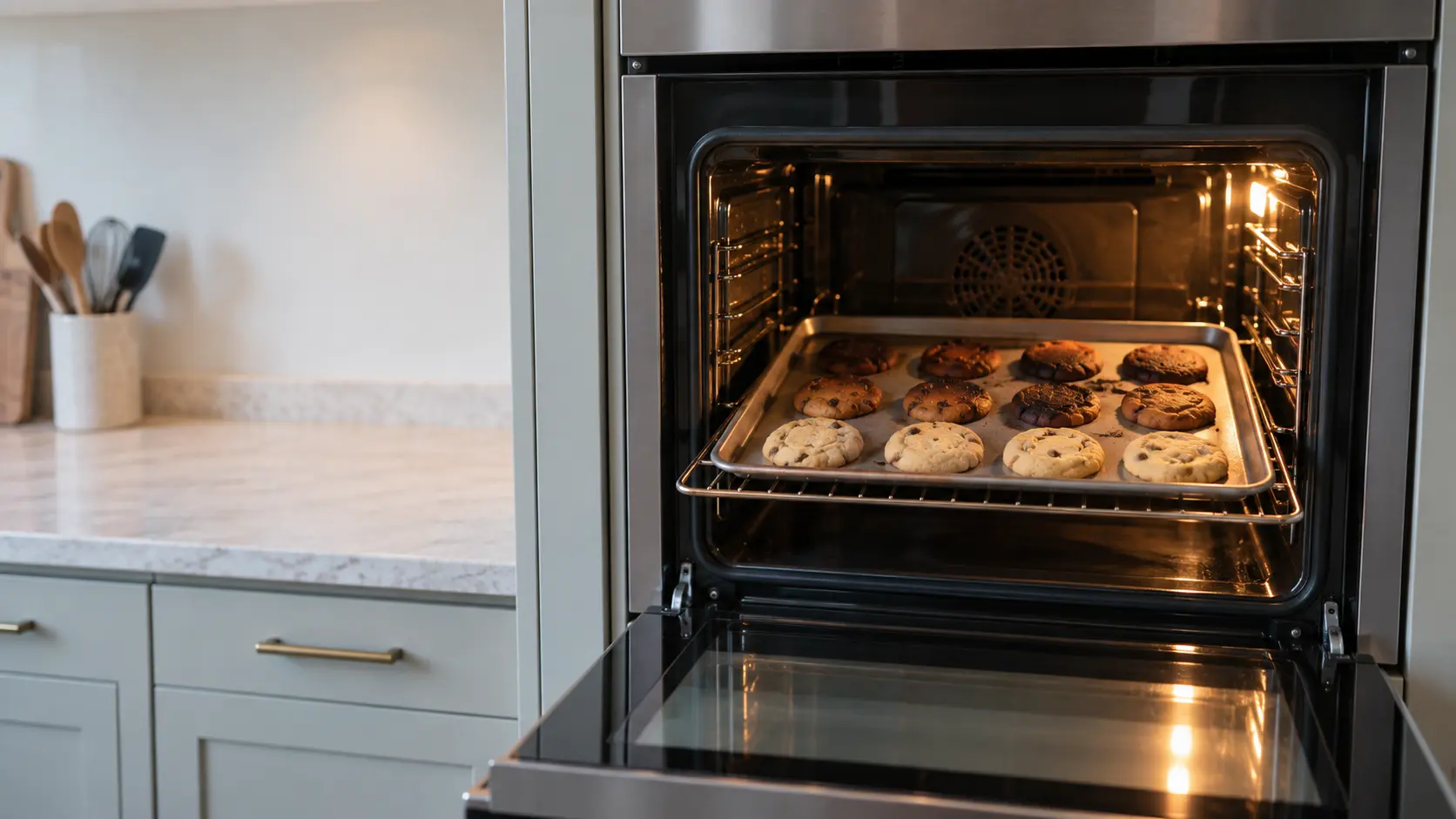
Edges of brownies set hard before the center, cookies darken a few minutes before the recipe time, and roasts reach temperature early and dry out. Baked goods may dome and crack on top because the outside sets before the inside has risen.
Signs it runs cold
Cakes sink in the middle, bread stays pale and dense, and everything takes longer than the recipe says. Pastry leaks butter instead of puffing, because the oven is not hot enough to turn the water in the dough to steam quickly.
Source: Whirlpool — Poor baking results, wall oven — A new oven may cook faster or slower than the old one; temperature can shift with age; elements cycle, so the cavity runs slightly hot or cool at any moment; GE Appliances — Built-in electric wall oven owner's manual (JTS3000, JKD3000) — A new oven may cook differently from the old one; upper and lower ovens of a double are adjusted separately
How the control keeps the heat, and why it swings
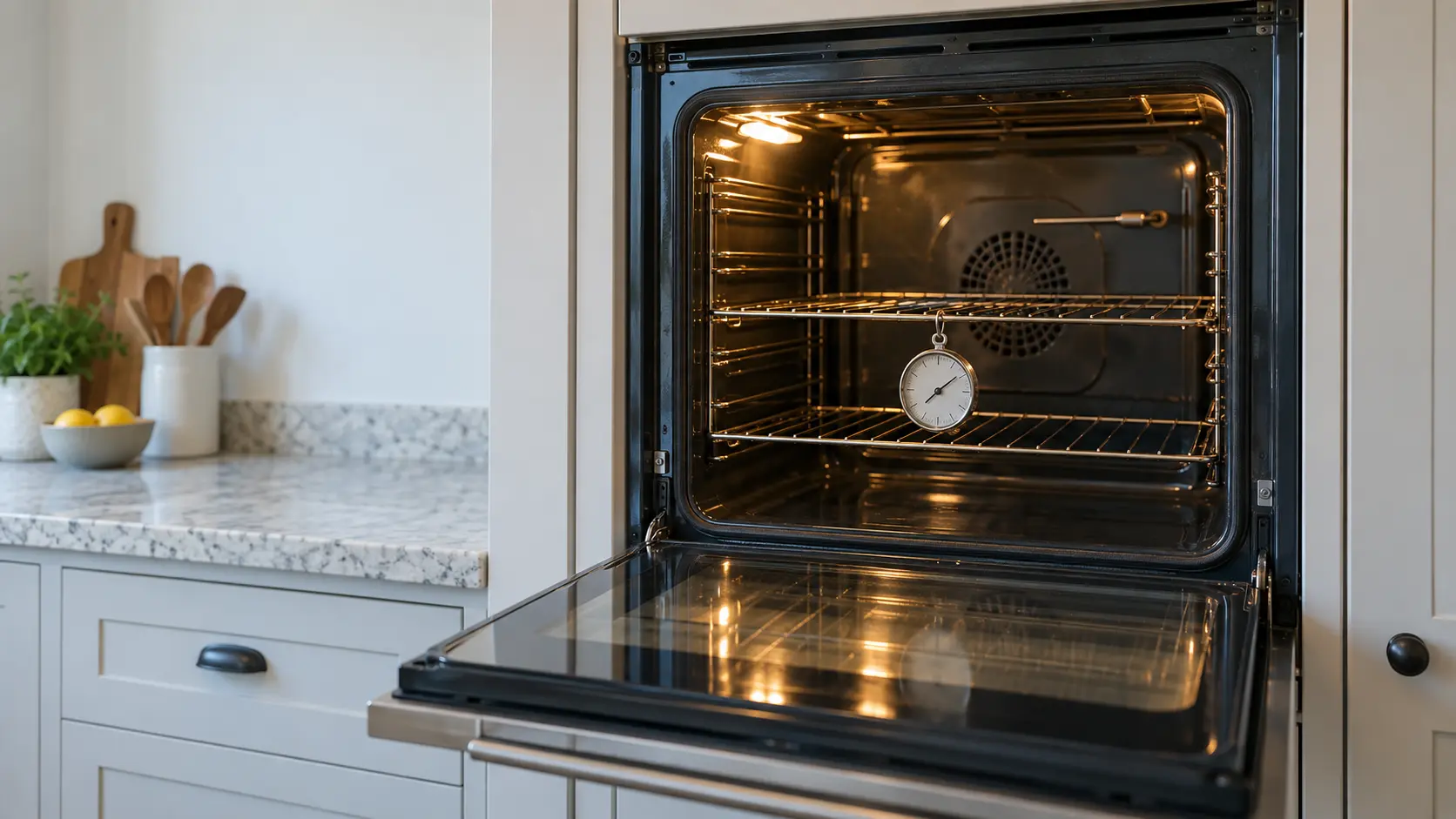
A thin sensor probe on the back wall of the cavity reports the temperature to the control, which switches the bake and broil elements, or the gas valve, on and off to hold the average near the set point. Whirlpool explains that because of this cycling the oven may run slightly hot or cool at any given moment, and that opening the door disturbs the cycle.
That swing is normal and it is the reason a single thermometer glance is a poor judge. What matters is the average over a full cycle and, more usefully, what happens to food. Our guide to testing your oven temperature walks through a check that accounts for the swing.
Gas wall ovens hold heat a little differently
A gas oven cycles its bake burner rather than an element, and each time the burner relights there is a short wait while the igniter heats. The swing around the set point can be wider than on an electric oven, and the cavity air is moister because burning gas makes water vapor. Neither means the oven is off; both mean a gas oven should be judged over a whole bake rather than a few minutes.
How much the door costs you
Every time the door opens, a wave of hot air rolls out of the top of the opening and the sensor sees the drop. Checking on a roast every ten minutes can add a surprising amount of time to a recipe and make an accurate oven feel slow. Use the window and the oven light instead, and open the door only when the food needs attention.
Source: Whirlpool — Poor baking results, wall oven — A new oven may cook faster or slower than the old one; temperature can shift with age; elements cycle, so the cavity runs slightly hot or cool at any moment

Adjusting the offset from the settings menu
Almost every electronic wall oven lets the owner shift its temperature without tools. GE's controls accept an offset of up to 35°F hotter or cooler, in one-degree steps, and GE notes the change stays in memory after a power failure and does not alter broil or self-clean temperatures. Whirlpool's controls allow up to 30°F either way in 5°F or 10°F steps, reached through a settings menu or by holding a named key for five seconds.
Make the change in small steps. If food is consistently underdone, raise the offset; if it is overdone, lower it. Then bake the same recipe again before adjusting further, because a correction of 10°F or 15°F is usually enough for drift, and a larger one can overshoot.
- Food underdone at the recipe time: raise the offset a little.
- Food overdone or dark before the recipe time: lower it a little.
- On a double wall oven: adjust each cavity separately, as each has its own sensor.
- Keep a note of the offset you set, so a technician knows the starting point.
Source: GE Appliances — Oven calibration, controls with up and down pads — Offset up to 35°F hotter or cooler in 1-degree steps; kept after a power failure; does not affect broil or self-clean; Whirlpool — How to calibrate a wall oven — Adjustment between +30°F and -30°F in 5°F or 10°F amounts, from the settings menu or by holding a key for 5 seconds; GE Appliances — Built-in electric wall oven owner's manual (JTS3000, JKD3000) — A new oven may cook differently from the old one; upper and lower ovens of a double are adjusted separately
When the error is too big or will not hold still
An offset only corrects a steady error. If the oven is 50°F off, changes from one day to the next, or needs the full adjustment and still misses, a part is failing. The usual suspects each leave their own trace:
- Temperature sensor: its resistance drifts with age or its wire is chafed, and many controls post a sensor code.
- Control relay stuck closed: the element never switches off and the oven overshoots badly, sometimes heating with the control off.
- Weak bake element or igniter: the oven reaches temperature slowly and sags when the door opens.
- Door gasket or hinge: a door that does not seal lets heat escape, so the element runs constantly and the front stays cool.
- Convection fan stopped: heat pools at the top and back, and the reading the sensor takes no longer matches the food.
An oven that keeps heating after it is switched off
A cooling fan that runs on after cooking is normal; Whirlpool notes it can continue for some time to cool the controls. Heat that keeps building with the oven off is not normal. Switch the oven off at its breaker, keep the door closed if anything inside is smoking, and have it checked before using it again.