
Read where the tray browned
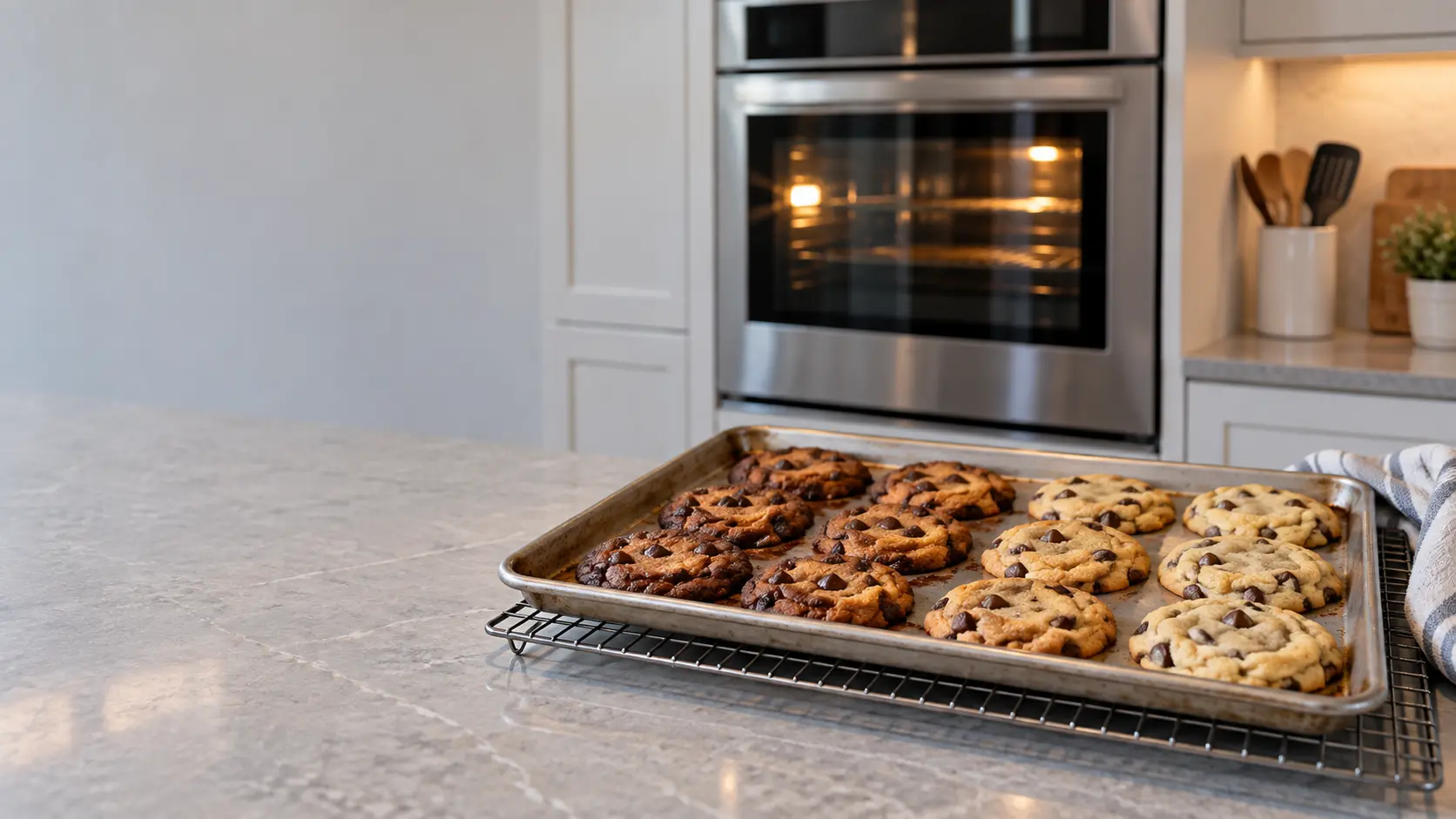
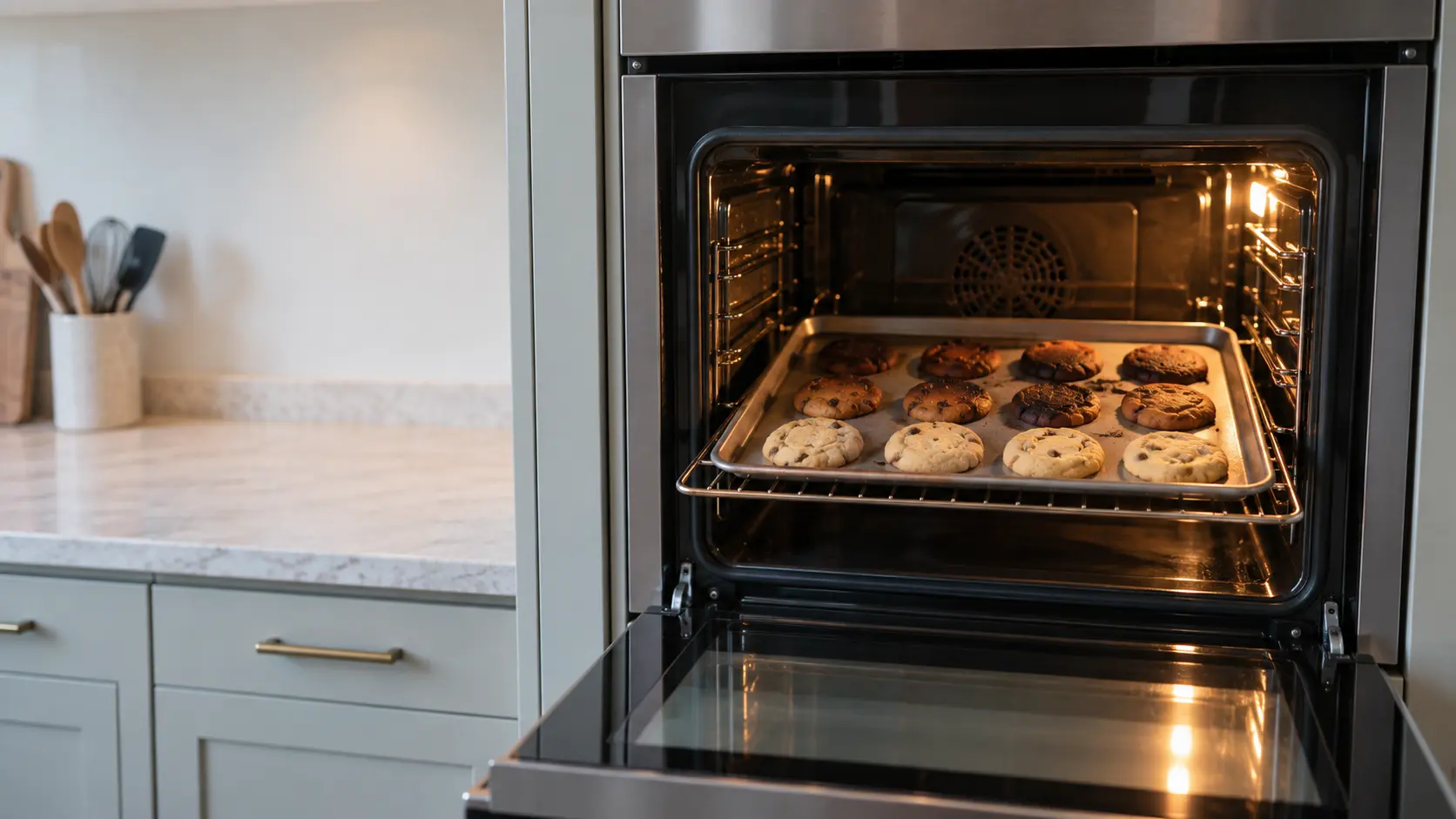
An oven baking unevenly leaves a pattern with a direction, and the direction narrows the cause. Bake one plain test, such as a sheet of sugar cookies or a pan of biscuits, on the center rack with nothing else in the oven, and note which part of the tray is darkest. Turn the tray halfway through on a second batch; if the dark area follows the tray, the pan is the cause, and if it stays in the same part of the cavity, the oven is.
The common patterns and their usual suspects:
- Dark bottoms, pale tops: dark pans, foil below the food, a rack set too low, or a bake element running hard.
- Pale bottoms, dark tops: a rack set too high, a broil element that switches on during bake, or a hidden bake element that has failed.
- The back row darker than the front: normal to a degree in many ovens; strong differences suggest heat escaping at the door.
- One side darker than the other: pans too close to a wall, or a fan or element working on one side only.
- The top rack fine and the lower rack raw, or the reverse: too many pans stacked without room for air to travel.
Crowded pans, foil and the color of the bakeware
Heat reaches food by moving around it, and anything that blocks that movement creates hot and cool zones. Whirlpool asks for about 2 inches of clearance between the pans and the oven walls, and warns that pans touching each other or the walls cause hot spots where they touch. GE's Monogram manual adds that pans on two racks should be staggered so one is not directly above the other, with roughly an inch and a half of space around each.
Foil is the other common culprit. Lining the cavity floor or covering a whole rack to catch drips traps heat below the food and cuts off the air, and Whirlpool names it as a cause of bottoms that brown too much. A small sheet on a lower rack, a little larger than the dish, catches drips without the same effect.
Dark pans next to shiny ones
Dark and nonstick pans absorb heat and brown the bottoms faster, while light, shiny aluminum reflects it and bakes paler. Baking two trays of the same cookies on one dark and one shiny pan can look like an uneven oven when it is really two different pans. Glass and ceramic dishes hold heat longer again, which is why many recipes lower the setting for them.
Source: Whirlpool — Uneven browning, wall oven — Allow 2 inches around pans and walls; pans touching cause hot spots; center rack for most baked goods; spread multiple racks evenly; Whirlpool — Too brown on bottom, wall oven — Foil over a whole rack or the oven bottom blocks airflow; dark pans absorb heat, shiny pans reflect it; GE Monogram — 27 and 30 inch convection wall oven owner's manual — Stagger pans on two racks with about 1.5 inches around each; reduce the baking temperature by 25°F for convection

Rack height changes which side browns
In a conventional bake the heat comes mainly from the floor, with the broil element at the top joining in during preheat on many ovens. Food near the floor gets more heat from below; food near the ceiling catches more from above. GE's wall oven manual suggests moving food one rack position higher if you want darker tops on cakes, muffins or cookies, and lower if tops are coming out too brown.
Whirlpool's rule of thumb for its wall ovens is a single rack in the center for most baked goods, the top rack for toasting and the bottom for roasting meats. When more than one rack is needed, spread the racks as evenly as the oven allows, and keep racks you are not using out of the cavity so they do not shade the food.
The smaller cavity of a double oven
Some double wall ovens pair a full-size cavity with a shorter one, and a short cavity puts food closer to both heat sources at once. Sheet cakes and tall breads that bake evenly in the larger oven may brown on top in the smaller one; drop a rack position or reserve the smaller cavity for dishes that suit it.
Source: Whirlpool — Uneven browning, wall oven — Allow 2 inches around pans and walls; pans touching cause hot spots; center rack for most baked goods; spread multiple racks evenly; GE Appliances — Built-in electric wall oven owner's manual (JTS3000, JKD3000) — Move food a rack higher for darker tops and lower if tops are too brown
What the convection fan is supposed to do
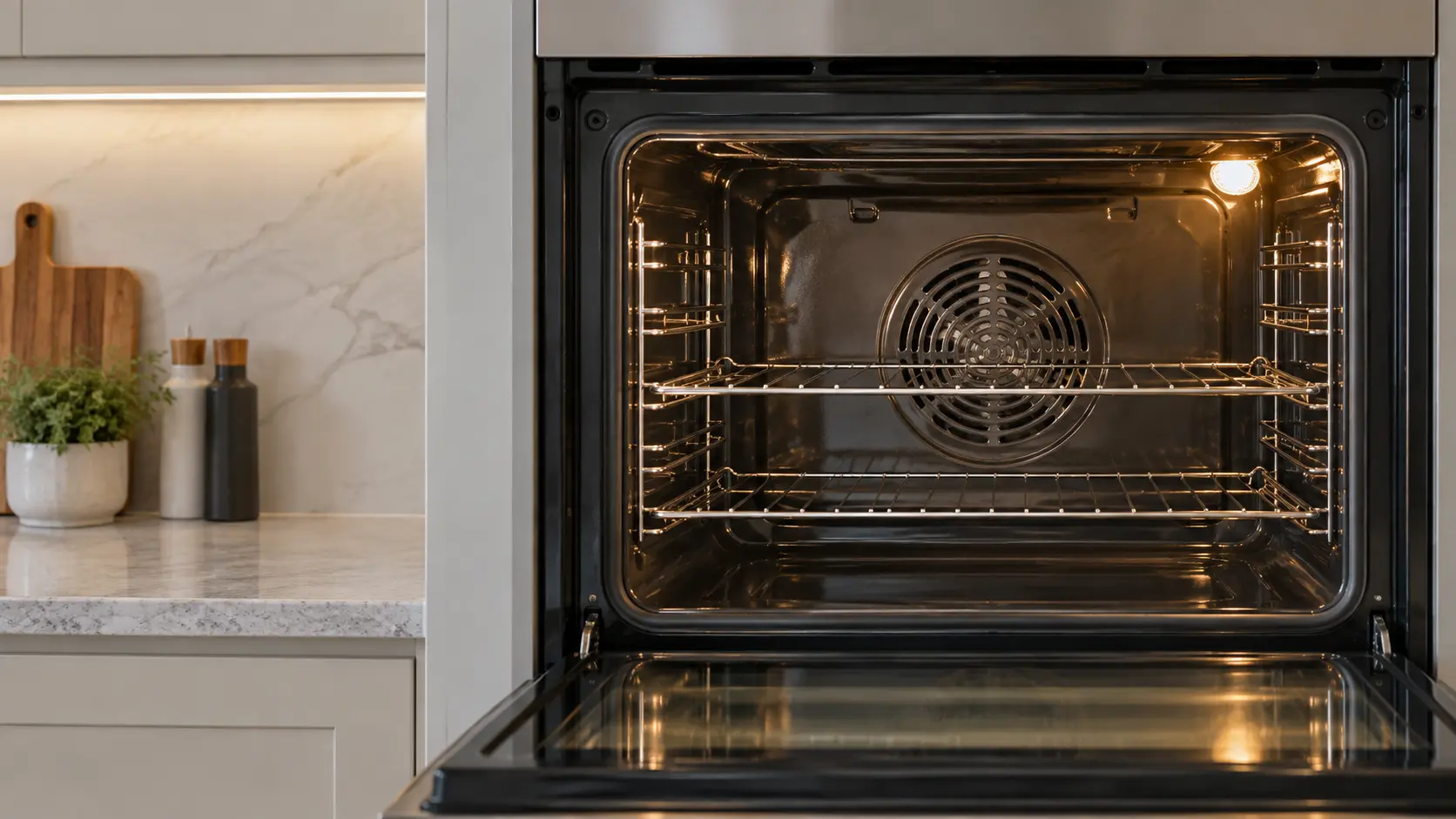
A convection wall oven has a fan in the back wall, often with its own ring-shaped element around it, that pushes hot air across every rack. It is the best tool for baking on several racks at once, and it is why convection recipes run cooler: GE's Monogram manual tells owners to reduce the baking temperature by 25°F when adapting a regular recipe.
If multi-rack baking was once even and has become patchy, check that the fan still turns. Open the door briefly during a convection bake; on most models the fan stops when the door opens, so listen for it spinning down and starting again when the door closes.
A fan that has stopped or slowed
A silent fan, a grinding sound or a fan that turns slowly means the motor or its bearings are wearing, or the rear element is out. The oven still bakes on regular bake, but convection settings will brown the rear and leave the front underdone until the fan is repaired.
Source: GE Monogram — 27 and 30 inch convection wall oven owner's manual — Stagger pans on two racks with about 1.5 inches around each; reduce the baking temperature by 25°F for convection
When the setup is right and the oven is still uneven
If one center-rack test on a light pan, without foil, still browns hard on one side, look at the oven itself. Each of the oven-side causes listed below leaves a mark of its own on the tray.
A temperature sensor that reads wrong makes the whole oven hot or cold rather than uneven, so a test that is evenly too dark or evenly too pale belongs to the guide on ovens that run hot or cold. Heat that is uneven in a pattern that does not change with pans or racks is worth a diagnostic visit.
- A bake element that has partly burned through heats only part of the floor; on an exposed element the damaged stretch stays dark while the rest glows.
- A door that no longer closes tightly, or a gasket that has flattened or torn, lets heat leak at the front, so the front row stays pale while the back darkens.
- A wall oven that has shifted in its cutout or was never set level lets batter run to one side of the pan and bake thicker there.
- A broil element that comes on during bake more than it should browns the tops on the top rack before the rest is set.