What happens inside during the cycle
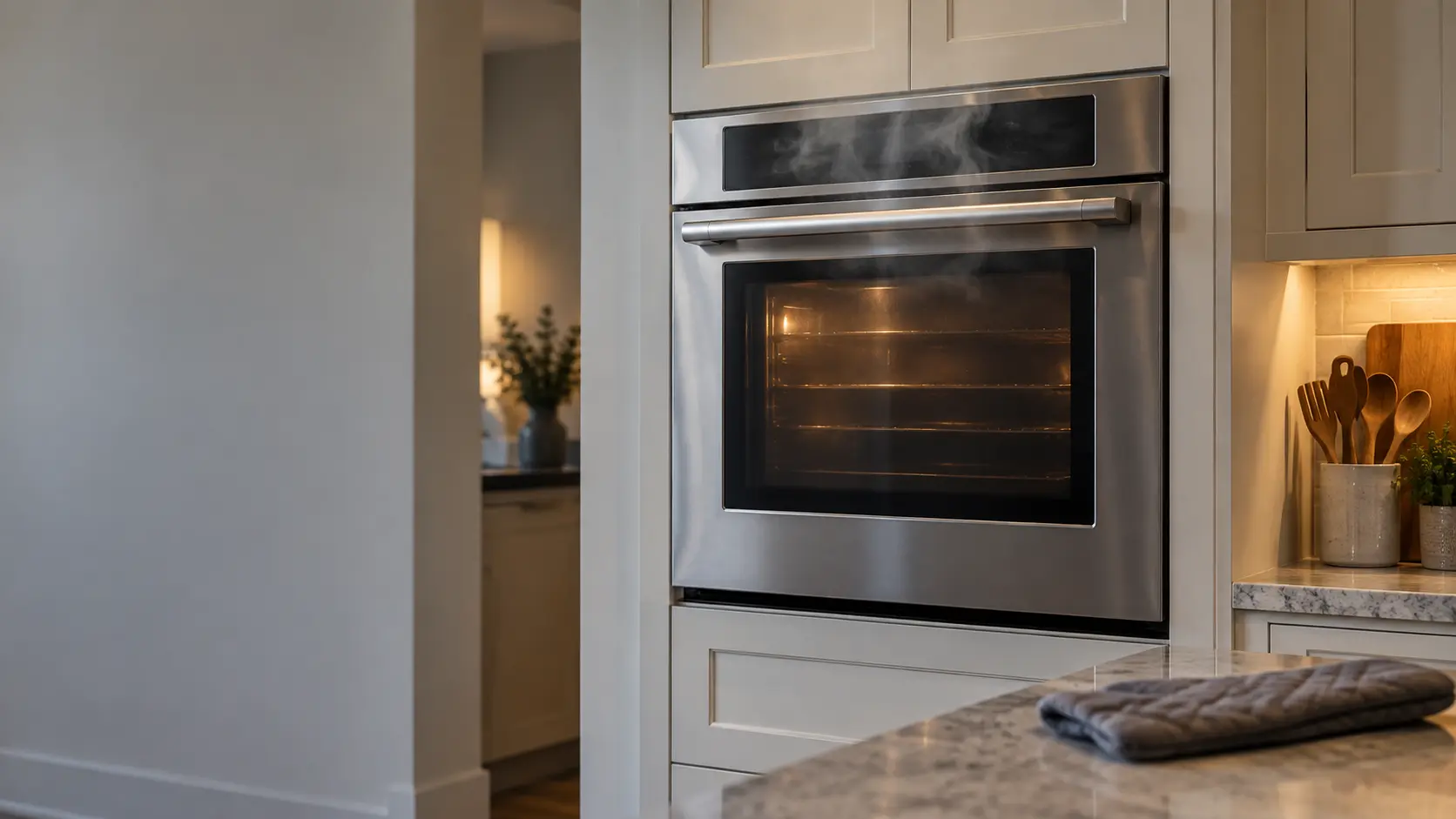
Once the program starts, a motorized latch locks the door and the elements drive the cavity far past baking heat. GE puts the peak at 885°F for its ovens and the whole run at one and a half to four hours depending on how dirty the cavity is. On most of its electronic models the broil element works for the first half hour and the bake element takes over after that, so seeing either one glow is expected.
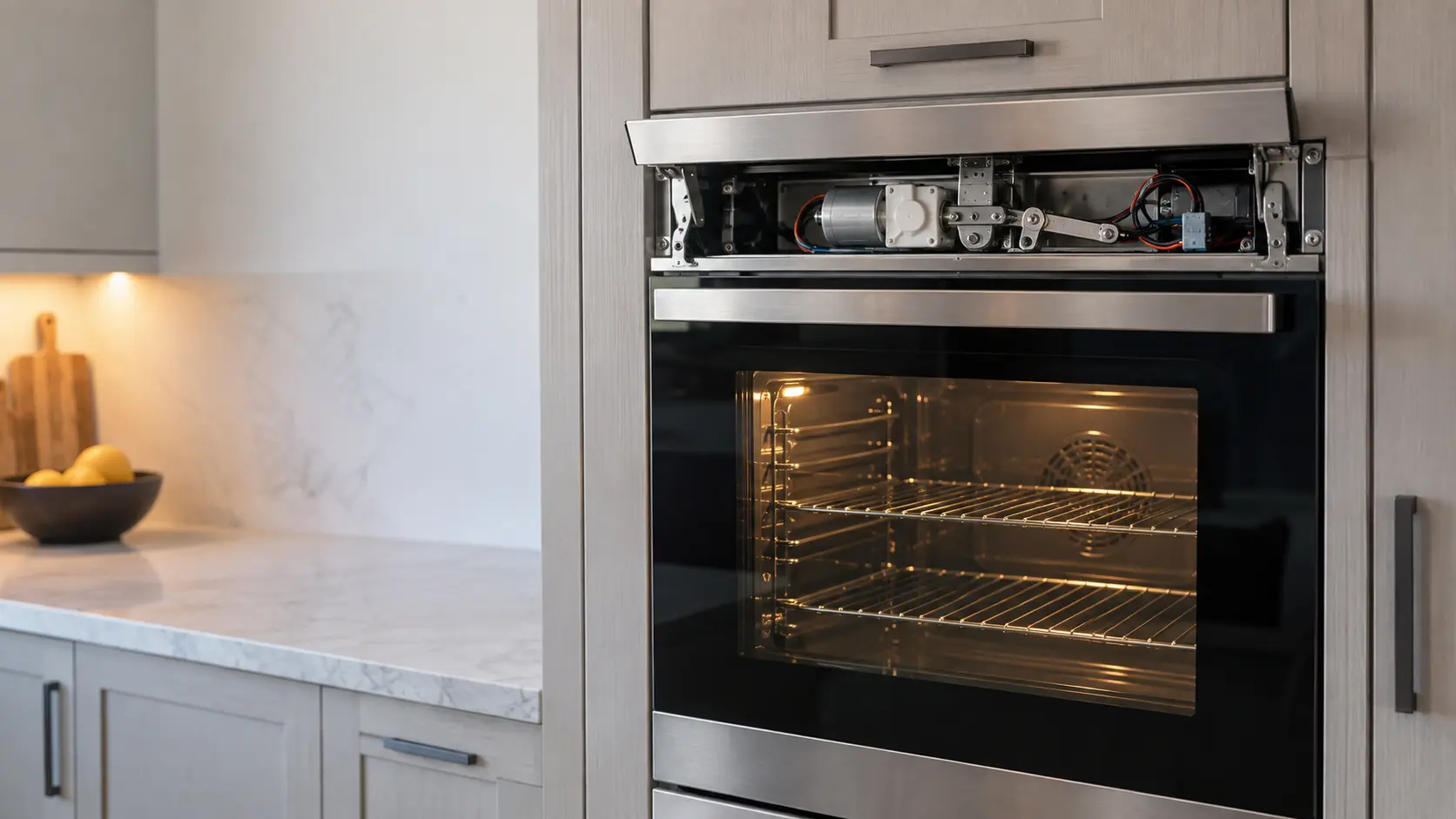
At that heat, food residue breaks down into a light ash and smoke. Many ovens pass the fumes through a catalyst, often called a smoke eliminator, that turns much of it into an almost odorless vapor. Cooling fans run the whole time and keep running after the cycle ends, protecting the controls, the latch and the wiring above the cavity.
Source: GE Appliances — Benefit of the self-clean cycle — The cavity heats to a maximum of 885°F, the cycle takes 1½ to 4 hours, most electronic controls use broil for the first half hour and then bake, and a smoke eliminator converts soil to an almost odorless vapor
Getting the cavity ready
A few minutes of preparation decide whether the cycle ends with ash or with a damaged part. Work through the list with the oven cold:
- Take out cookware, pizza stones, temperature probes, foil, silicone liners and anything stored in the cavity.
- Remove the racks unless the manual identifies them as self-clean racks; those are the dark, porcelain-coated kind.
- Wipe up liquid grease, juice or sauce that has not baked on, using a wet cloth, because a pool of fat is what makes a clean cycle smoke heavily.
- Clean the inside of the door window with a damp cloth, since the glass does not come as clean as the enamel.
- Leave the light bulb and its cover in place, and keep water and cleaner away from the woven gasket around the opening.
Which racks can stay in
Shiny chrome racks survive the heat but come out a dull deep gray and often stick in their guides afterward. If that has already happened, a little vegetable oil rubbed along the side edges of each rack helps them slide again. Racks with a dark enamel finish are designed to stay in for the cycle.
Why oven cleaner stays out of it
Spray oven cleaners, including those labeled safe for self-cleaning ovens, etch and discolor the enamel liner over time, and an etched liner stops cleaning well under the high-heat program. Soap left behind from hand cleaning can also bake into stains, so rinse with plain water if you wiped the cavity with detergent first.
Source: GE Appliances — Tips for self clean — Remove items and non-self-clean racks, wipe loose spills and the door, some smoke is normal, if flames appear switch off and cool at least one hour, the oven takes 30 to 90 minutes to cool and white ash wipes off with water and vinegar; GE Appliances — Cleaning standard oven racks in self-clean ovens — Chrome racks turn deep gray and may stick after self-clean; vegetable oil on the side edges helps them slide; GE Appliances — Manually cleaning a self clean oven — Commercial oven cleaners, even those made for self-clean ovens, etch and discolor the liner; soap residue can stain during self-clean
Smoke, smell and a locked door
Some smoke and a hot, dusty smell are normal, especially on the first few cleans of a new oven. Open a window or run the exhaust fan before starting. A lot of smoke usually means a pool of grease or a forgotten utensil inside.
Households with pet birds
Birds are extremely sensitive to the fumes any oven gives off while cleaning itself. A GE owner's manual tells households to move them to another well-ventilated room for the duration, and it is sensible to keep them there until the kitchen has aired out.
If you see flames through the window
Switch the oven off and leave the door shut; the latch will keep it closed anyway, and opening it would feed the fire with air. GE advises letting the oven cool for at least an hour, then removing whatever caused the flare-up before running the program again. If flames or smoke come from outside the cavity, from the controls or the cabinet, leave the kitchen, call the fire department and switch the circuit off at the breaker if you can reach it safely.
Source: GE Appliances — Tips for self clean — Remove items and non-self-clean racks, wipe loose spills and the door, some smoke is normal, if flames appear switch off and cool at least one hour, the oven takes 30 to 90 minutes to cool and white ash wipes off with water and vinegar; GE Appliances — Self-cleaning oven owner's manual (49-80036) — Some birds are extremely sensitive to self-cleaning fumes from any oven; move them to another well-ventilated room
Cooldown and the ash left behind
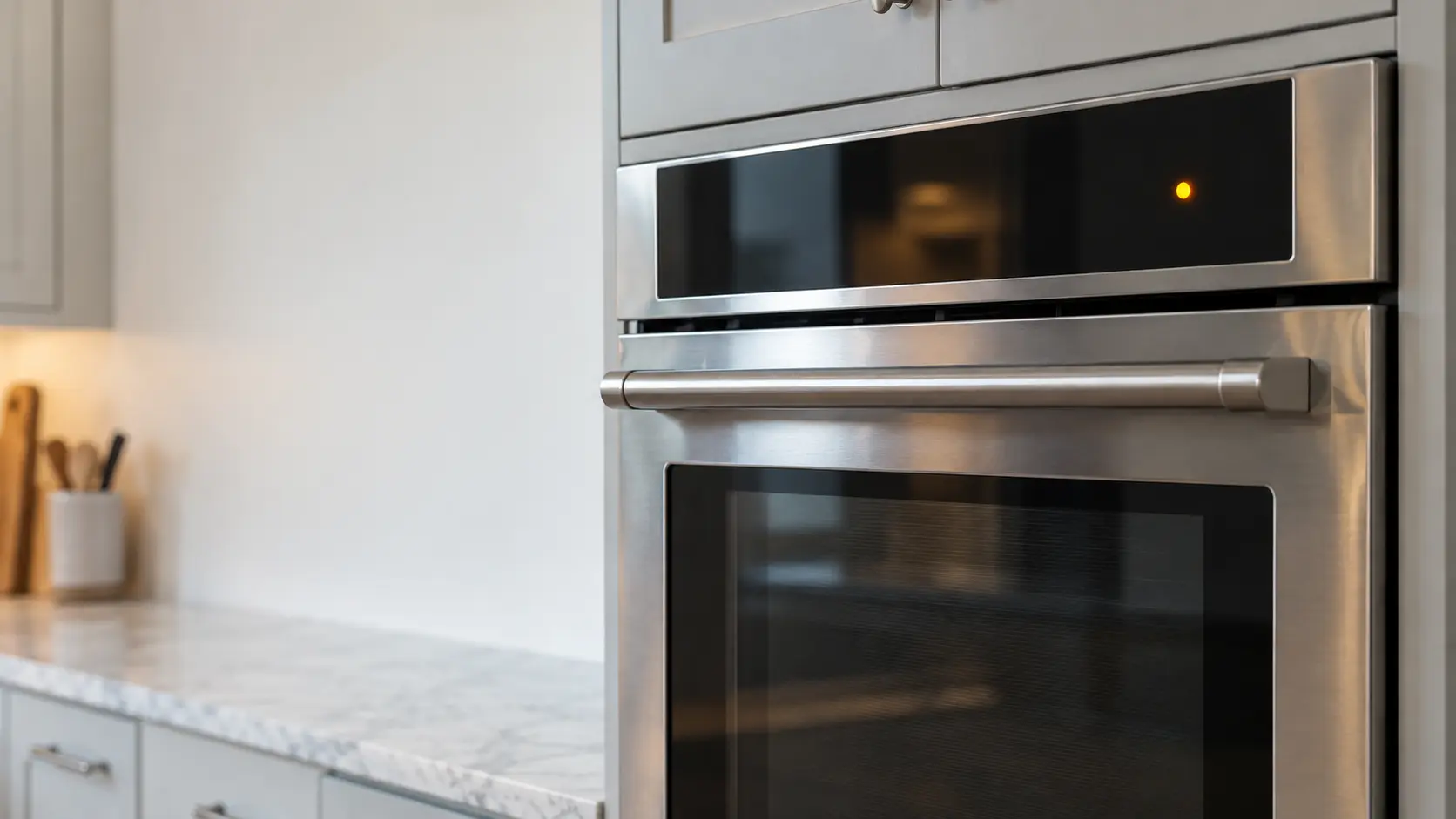
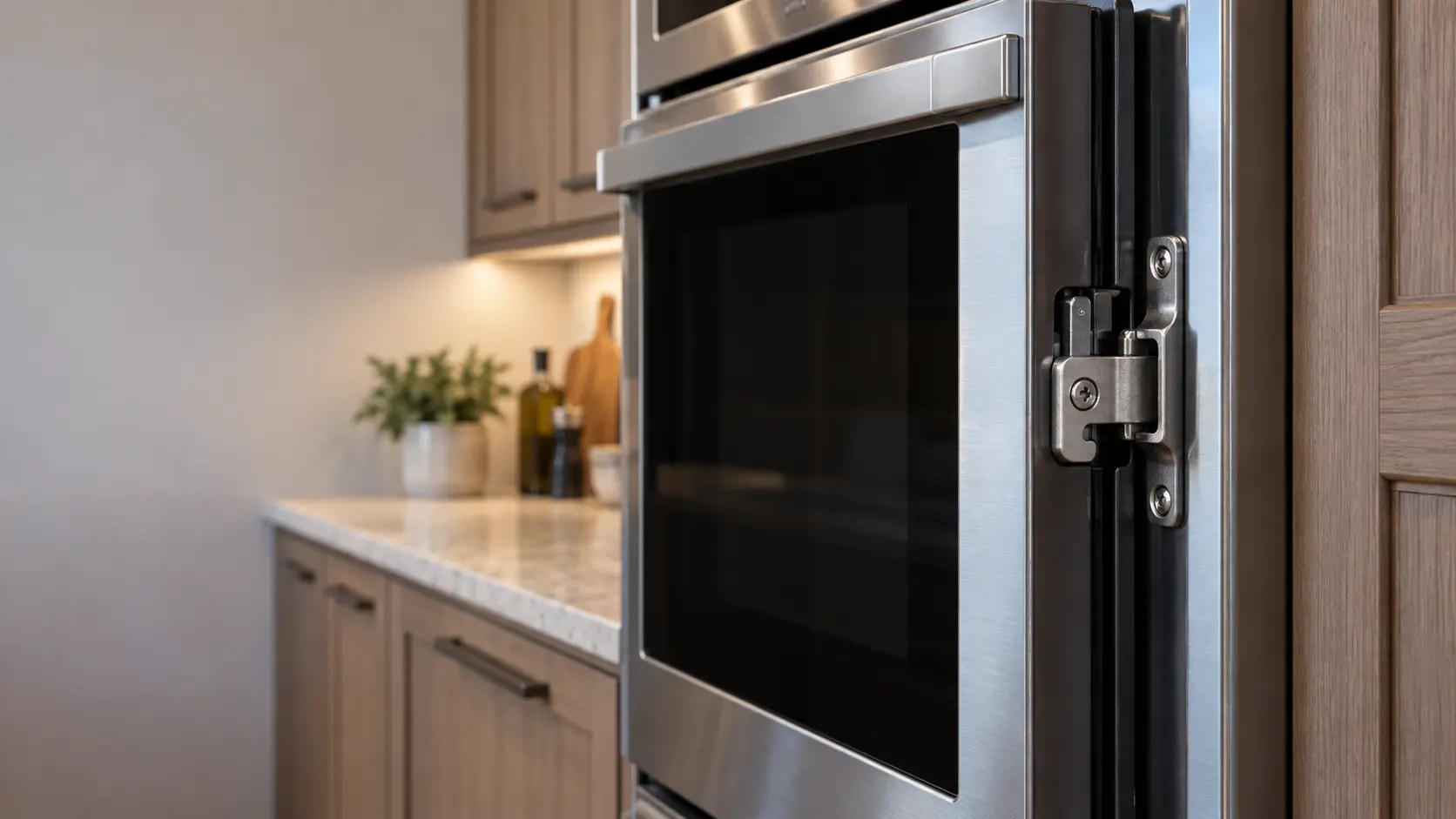
When the program ends, the door stays locked until the cavity has cooled, which takes 30 to 90 minutes. The lock or clean indicator can stay lit during that time, and the cooling fan may keep running. Waiting is the whole fix; forcing the handle only bends the latch.
Inside you will find white or gray ash, sometimes a thin film. Wipe it out with a sponge and a mix of water and vinegar. Heavy spots that survive may need a second cycle or a gentle non-abrasive cleanser on the enamel, never on the gasket.
A few outcomes are not part of a normal finish and point to a part that needs attention:
- The door is still locked two or three hours after the program ended and the oven feels cool to the touch.
- The display is blank, the clock has reset or the oven will no longer heat on an ordinary bake setting.
- A new rattle or hum from the cooling fan, or no fan sound at all while the cabinet is hot.
- Scorch marks or discolored trim along the top edge of the door or the control panel.
Source: GE Appliances — Tips for self clean — Remove items and non-self-clean racks, wipe loose spills and the door, some smoke is normal, if flames appear switch off and cool at least one hour, the oven takes 30 to 90 minutes to cool and white ash wipes off with water and vinegar
How often is sensible
No maker sets a firm limit. GE says most owners run the oven self-clean cycle two or three times a year and that cleaning much more than once a month could shorten the life of components and controls through the extra heat cycles. Wiping small spills while they are fresh keeps the need for the program low.
Not the day before a big meal
The high-heat run is when a tired thermal fuse, cooling fan or latch is most likely to give out. Schedule it a week or two before a holiday, not the night before, so any part that fails can be replaced while you still have time to cook.
Source: GE Appliances — Self clean oven frequency of use — Most owners self-clean two or three times a year; more than about once a month could shorten the life of components and controls