
What the seal does and where it sits
On most electric wall ovens with a cleaning cycle, the oven door gasket is a soft tube of woven fiberglass mesh clipped into the frame around the cavity opening, and the door closes against it. Some models carry part of the seal on the door itself instead. Either way, it is the only thing between air at baking heat and the kitchen, and the only thing keeping that air from rising into the controls above.
Because it is a textile, it wears the way fabric wears: it flattens, frays at corners and hardens where grease has baked into it. Nothing about that is sudden, so the signs are easy to miss.
Signs the seal is going
Look at the gasket with the oven cold and the door fully open, and at the trim around the door with it closed:
- A section that is flat, torn or hanging loose from its clips.
- Brown or black streaks on the trim or the control panel directly above the door.
- Condensation or a hot draft at the top edge of the door while baking.
- Preheating that takes noticeably longer than it used to, or browning heavier near the door.
- A door that closes without the faint resistance of pressing into the seal.
A no-tool check of the seal
With the oven off and cold, close the door on a strip of paper at the top, each side and the bottom in turn, and pull it out. It should drag a little at every point. A strip that slides out freely marks a gap, either from a flattened seal or from a door that no longer sits square on its hinges.
A second check works at night: switch on the oven light, turn off the kitchen lights, and look around the door edge. Light showing through along one side tells you where heat has been escaping.

Cleaning around the seal, not on it
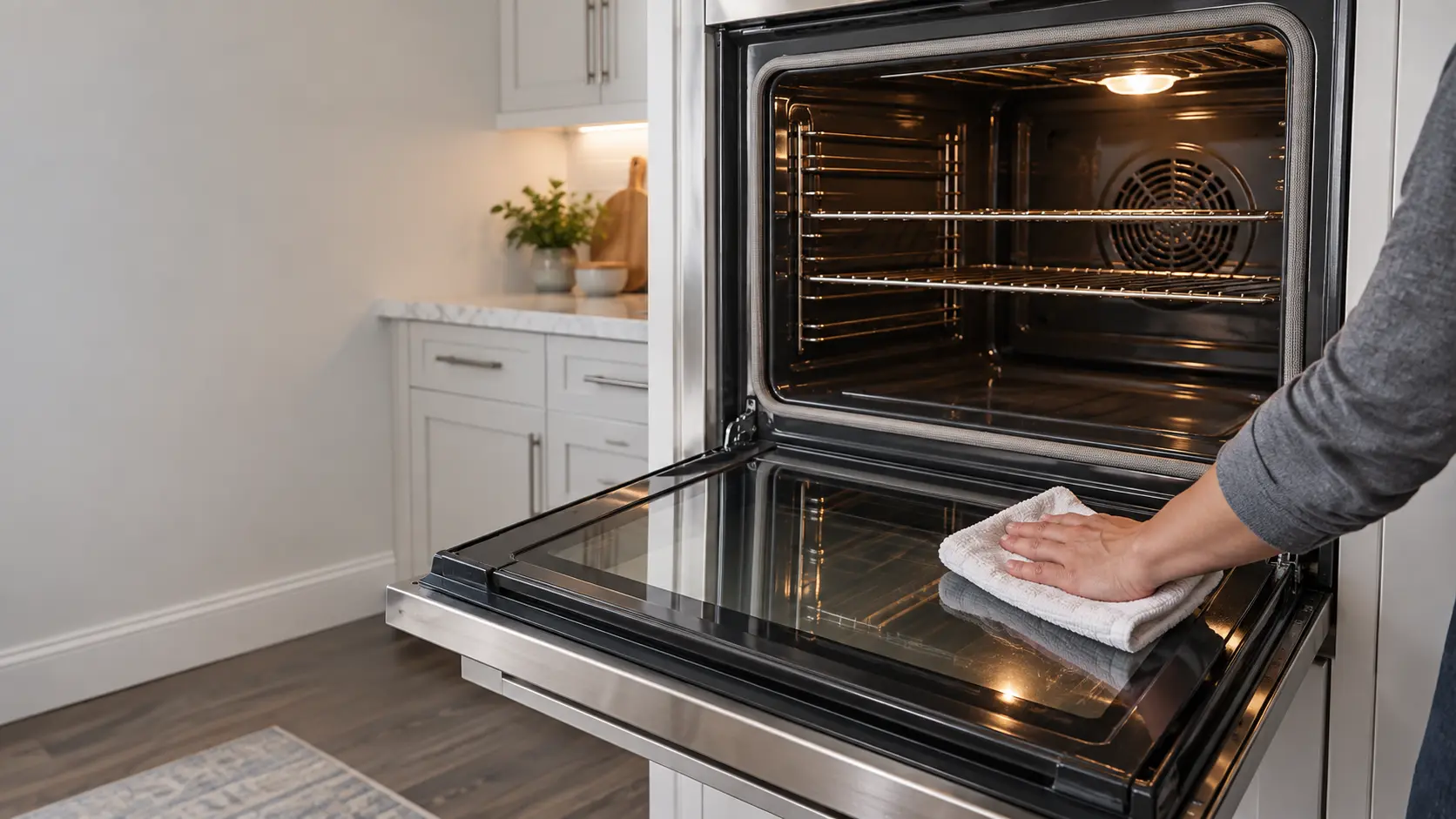
GE's guidance is plain: clean the door liner only outside the gasket, rinse away any soap before a self-clean cycle, and do not rub the gasket or let water or cleaner reach it, because that makes it deteriorate. Crumbs caught in the mesh can be lifted off with a dry soft brush.
A seal that looks dirty after a cleaning cycle is normal; GE notes that the area around the gasket does not clean the way the enamel does. Scrubbing it to make it look new is exactly how seals end up torn.
Source: GE Appliances — Cleaning the inner oven door panel on self-clean models — Clean only the door liner outside the gasket, rinse soap away before self-clean, do not rub the gasket, and keep water and cleaner off it because they make it deteriorate; disconnect power before cleaning; GE Appliances — Self-cleaning oven does not clean — The area around the door gasket not cleaning is normal; the window glass does not self-clean as well as the enamel and should be cleaned beforehand
The door glass and the panes behind it
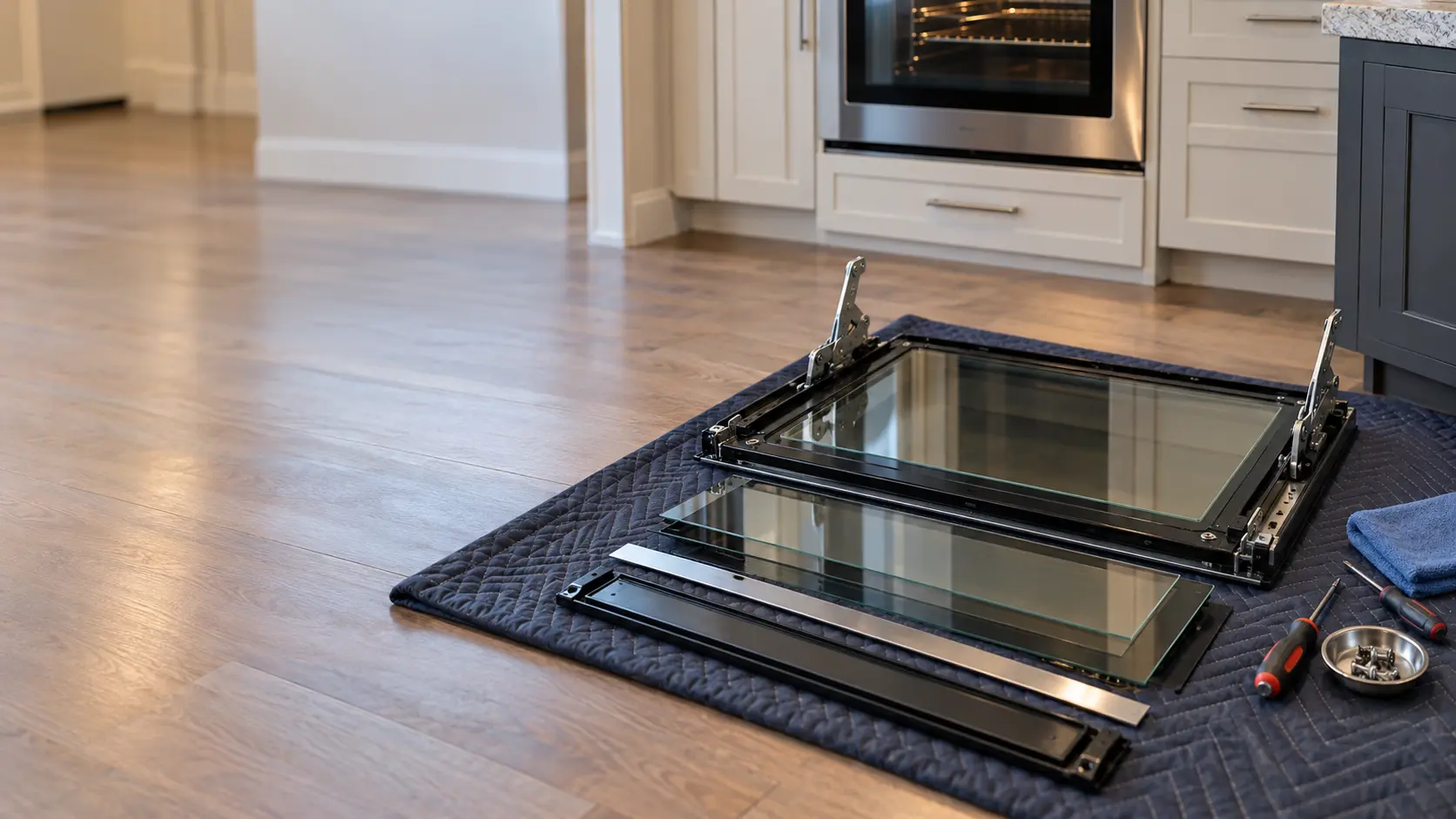
An oven door window is a stack of panes with air gaps between them, which keeps the outer glass cool enough to touch. The inner pane faces the heat and collects splatter; the outer one collects fingerprints; the ones in between should stay clean, but sometimes do not.
Cleaning the inner pane
Wipe the inside glass with a damp cloth once the oven is cold, and use a paste of baking soda and water on baked-on spots, then rinse. Do it before any self-clean cycle, since the window comes out of that program dirtier than the rest of the cavity. Keep razor scrapers and abrasive powders away from coated glass.
Streaks between the panes
Grease or water that runs down the door vents can dry into streaks between the layers. On many models the door comes off its hinges and the inner panes can be reached following the owner's manual. If your manual does not describe it, leave it for a technician, because refitting the panes in the wrong order or without their spacers affects both heat and safety.
When glass cracks or shatters
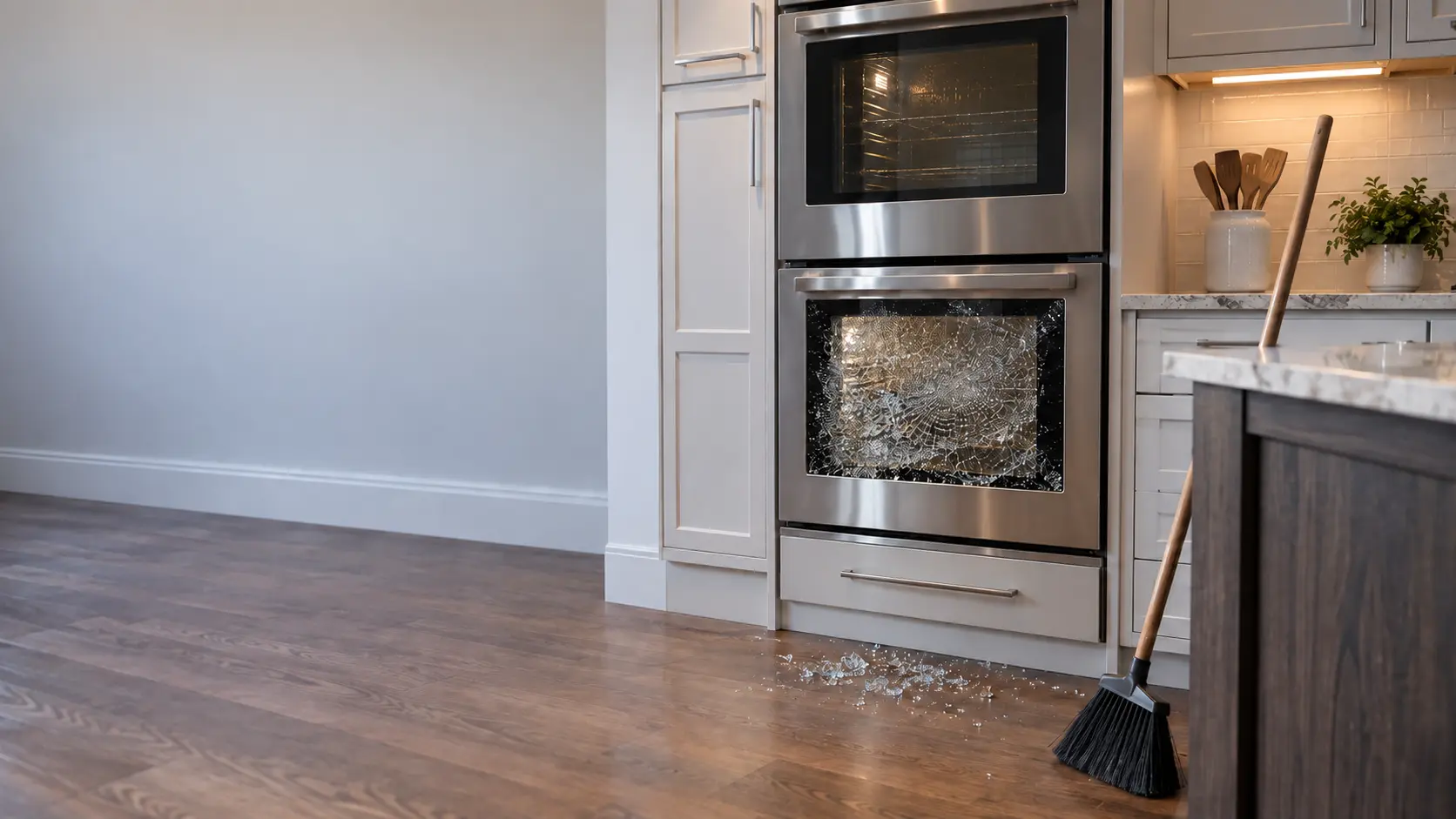
Tempered oven glass can fail suddenly after years of small chips and knocks, often from a rack edge or a heavy pan. If a pane cracks, switch the oven off at the breaker, leave the door shut until everything is cold, and keep children and pets away from the fragments. Do not bake with a cracked pane.
Source: GE Appliances — Self-cleaning oven does not clean — The area around the door gasket not cleaning is normal; the window glass does not self-clean as well as the enamel and should be cleaned beforehand
Habits that protect the door
Most door damage comes from how the door is used rather than from heat. A few habits prevent most of it:
- Never lean on an open door, set a heavy roaster on it, or let a child stand on it; the hinges are sprung for the door's own weight.
- Slide racks in and out with the door fully open, so the rack edge does not strike the inner glass.
- Keep cold water, ice and wet cloths off hot glass, and let the door cool before wiping it.
- Close the door gently rather than letting it snap shut from halfway.
- On a speed oven, stop using it if the door no longer closes firmly; its seals and latches also contain high-frequency energy.
Source: FDA — Microwave oven radiation — Do not operate an oven with microwave energy if the door does not close firmly or its hinges, latches or seals are damaged