The first two minutes belong to getting out
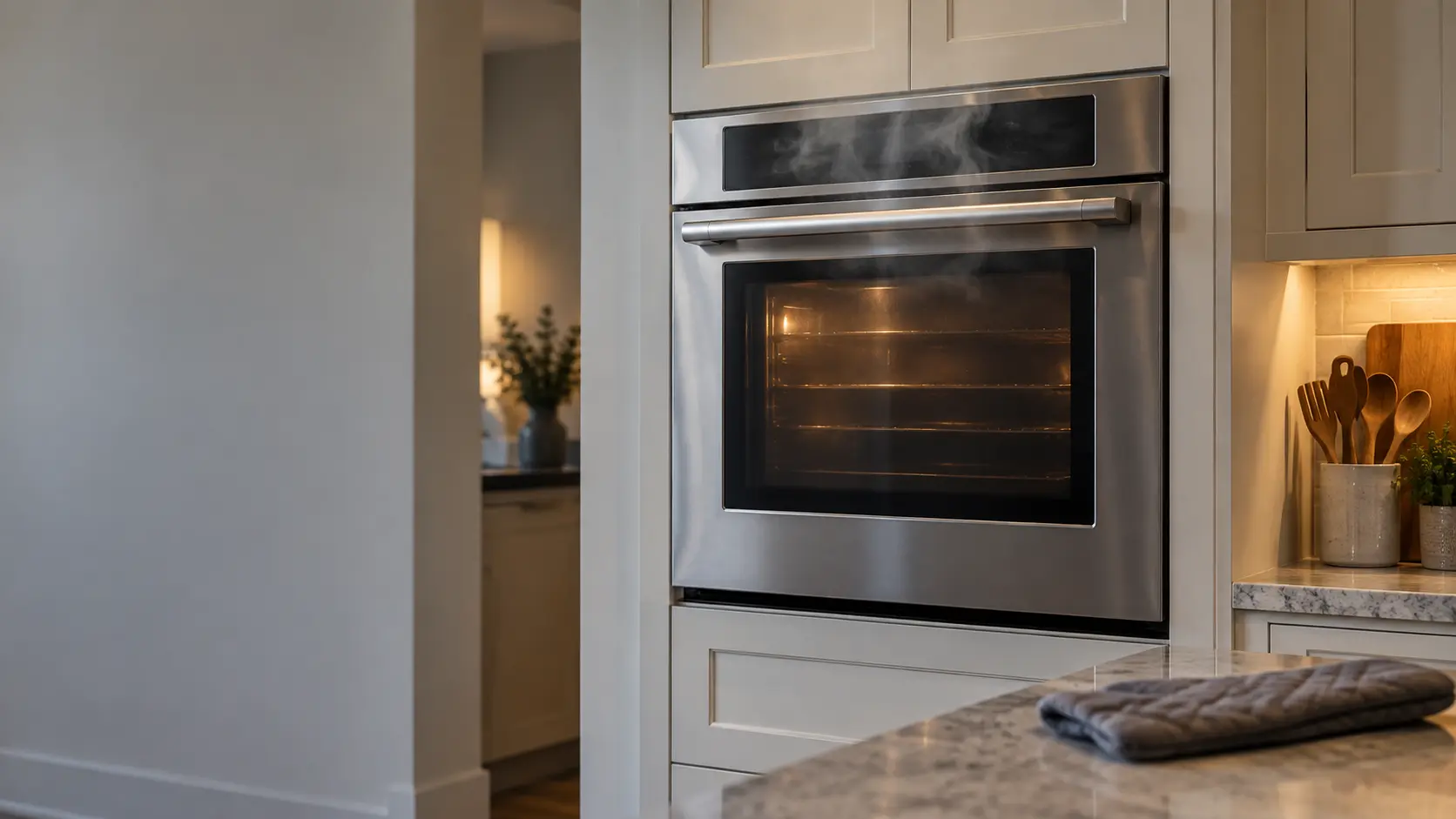
The oven gas smell is the warning, and the right response does not depend on how strong it is. Washington Gas puts the whole plan in three words: recognize the sulfur smell, leave the building immediately, then call. Con Edison adds that you should leave even when the odor is weak, taking everyone in the house with you, and that you should not assume a neighbor has already reported it.
What you leave behind matters as much as how fast you go. A spark is enough to ignite gas that has pooled in a kitchen, and ordinary household actions make small sparks. Con Edison's list of things not to do while gas may be present is worth knowing before you ever need it:
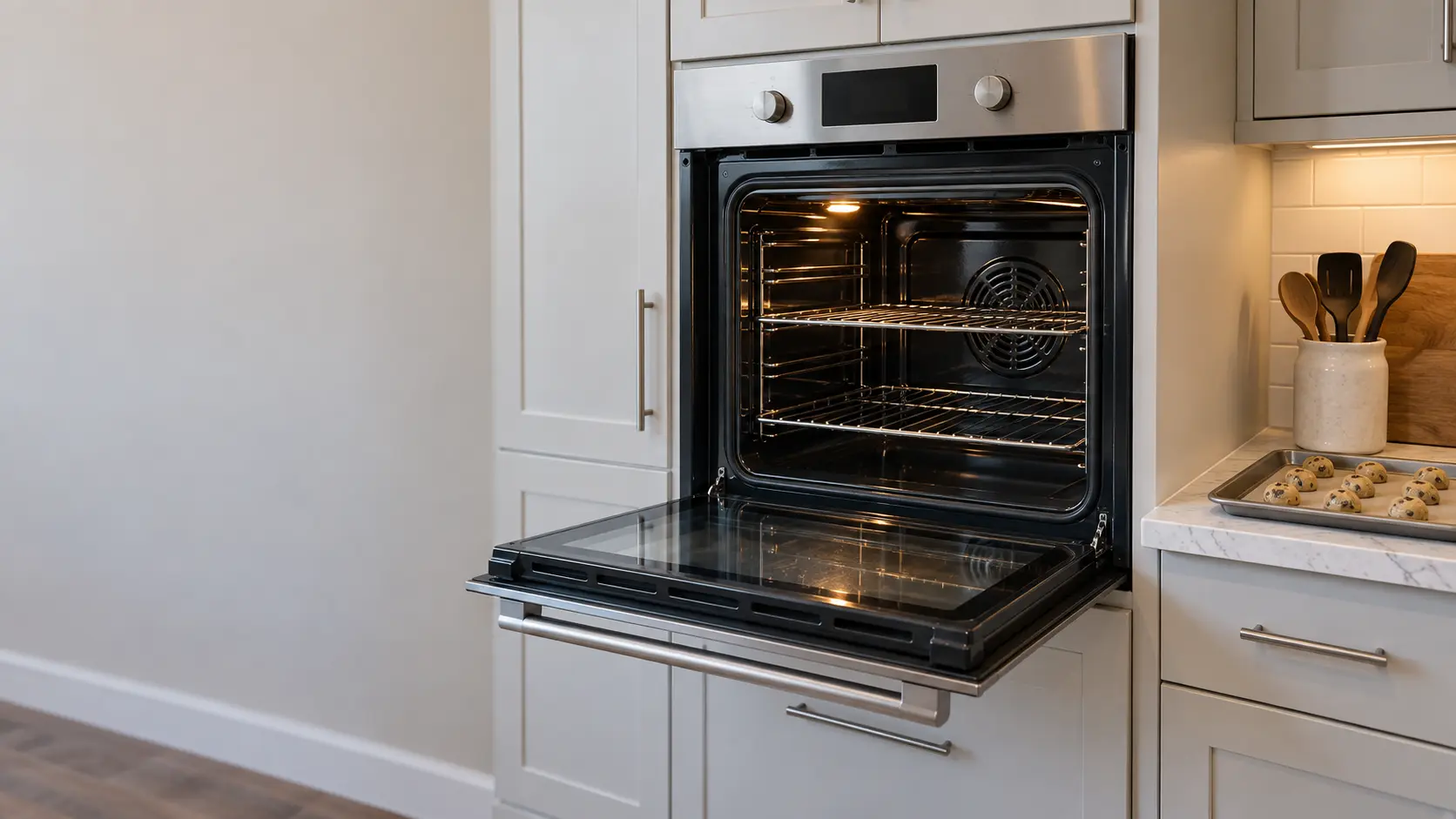
- Do not turn the oven's controls on or off, and do not open its door to check inside.
- Do not flip a light switch, unplug anything or ring a doorbell on the way out.
- Do not light a match, a candle or a cigarette.
- Do not use a phone, including a cell phone, until you are outside and away from the house.
- Leave doors and windows open behind you only if it costs no time.
If the oven was baking when you noticed it
Leave it exactly as it is. Reaching for the control panel to cancel the bake means standing at the source and pressing switches that carry current. The gas utility can stop the supply to the whole house from outside; that is its job, and the oven can be dealt with once the air is safe.
Getting children, older relatives and pets out
Decide ahead of time who carries a small child, who helps someone who moves slowly, and where everyone meets outside. Pets follow people; do not go back into the house for one. If someone cannot be moved, tell the 911 operator exactly where they are.
Source: Washington Gas — Natural gas safety — Natural gas smells like sulfur or rotten eggs because mercaptan is added; leave immediately, then call 911 and the utility's leak line; hissing or blowing sounds are a sign; Con Edison — Gas safety — Leave even if the odor is weak and take others; do not assume someone else called; no name needed; do not light a match, flip a switch, ring a doorbell or use a phone; odor fade from odor fatigue, competing odors and new piping; hiss, whistle or roar
Making the call from a safe distance
Once you are clear of the house, call 911 and your gas utility's emergency line. Washington Gas asks for 911 first and then its own leak line, and utilities answer these calls at any hour. Con Edison notes that you do not need to give your name, so a neighbor can report it just as well as you can.
Crews work faster with a few details. Before they arrive, collect what you know rather than going back inside to check:
- That the smell is in the kitchen near a gas wall oven, and whether it was on.
- Roughly when you first noticed it, and whether it was stronger at the oven or elsewhere.
- Whether the oven was installed, moved or worked on recently.
- Whether anyone in the house feels dizzy, sick or has a headache.
Source: Washington Gas — Natural gas safety — Natural gas smells like sulfur or rotten eggs because mercaptan is added; leave immediately, then call 911 and the utility's leak line; hissing or blowing sounds are a sign; Con Edison — Gas safety — Leave even if the odor is weak and take others; do not assume someone else called; no name needed; do not light a match, flip a switch, ring a doorbell or use a phone; odor fade from odor fatigue, competing odors and new piping; hiss, whistle or roar
What a gas leak can seem like, and what else smells hot
Plenty of oven odors are not gas. A new oven's first few heat-ups, a spill scorching on the cavity floor or a self-clean cycle burning off soil all smell of heat, smoke or hot oil. None of them smells like sulfur. If there is any trace of rotten eggs in the mix, treat it as gas; the difference is for the utility to confirm, not for you to settle by sniffing longer.
Why a real leak can smell faint
Con Edison explains that the odorant can fade before it reaches you. A weak sense of smell, odor fatigue after a long time in the same room and strong cooking smells can all hide it, and new piping can absorb some of it. A faint smell in a kitchen that has been busy all afternoon deserves the same response as a strong one.
Sounds that point to escaping gas
Utilities describe a hiss, a whistle or a roar near a pipe or appliance as another sign. With a wall oven the connection sits behind the cabinet, so a sound from low behind the oven, especially with a smell, is a reason to leave rather than to listen more closely.
A yellow flame is a warning of a different kind
GE's installation instructions for its 24-inch gas wall oven say the bake and broil flames should be blue with no trace of yellow and should not flutter or lift off the burner. A lazy, yellow flame seen through the window points to poor combustion rather than a leak. Stop using the oven and book a visit, and keep a carbon monoxide alarm working in the home, because incomplete burning makes a gas you cannot smell at all.
Source: Washington Gas — Natural gas safety — Natural gas smells like sulfur or rotten eggs because mercaptan is added; leave immediately, then call 911 and the utility's leak line; hissing or blowing sounds are a sign
Where gas actually runs in a built-in oven
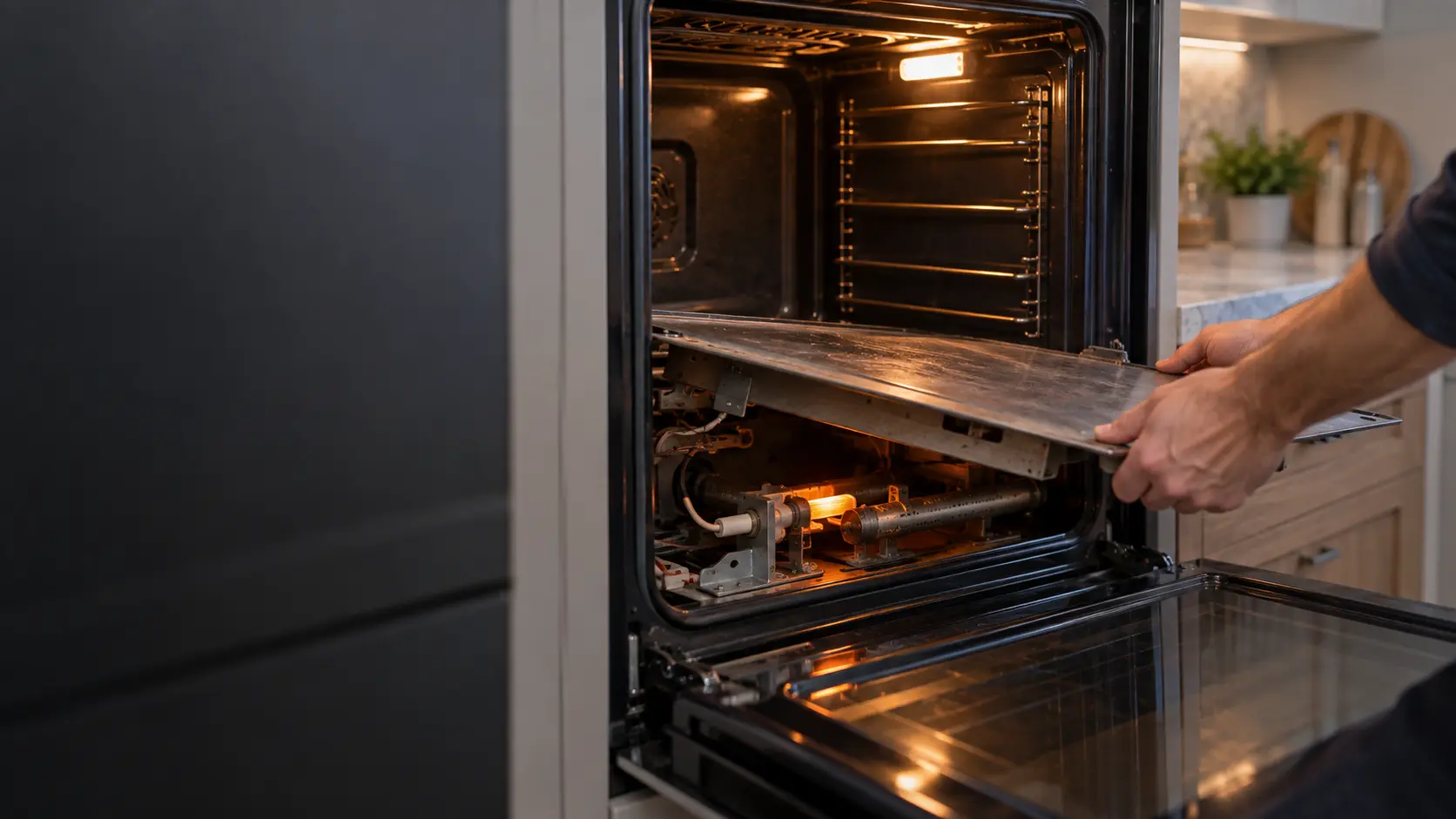
In a gas wall oven the supply comes out of the wall or floor inside the cabinet, passes a shutoff valve, then a flexible connector or rigid pipe, and reaches a pressure regulator at the back of the oven. From there it feeds the bake burner under the cavity floor and the broil burner at the top rear. GE's installation sheet has the regulator reached through an opening in the oven's back once the oven is in the cutout, which is why none of it can be seen, or safely reached, from the kitchen.
That layout is also why an owner should not go looking. Getting to the connector means sliding a heavy oven out of its opening, and GE warns that old flexible connectors can leak and should never be reused. The owner's manual asks only one thing of you: have the installer show you where the oven's gas shutoff valve is and how it closes. That is worth knowing for a planned repair, and it is not a reason to stay indoors during a leak.
Source: GE Appliances — Installation Instructions, 24-inch Gas Built-In Oven JGRP20 (31-2000792) — Bake and broil flames blue with no trace of yellow, not fluttering; pressure regulator reached through an opening in the oven's back; never reuse old flexible connectors; GE Appliances — Built-In Gas Wall Oven Owner's Manual JGRP20 (49-2000959) — What to do if you smell gas; have the installer show you the gas shutoff valve; only trained installers, service agencies or the gas company install or service the oven
After the crew has been
The utility may shut the gas off to the oven or to the house and tag the valve. That tag stays until the cause is corrected, and relighting or turning the valve back on is not an owner's job. GE's manual hands both installing and servicing a gas oven to trained gas installers, service agencies or the gas company itself.
When the crew has finished and the supply is safe again, a technician from our team can test the oven's igniter, safety valve, burners and regulator. Restoring gas to the house stays with the utility, and any work on the house piping belongs to a gas contractor.
Source: GE Appliances — Built-In Gas Wall Oven Owner's Manual JGRP20 (49-2000959) — What to do if you smell gas; have the installer show you the gas shutoff valve; only trained installers, service agencies or the gas company install or service the oven