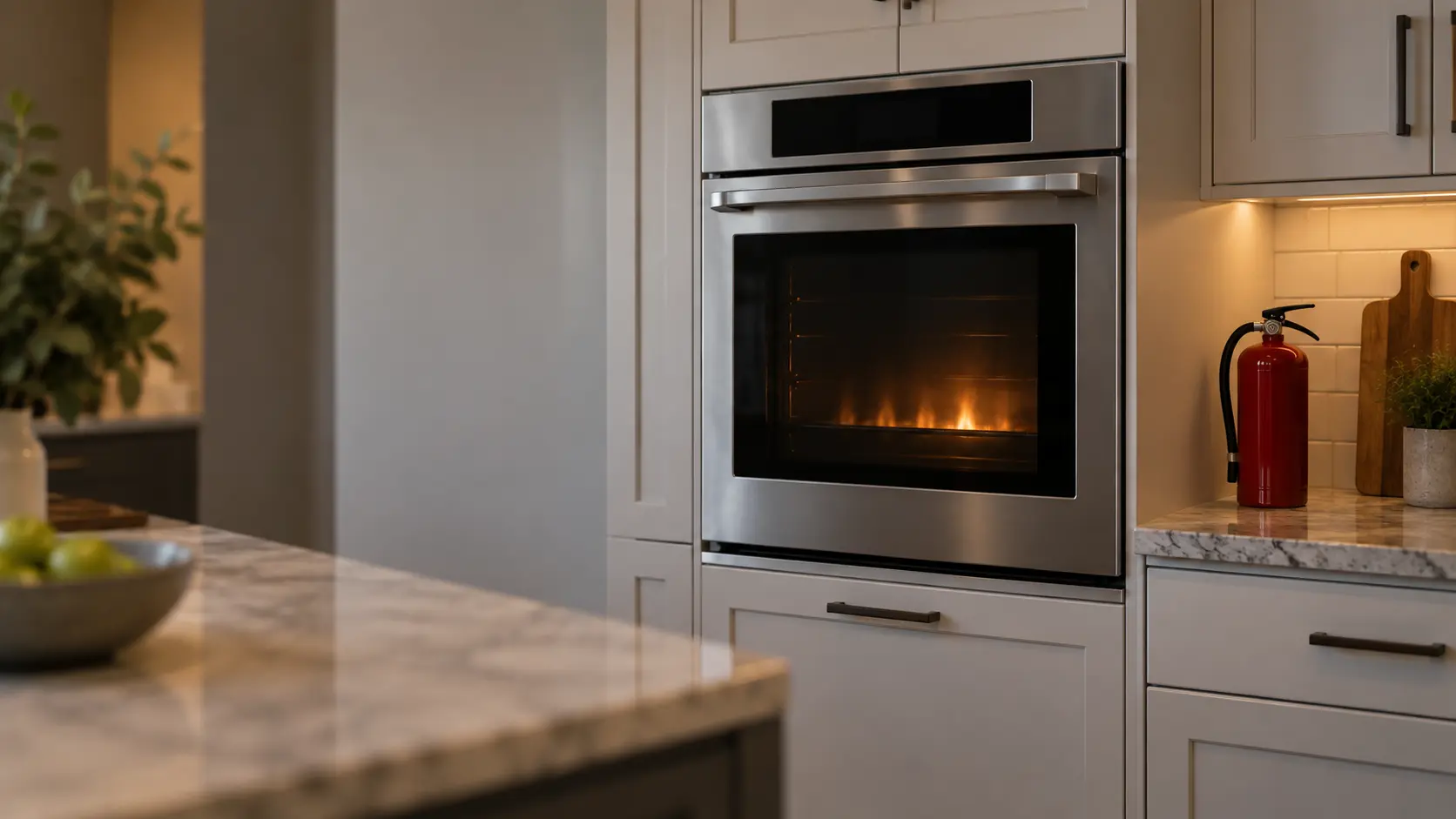


Why the door stays closed
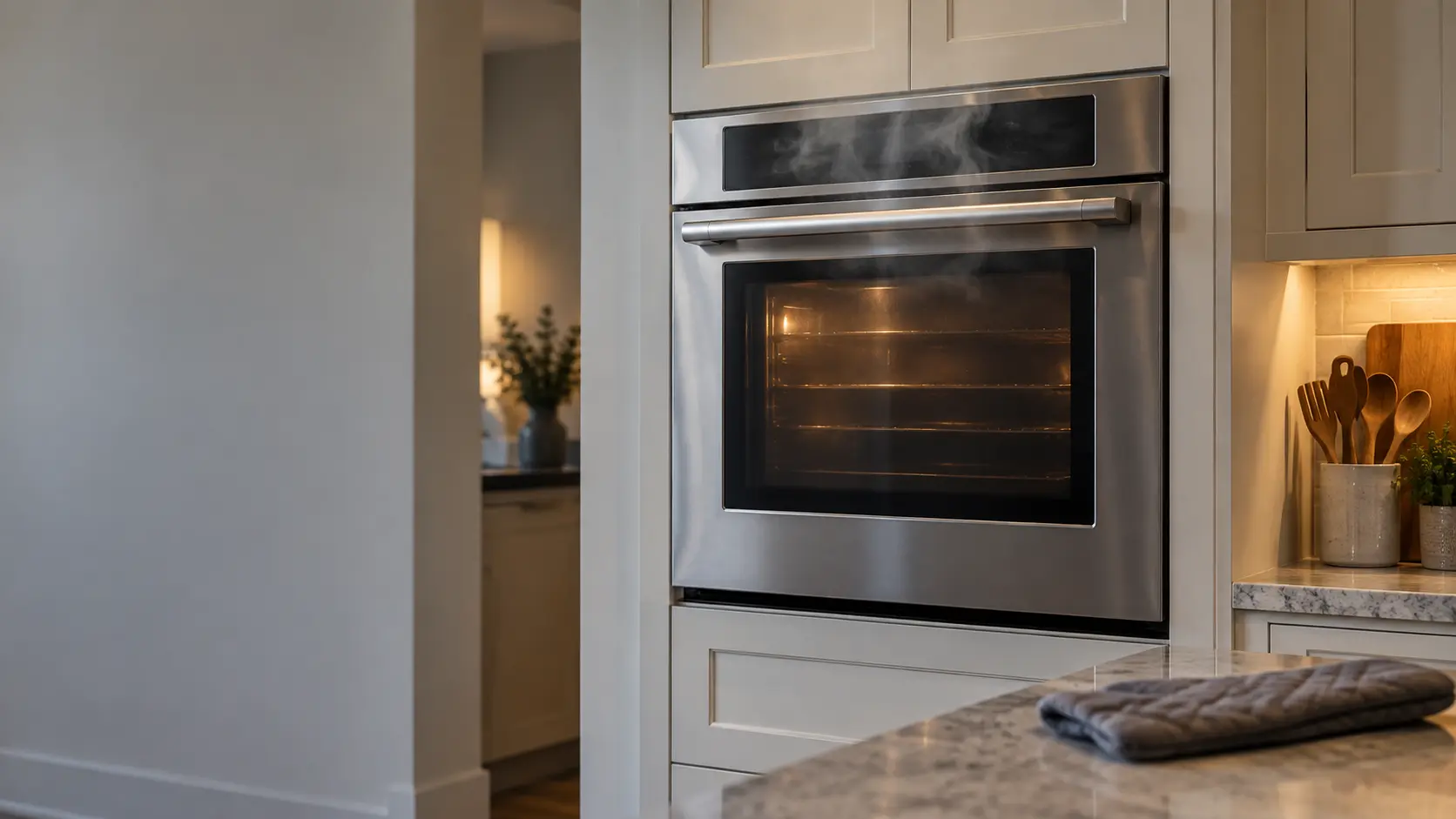
A fire needs air, and a closed oven has very little of it. The Consumer Product Safety Commission's cooking advice is short: keep the oven door shut and turn off the heat to smother an oven or broiler fire. GE's wall oven manuals give the same instruction for a fire during baking, with a multi-purpose dry chemical or foam extinguisher as the alternative.
Opening the door does the opposite. A rush of room air feeds the flames at the moment your face and hands are closest to them, and grease that was smoldering can flare out of the opening. The window is there so you can watch without opening anything.
Turning the oven off
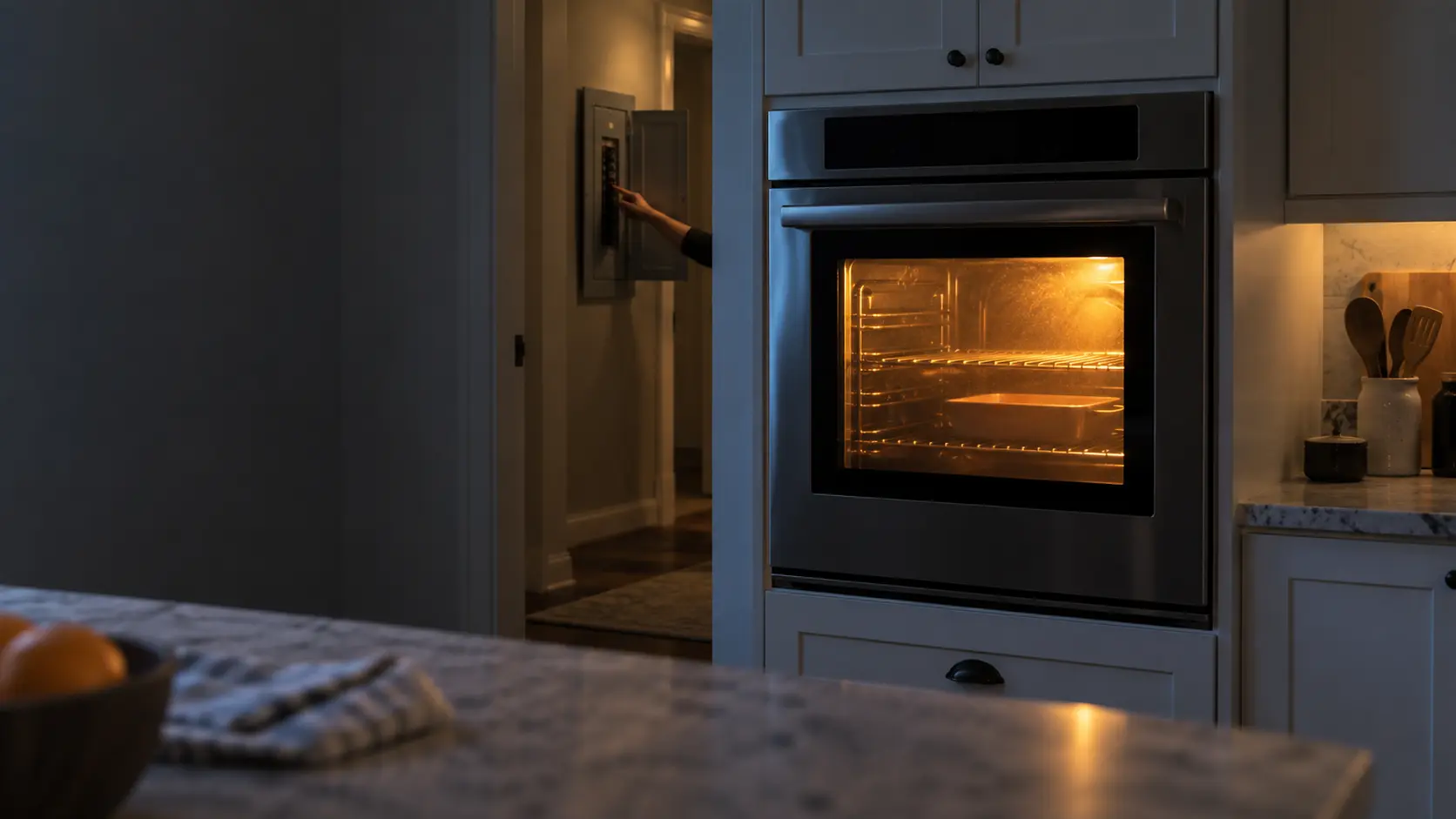
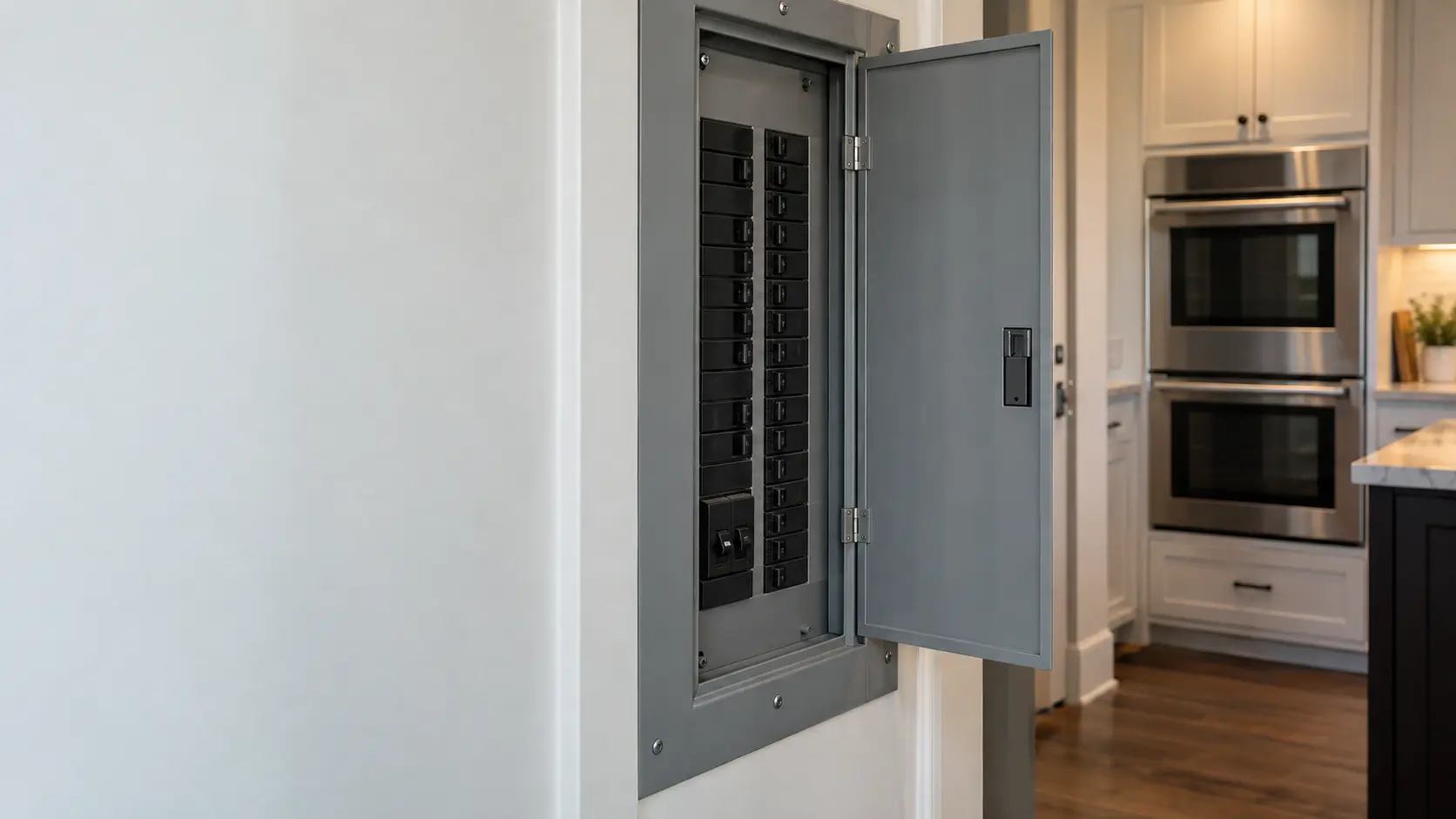
Press cancel or off on the control panel if you can reach it without opening the door. Then walk to the electrical panel and flip the breaker labeled for the oven, provided nothing on the way puts you near the flames. A wall oven is wired straight into its own circuit with no plug to pull, so the breaker is the only true off switch, and it also stops a convection fan that would otherwise keep moving air around the cavity.
Switch off any vent fan nearby
GE's electric oven manual adds that a ventilating fan should be turned off in a fire, because a running blower can spread flames. If a hood or downdraft fan is running anywhere near the oven, switch it off on your way to the breaker.
Source: CPSC — Recipe for safer cooking — Keep the oven door shut and turn off the heat to smother an oven or broiler fire; never use water or flour on cooking fires; keep a fire extinguisher of the right type, with training; GE Appliances — Convection Built-In Electric Wall Oven Owner's Manual (49-2000254) — Smother a baking fire by closing the door and turning the oven off, or use a dry chemical or foam extinguisher; turn a ventilator off in a fire; during self-clean turn the oven off and do not force the door; wipe grease before self-clean; no foil, liners or stones on the oven floor; stop using an element with a glowing spot; never broil with the door open
A fire during the self-clean cycle
During self-clean the oven pushes its cavity well past normal baking heat to reduce soil to ash, and a thick layer of grease can catch fire along the way. The door locks for the whole cycle, and that lock is doing you a favor. GE's instruction is to turn the oven off and wait for the fire to go out, not to force the door, because fresh air at self-clean temperatures can cause a burst of flame from the opening.
Expect the door to stay locked long after the flames are gone, because the latch releases only once the cavity has cooled. That wait can be long; do not pry at the handle or keep switching the power off and on hoping it will let go sooner. When it opens, leave the ash and the racks alone until everything is cool to the touch.
- Before a self-clean, wipe out pooled grease and large spills, as GE's manual asks.
- Take out pans, foil and shiny metal racks unless the manual says the racks can stay.
- Stay home while the cycle runs, and keep the kitchen ventilated.
Source: GE Appliances — Convection Built-In Electric Wall Oven Owner's Manual (49-2000254) — Smother a baking fire by closing the door and turning the oven off, or use a dry chemical or foam extinguisher; turn a ventilator off in a fire; during self-clean turn the oven off and do not force the door; wipe grease before self-clean; no foil, liners or stones on the oven floor; stop using an element with a glowing spot; never broil with the door open; GE Appliances — Built-In Gas Wall Oven Owner's Manual JGRP20 (49-2000959) — Fresh air at self-clean temperatures may lead to a burst of flame; items stored in an oven can ignite; keep the oven free of grease buildup

When it stops being an oven problem
An oven fire contained by the cavity is one thing; smoke pouring from the vent or seams, flames around the door or scorching on the cabinet face is another. At that point the house is the priority: everyone leaves, doors are pulled shut behind you if that takes no time, and the 911 call is made from the street. Ready.gov's home fire guidance is simple: get out, stay out and call for help, and never go back in for belongings or pets.
Cooking is by far the leading cause of home fires and home fire injuries in the United States, according to the U.S. Fire Administration. Most of those start on a burner, but the rule for leaving is the same wherever the fire began.
Using an extinguisher
CPSC recommends a fire extinguisher in the kitchen, of the right type and with some training in using it. For an oven, the extinguisher is a backup to the closed door, not a reason to open it. Never throw water or flour at a cooking fire; water spreads burning grease and flour can ignite.
If someone is burned
Ready.gov advises cooling a burn with cool water for three to five minutes and covering it with a clean, dry cloth. Get medical help for anything larger than a small patch, for a burn on the face or hands, or for anyone who breathed in smoke.
Source: Ready.gov — Home fires — Leave the home and call 911 or the fire department; treat a burn with cool water for three to five minutes and cover it with a clean dry cloth; U.S. Fire Administration — Cooking fire safety — Cooking is by far the leading cause of home fires and home fire injuries
What usually starts a fire inside an oven
Most oven fires begin with fuel left in the cavity. GE's manuals list the usual suspects: grease building up on the walls and floor, items stored inside the oven and forgotten, and foil, liners or baking stones placed on the oven floor, where they can trap heat or melt. Fat spitting under the broiler with the food set too close to the element is another common start.
A few fires start with the oven itself. GE tells owners not to use an oven if a heating element shows a glowing spot or other damage during use, because a failing element can present a burn, fire or shock hazard. An element that sparks, splits or burns through is a part to replace, not something to keep cooking around.
- Keep the cavity free of grease buildup, especially under the broiler.
- Never store pans, paper or plastic inside the oven.
- Keep foil and liners off the oven floor unless your manual allows it.
- Broil with the door closed; GE does not allow door-open broiling on these ovens.
Source: GE Appliances — Convection Built-In Electric Wall Oven Owner's Manual (49-2000254) — Smother a baking fire by closing the door and turning the oven off, or use a dry chemical or foam extinguisher; turn a ventilator off in a fire; during self-clean turn the oven off and do not force the door; wipe grease before self-clean; no foil, liners or stones on the oven floor; stop using an element with a glowing spot; never broil with the door open; GE Appliances — Built-In Gas Wall Oven Owner's Manual JGRP20 (49-2000959) — Fresh air at self-clean temperatures may lead to a burst of flame; items stored in an oven can ignite; keep the oven free of grease buildup
Before the oven is used again
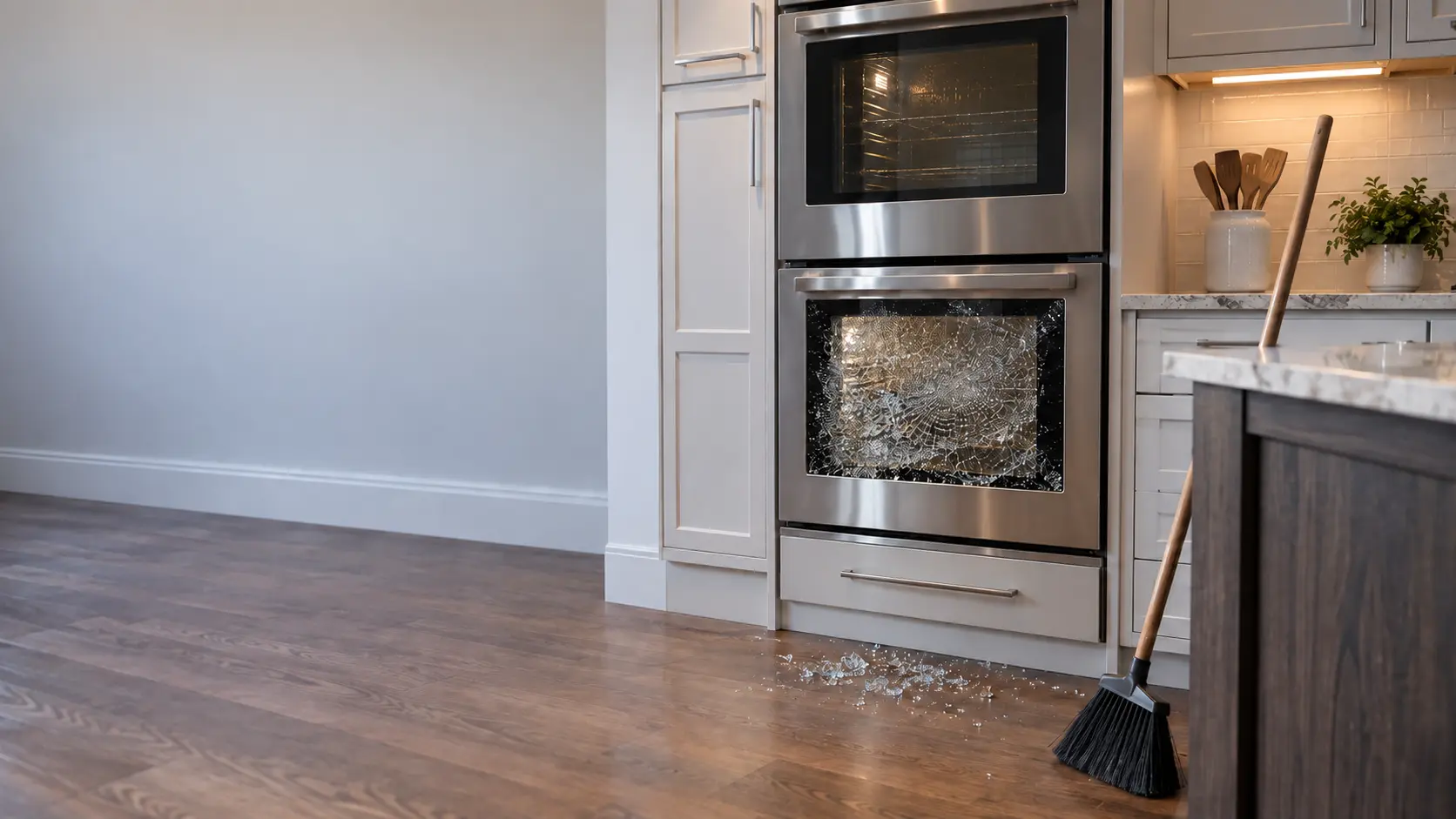
Once the cavity is cold, look before you cook. Soot on the cabinet face, a door that no longer seals, cracked glass in the door, or a smell of hot wiring rather than burned food all mean the fire reached parts that were never meant to see flame. So does a breaker that trips when the circuit is switched back on.
If the cause was plainly a spill and the oven looks untouched, clean out the ash once it is cold and run a short bake with the kitchen ventilated, watching it. If anything else is uncertain, leave the breaker off and book a check of the elements or burners, the wiring and the door.