The oven setting is not the food's temperature
Set a wall oven to 350°F and the air around the rack gets there within minutes. The center of a five-pound roast takes hours to follow, and for most of that time it sits far below the air around it. That is why the setting, the cooking time in a recipe and the look of the food are all estimates, and why the USDA's Food Safety and Inspection Service puts its advice in terms of the food's own internal temperature.
FSIS is blunt about appearance: color and texture are not reliable signs of safety or doneness, and a food thermometer is the only way to know that harmful bacteria have been destroyed. It also notes that only about 15 percent of people consistently use one. Browned outside and pink inside can be safe, and the reverse can be true as well; only the thermometer settles it.
Using the probe that came with the oven
Some wall ovens include a plug-in meat probe that shows the food's temperature on the display and can end the cook when it reaches a target. Treat it as a food thermometer: place it the same way, and check a second spot with a handheld thermometer on large or oddly shaped roasts.
Source: USDA FSIS — Doneness versus safety — Appearance and color are not reliable indicators; only a food thermometer confirms bacteria are destroyed; only about 15% of people consistently use one
The safe minimum internal temperature, food by food
These are the figures FSIS publishes in its safe temperature chart. They are minimums: you can cook past them for taste, but not below them for safety. The rest time for whole cuts is part of the process, because the temperature keeps rising and holding for those minutes after the food leaves the oven.
| Food | Minimum internal temperature |
|---|---|
| Beef, pork, veal and lamb steaks, chops and roasts | 145°F, then rest at least 3 minutes |
| Ground meats | 160°F |
| All poultry, including ground poultry, giblets and stuffing | 165°F |
| Fresh or smoked ham, uncooked | 145°F, then rest at least 3 minutes |
| Fully cooked ham from a USDA-inspected plant, reheated | 140°F; other cooked hams 165°F |
| Eggs and egg dishes | 160°F |
| Fish and shellfish | 145°F |
| Leftovers and casseroles | 165°F |
Why the rest is part of the number
For steaks, chops, roasts and uncooked ham, FSIS pairs 145°F with a rest of at least three minutes. Carving the moment the thermometer reads 145°F skips part of what makes that temperature safe. Let the meat stand on the board, loosely covered, before you slice.
Source: USDA FSIS — Safe temperature chart — 145°F plus a 3-minute rest for beef, pork, veal and lamb steaks, chops and roasts and uncooked ham; 160°F ground meats and eggs; 165°F all poultry, leftovers and casseroles; 145°F fish; reheated cooked ham 140°F or 165°F

Where the thermometer goes
A thermometer placed in the wrong spot gives a reassuring number that means nothing. FSIS's placement guidance is specific, and it is worth following every time:
- Roasts: midway into the thickest part, away from bone, fat and gristle.
- Steaks, chops and burgers: into the thickest part, or in from the side on thin pieces so the tip reaches the center.
- Whole poultry: three readings, in the innermost thigh, the innermost wing and the thickest part of the breast, avoiding bone.
- Several pieces on one pan: check each one, because size and position change how fast each piece heats.
- Large or irregular cuts: check more than one place.
Stuffing inside a bird
FSIS does not recommend stuffing whole poultry, and suggests baking the stuffing in its own dish. If you do stuff a bird, the center of the stuffing must also reach 165°F, and it heats more slowly than the meat around it, so the meat can read done while the stuffing is not.
Source: USDA FSIS — Food thermometers — Thermometer placement for roasts, steaks and thin pieces; three places on whole poultry; check each piece and several places on large cuts; stuffing must reach 165°F; stuffing whole poultry not recommended
Oven settings that decide whether food stays safe
A few features of a modern wall oven interact with the numbers above. FSIS advises an oven temperature no lower than 325°F when roasting meat and poultry, which rules out very low settings for raw meat. It also says to keep hot food at or above 140°F, and to refrigerate cooked food within two hours, or one hour when the room is above 90°F.
Delay start and raw food
A delayed start leaves food sitting in an unheated cavity at room temperature until the oven switches on. FSIS's two-hour limit for perishable food applies to that wait just as it would on the counter, so it suits bread and dry baked goods better than raw meat, poultry, fish or egg dishes. Bacteria multiply fastest between 40°F and 140°F and can double in about 20 minutes.
Keep-warm settings and warming drawers
Holding a finished dish in the oven works only while the food itself stays at 140°F or above. Check it with the thermometer rather than trusting the setting, and refrigerate anything that has dropped below 140°F for close to two hours.
Reheating leftovers
FSIS asks for leftovers reheated to 165°F, covered so they heat through, with the oven set to 325°F or higher. Frozen casseroles can go into the oven without thawing; they simply take longer, so the thermometer, not the clock, says when they are ready.
Source: USDA FSIS — Danger zone (40°F–140°F) — Bacteria grow between 40°F and 140°F, doubling in as little as 20 minutes; no more than 2 hours out of refrigeration, 1 hour above 90°F; keep hot food at or above 140°F; roast meat and poultry at an oven temperature no lower than 325°F
When the oven itself is the problem
An oven that runs cold does not make food unsafe by itself; it makes cooking times longer and recipes unreliable. A food thermometer protects you either way, because it measures the food rather than the oven. What a weak oven does change is how long raw food spends warming through, which is one more reason to keep roasting at 325°F or above.
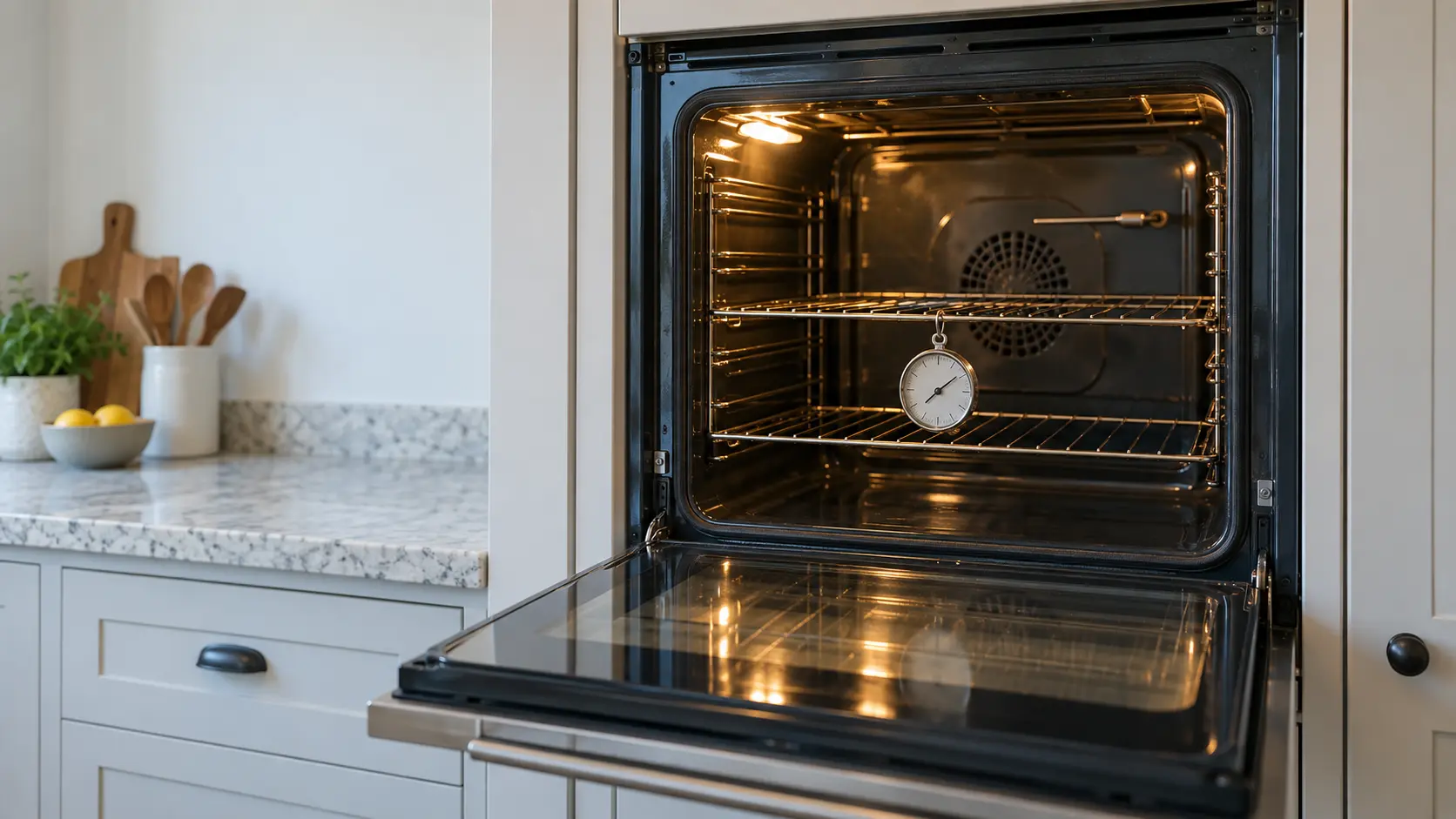
If you notice any of the signs below, check the oven with an oven thermometer on the middle rack, as FSIS describes, and see our guide to testing oven temperature. An oven that cannot reach or hold its setting, or a keep-warm mode that lets food cool below 140°F, is worth a visit.
- Recipes that routinely need a third longer than stated.
- Browning on top long before the center is cooked.
- A preheat signal that sounds while an oven thermometer still reads well below the setting.
- A keep-warm setting that leaves the dish lukewarm to the touch.
Source: USDA FSIS — Appliance thermometers — An oven thermometer hung from a center rack verifies the oven's temperature; cook meat and poultry with the oven at 325°F or higher