Hard-wired into the house, with no plug
The first of the wall oven electrical requirements in GE's installation instructions for its 27- and 30-inch electric wall ovens is stated plainly: every electric wall oven must be hard-wired, or direct-wired, into an approved junction box, and a plug and receptacle is not permitted. The oven arrives with a length of flexible metal conduit, 40 or 54 inches long depending on the model, that carries its power leads to that box.
The instructions say not to shorten that conduit and to let it lie behind the oven in a natural loop once the oven is pushed in, secured to the box with a strain relief clamp of the right size. A conduit cut short, kinked or pulled tight is a sign the oven was forced into an opening that did not suit its box.
Why the breaker is the oven's real off switch
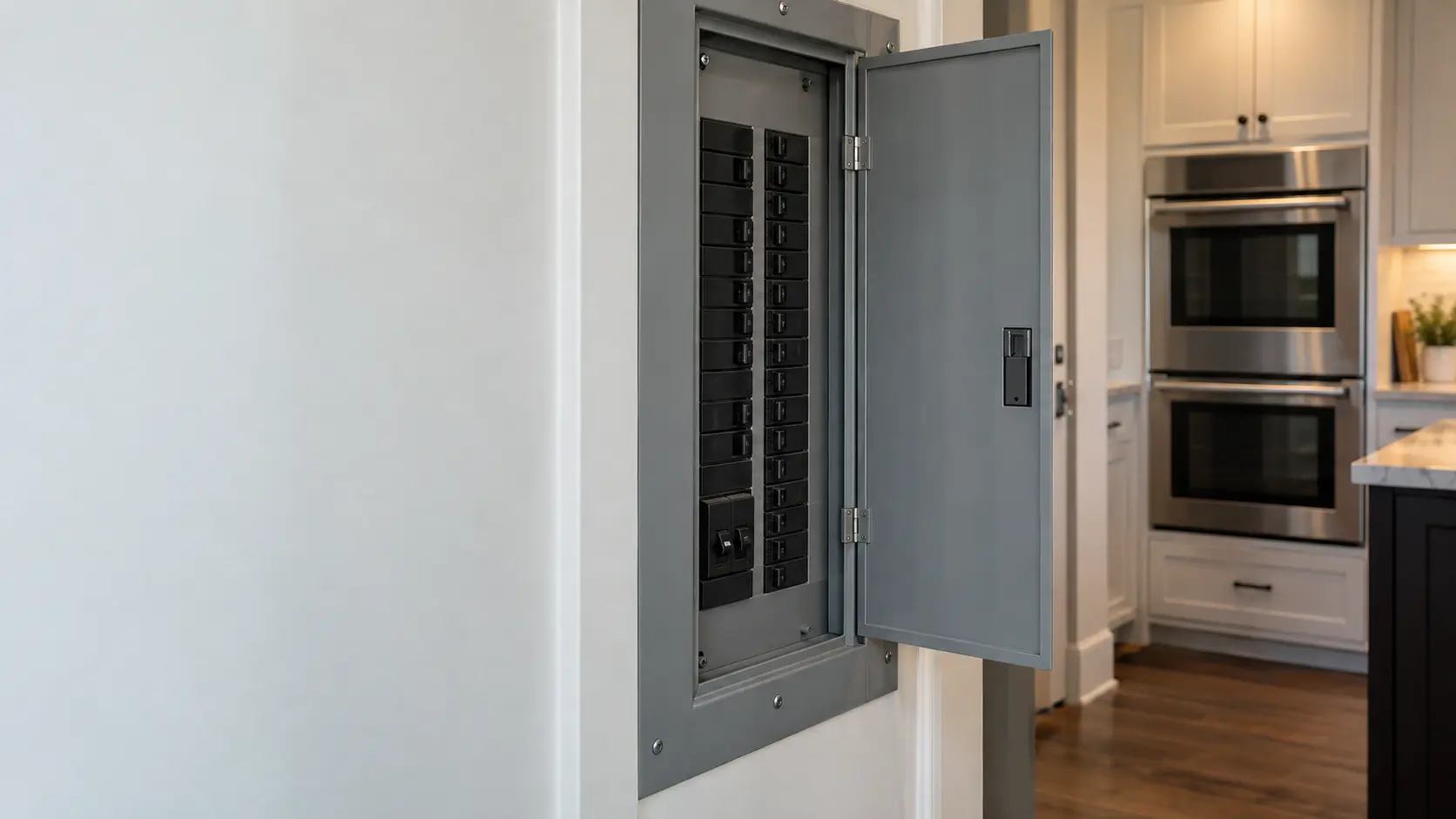
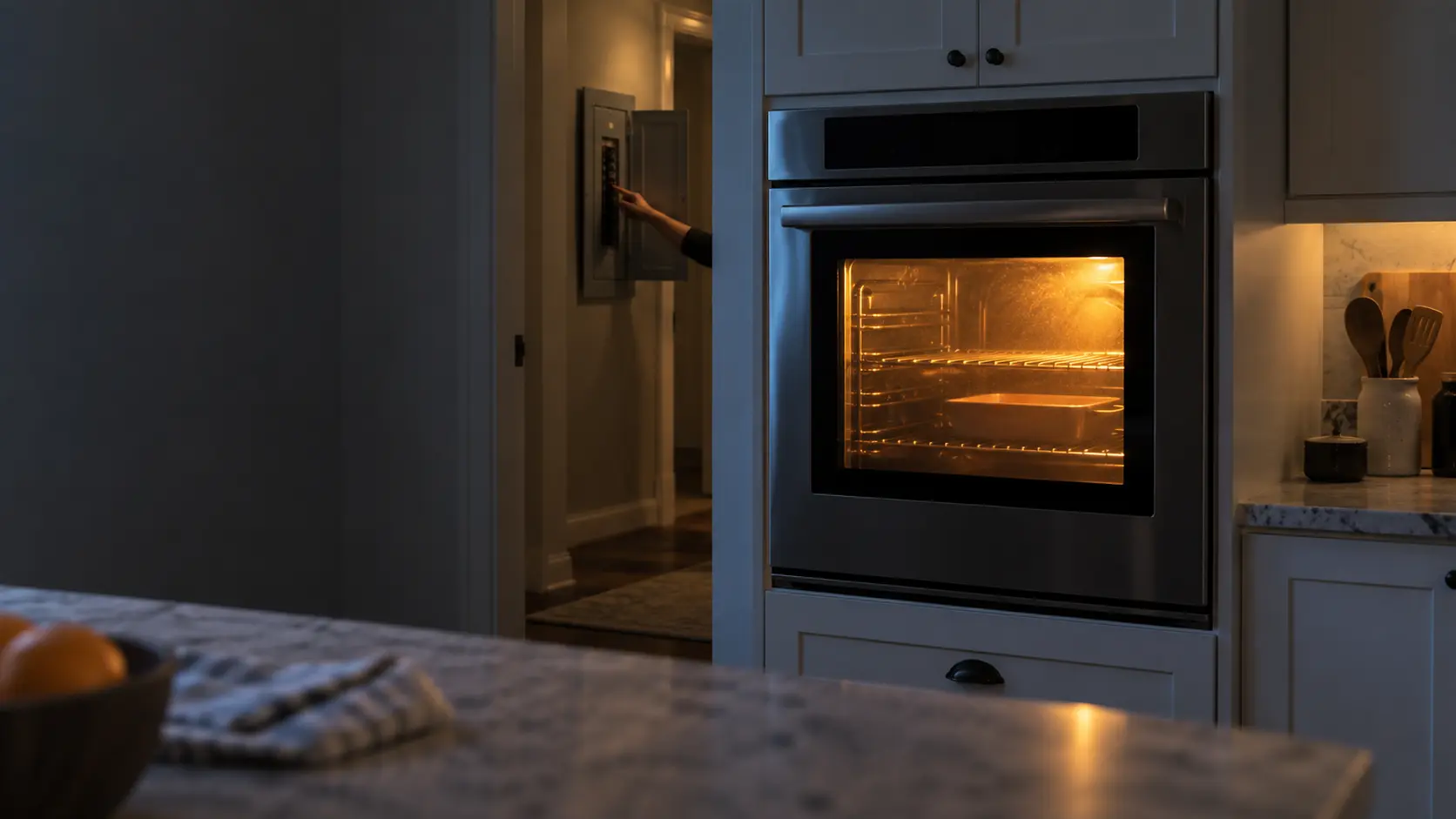
With no plug to pull, the only way to cut power to a wall oven completely is at the breaker or fuse. GE recommends having a qualified electrician make the connection and then show you how to disconnect power to the oven. Learn which breaker it is before you need it; a label on the panel saves a frantic search when an oven will not switch off.
Before anyone touches the wiring
GE's warning for installers is to switch the power off at the service panel and lock the disconnect so it cannot be switched back on by accident, or to tag the panel clearly where it cannot be locked. The same rule applies to anyone reaching behind or inside the oven for a repair.
Source: GE Appliances — Installation Instructions, 27-inch and 30-inch Electric Built-In Wall Ovens (31-2000964) — Electric wall ovens hard-wired into an approved junction box, no plug and receptacle; 40- or 54-inch conduit not to be shortened, natural loop, strain relief clamp; electrician to show how to disconnect power; switch off and lock or tag the service panel; single-phase 120/240 or 120/208 V, 60 Hz, individual grounded branch circuit; rating plate on the side trim; kW-to-circuit table; four-conductor connection required in new construction since January 1, 1996; aluminum wiring connectors; no extension cord; warming drawer needs its own 120V grounded receptacle
How big the circuit has to be
An electric wall oven needs a single-phase supply of 120/240 or 120/208 volts at 60 hertz, on an individual, properly grounded branch circuit protected by its own breaker or fuse. The size of that breaker depends on how much power the oven draws, which is printed in kilowatts on its rating plate. GE places the plate on the oven's side trim, visible with the door open.
GE's table matches the rating to a minimum dedicated circuit. A double oven, with two cavities and two sets of elements, usually lands in a higher band than a single, which is why swapping a single for a double can mean new wiring as well as new carpentry.
| Rating at 240 V | Rating at 208 V | Recommended circuit |
|---|---|---|
| 4.9 to 7.2 kW | 4.2 to 6.2 kW | 30 amps |
| 7.3 to 9.6 kW | 6.3 to 8.3 kW | 40 amps |
| 9.7 to 12.0 kW | 8.4 to 10.4 kW | 50 amps |
Reading the rating plate
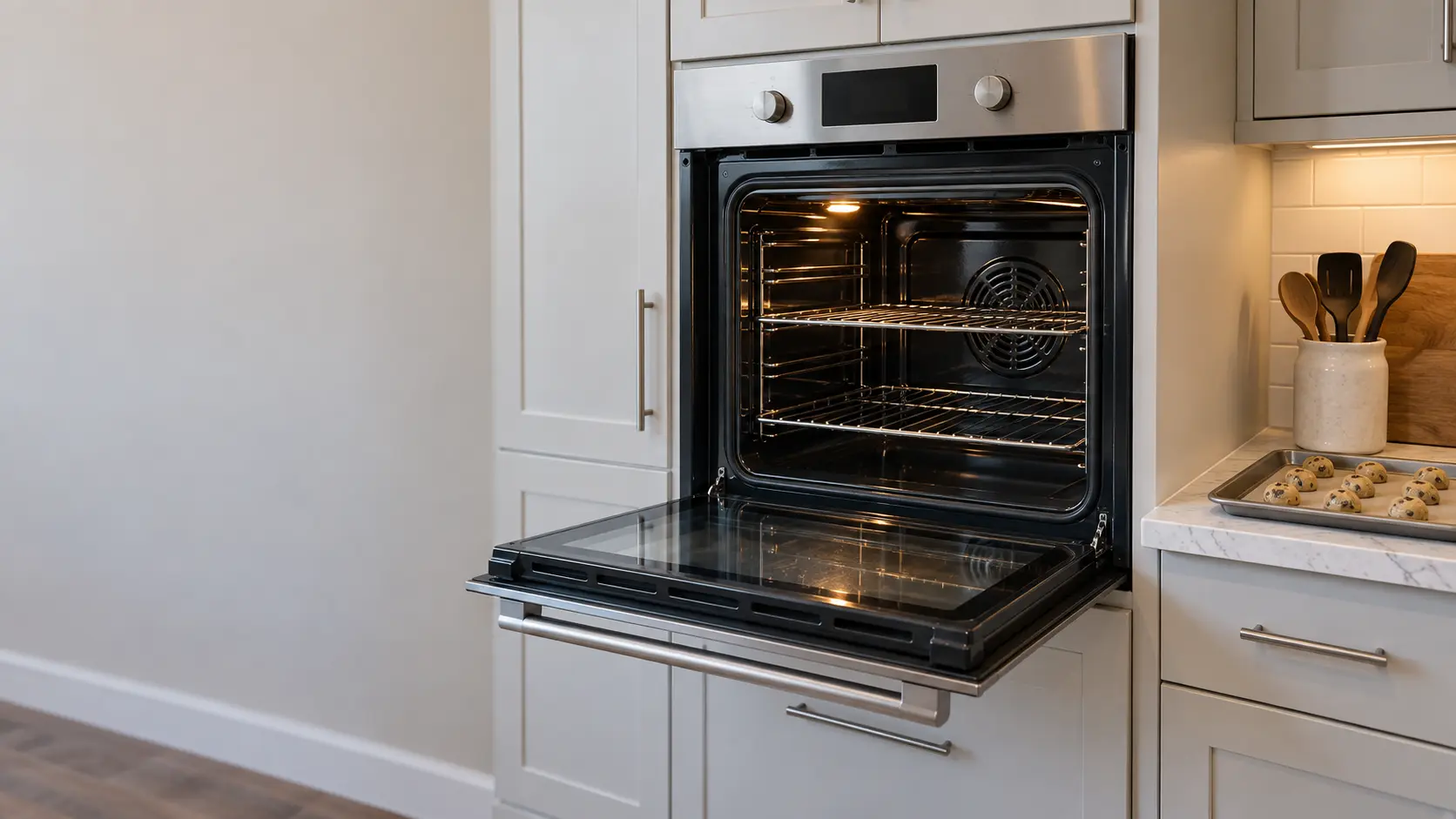
The plate lists the model and serial numbers, the voltage and the kilowatt rating, often with two figures for 240 and 208 volts. Some apartment buildings are supplied at 208 volts, and the oven's rating is lower there. Take a photo of the plate before you shop for a replacement; it tells an electrician whether the existing circuit will carry the new oven.
Source: GE Appliances — Installation Instructions, 27-inch and 30-inch Electric Built-In Wall Ovens (31-2000964) — Electric wall ovens hard-wired into an approved junction box, no plug and receptacle; 40- or 54-inch conduit not to be shortened, natural loop, strain relief clamp; electrician to show how to disconnect power; switch off and lock or tag the service panel; single-phase 120/240 or 120/208 V, 60 Hz, individual grounded branch circuit; rating plate on the side trim; kW-to-circuit table; four-conductor connection required in new construction since January 1, 1996; aluminum wiring connectors; no extension cord; warming drawer needs its own 120V grounded receptacle

Three wires or four
Older kitchens often feed the oven with three conductors: two hot wires and a neutral that doubles as the ground. According to GE, an electric oven in new construction has needed a four-conductor hookup with its own ground since the National Electrical Code changed on January 1, 1996. The same applies in a mobile home, a recreational vehicle, or wherever local codes do not allow grounding through the neutral.
A three-wire connection may remain on an existing circuit where local codes permit it, and the oven's leads are arranged differently for each case. That is the electrician's decision, made at the junction box, and one more reason a replacement oven is not a plug-and-go purchase.
- Four-wire: two hot conductors, a neutral and a separate ground.
- Three-wire: two hot conductors and a neutral used as the ground, on existing circuits where local code allows.
- Aluminum house wiring: only connectors approved for joining aluminum to copper, as GE warns.
- Never an extension cord, for any oven, electric or gas.
Source: GE Appliances — Installation Instructions, 27-inch and 30-inch Electric Built-In Wall Ovens (31-2000964) — Electric wall ovens hard-wired into an approved junction box, no plug and receptacle; 40- or 54-inch conduit not to be shortened, natural loop, strain relief clamp; electrician to show how to disconnect power; switch off and lock or tag the service panel; single-phase 120/240 or 120/208 V, 60 Hz, individual grounded branch circuit; rating plate on the side trim; kW-to-circuit table; four-conductor connection required in new construction since January 1, 1996; aluminum wiring connectors; no extension cord; warming drawer needs its own 120V grounded receptacle
What a gas wall oven needs from the electrical side
A gas wall oven burns gas for heat but still needs electricity for its controls, igniters, fan and light. GE's 24-inch gas wall oven comes with a three-prong cord for a properly grounded 120-volt household outlet, which its instructions place below the oven on the left, where it can be reached through the cabinet doors. The ground prong must never be cut or removed, and GE rules out an extension cord.
Reaching the plug is useful: a gas oven can be unplugged without pulling it out of the wall, which cuts power to the controls and igniters. It does not shut off the gas. If gas is what you smell, forget the plug: get out of the house first and phone the utility once you are clear of it.
A warming drawer below the oven
GE's electric oven instructions ask for a separate 120-volt, 60-hertz, grounded receptacle for a warming drawer installed underneath. It is a small load, but it is its own circuit point, and it needs to be planned before the cabinetry is closed in.
Source: GE Appliances — Installation Instructions, 24-inch Gas Built-In Oven JGRP20 (31-2000792) — Three-prong cord for a properly grounded 120-volt outlet placed below the oven on the left, reachable through the cabinet doors; never cut or remove the grounding prong; never use an extension cord
Signs that the supply, not the oven, is the problem
Some oven complaints start in the panel rather than the appliance. These patterns point toward the circuit, the breaker or the connection in the junction box before they point at the oven:
None of these proves the supply is to blame on its own, since a shorted element can trip a breaker too, but each one is worth mentioning when you book.
Those are not things to probe with a meter behind the cabinet. Note what happened and when, check whether the breaker has tripped and reset it once, and book a diagnostic visit if it trips again. A breaker that runs warm, a burning smell near the panel or scorch marks at the junction box are for an electrician the same day.
- A breaker that trips as soon as the oven starts to heat.
- A display that lights and a fan that runs while the elements stay cold.
- Heating that weakened suddenly after electrical work elsewhere in the house.
- Lights in the kitchen dimming sharply whenever the oven cycles on.