
How often you need two temperatures at once
Capacity is rarely the problem. A full-width single cavity holds a large turkey or three sheet pans on staggered racks. What one cavity cannot do is roast at 425°F while a custard sets at 325°F, or keep a finished dish warm while bread bakes hotter. Count how many times a month that happens in your kitchen.
These patterns tend to pay for the second cavity:
- Sunday roasts or sheet-pan dinners served with a baked side that wants a different setting.
- Regular baking, where cookies or bread go in while a casserole occupies the other oven.
- Hosting several times a year, with pies, rolls and a main course all timed for one sitting.
- A household where two people cook different meals on different schedules.
- Anyone who uses the broiler often and would rather not interrupt a bake to use it.
Height, reach and the cabinet wall
A wall oven's great advantage is that it lifts the cavity off the floor. How much of that advantage you keep depends on how many cavities share the cabinet.
Before settling on either, stand at the planned spot and take a few measurements:
- The height of the cabinet opening from the floor, compared with the height the chosen model needs for one or two cavities.
- Where the middle rack of each cavity would land against your own elbow height.
- The clearance in front of the cabinet, since a lowered door on a lower cavity reaches well into the walkway.
- The distance to the nearest counter, which becomes the landing spot for anything hot coming out.
Where a single oven sits
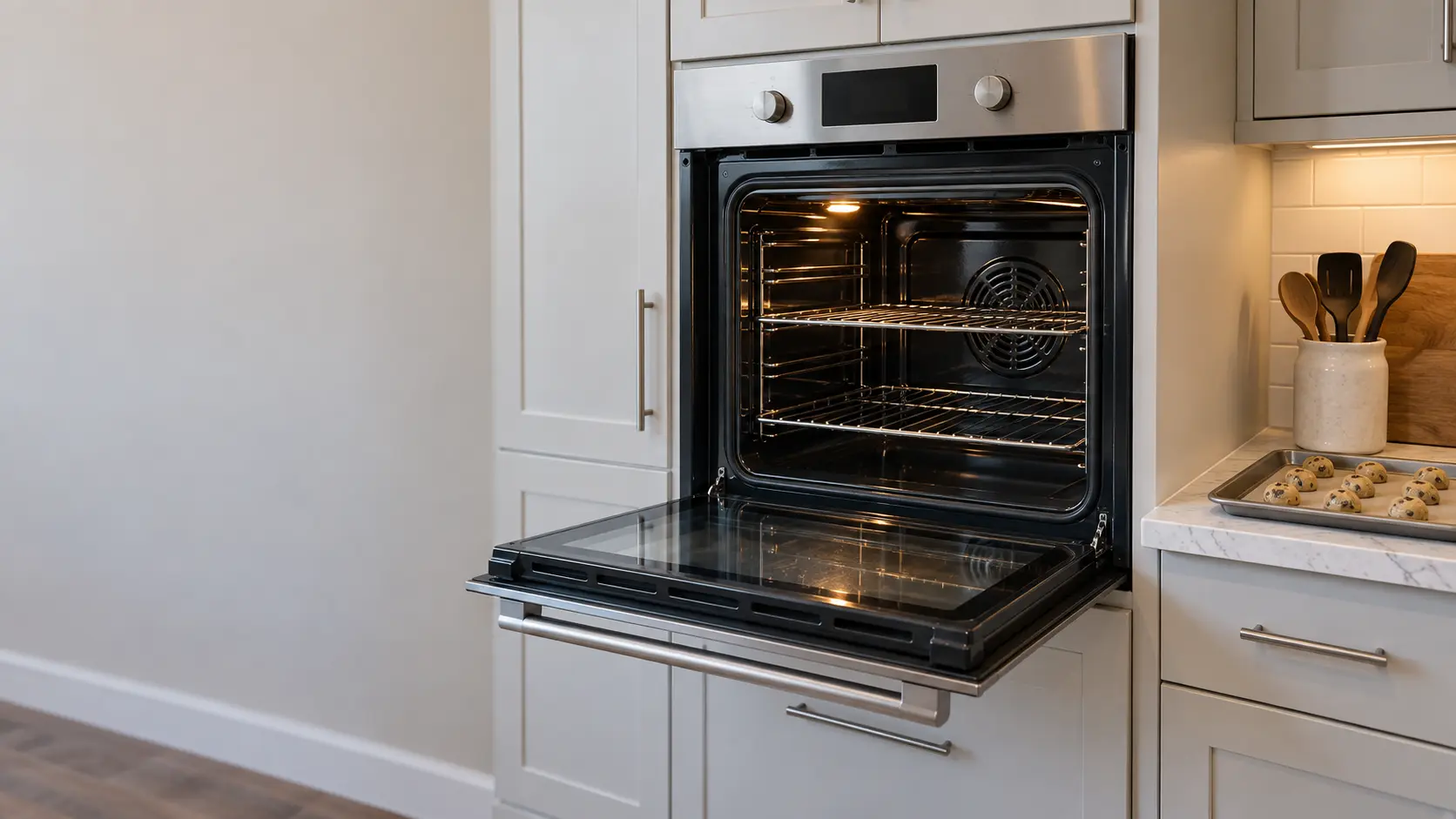
A single unit can be placed so its middle rack lands near elbow height, which makes lifting a heavy pot almost a sideways move. It can also sit beneath a counter where the tall cabinet space is not available, though that gives up the easy reach that makes a wall oven worth having.
The lower cavity of a stacked pair
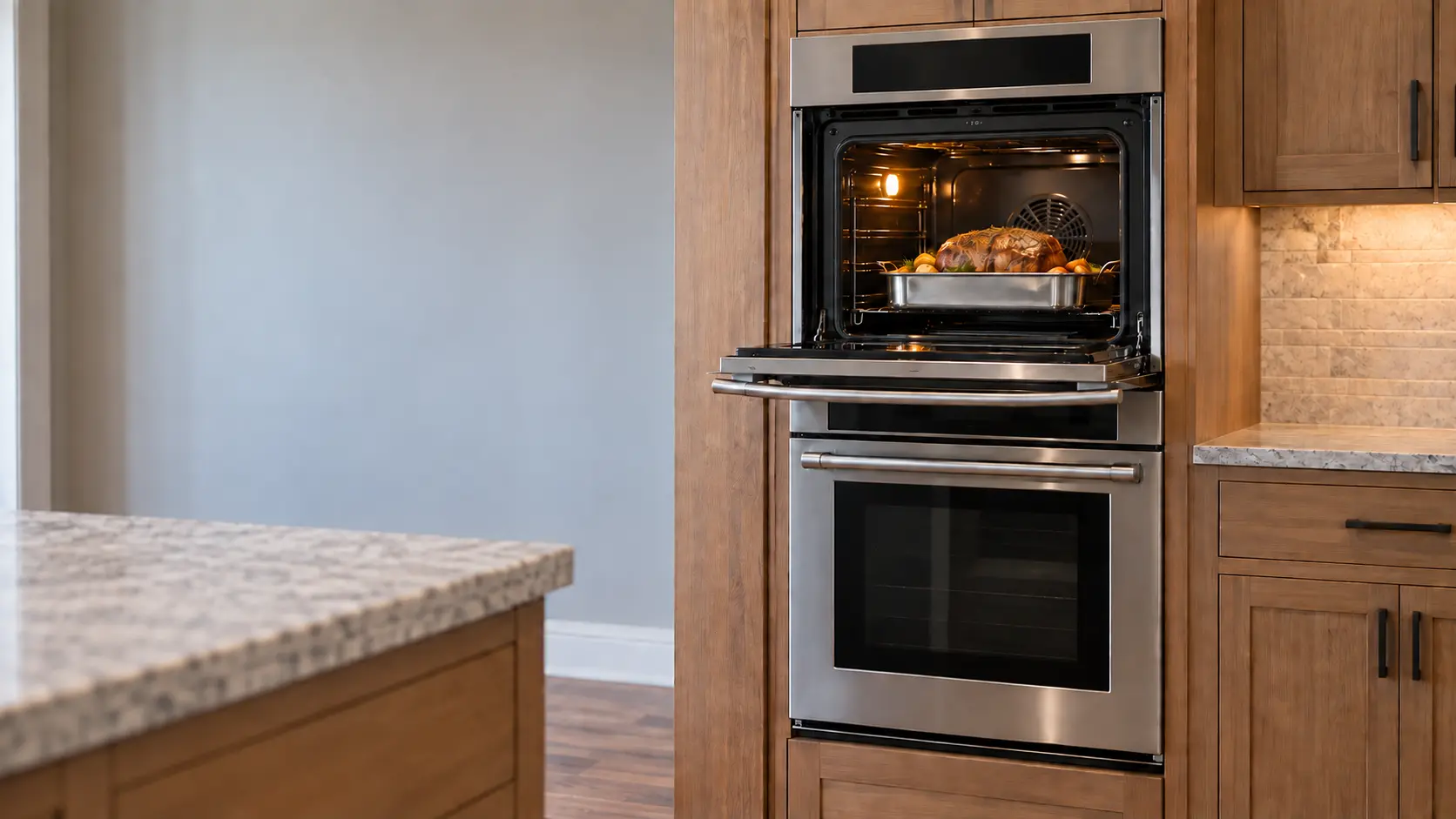
Stacking two cavities pushes one of them toward the floor. In most kitchens the upper oven lands at a comfortable height and the lower one sits close to knee level, so the heavy roasting pan still means bending. Many owners end up using the top cavity daily and the bottom one mainly for large or occasional jobs.
A single oven with a companion above it
Many kitchens pair one full oven with a compact unit in the same cabinet column: a speed oven for quick meals, a steam oven for vegetables, fish and reheating, or a warming drawer below. The second unit is a separate appliance with its own controls, so a failure in one leaves the other cooking.

What the circuit behind the wall allows
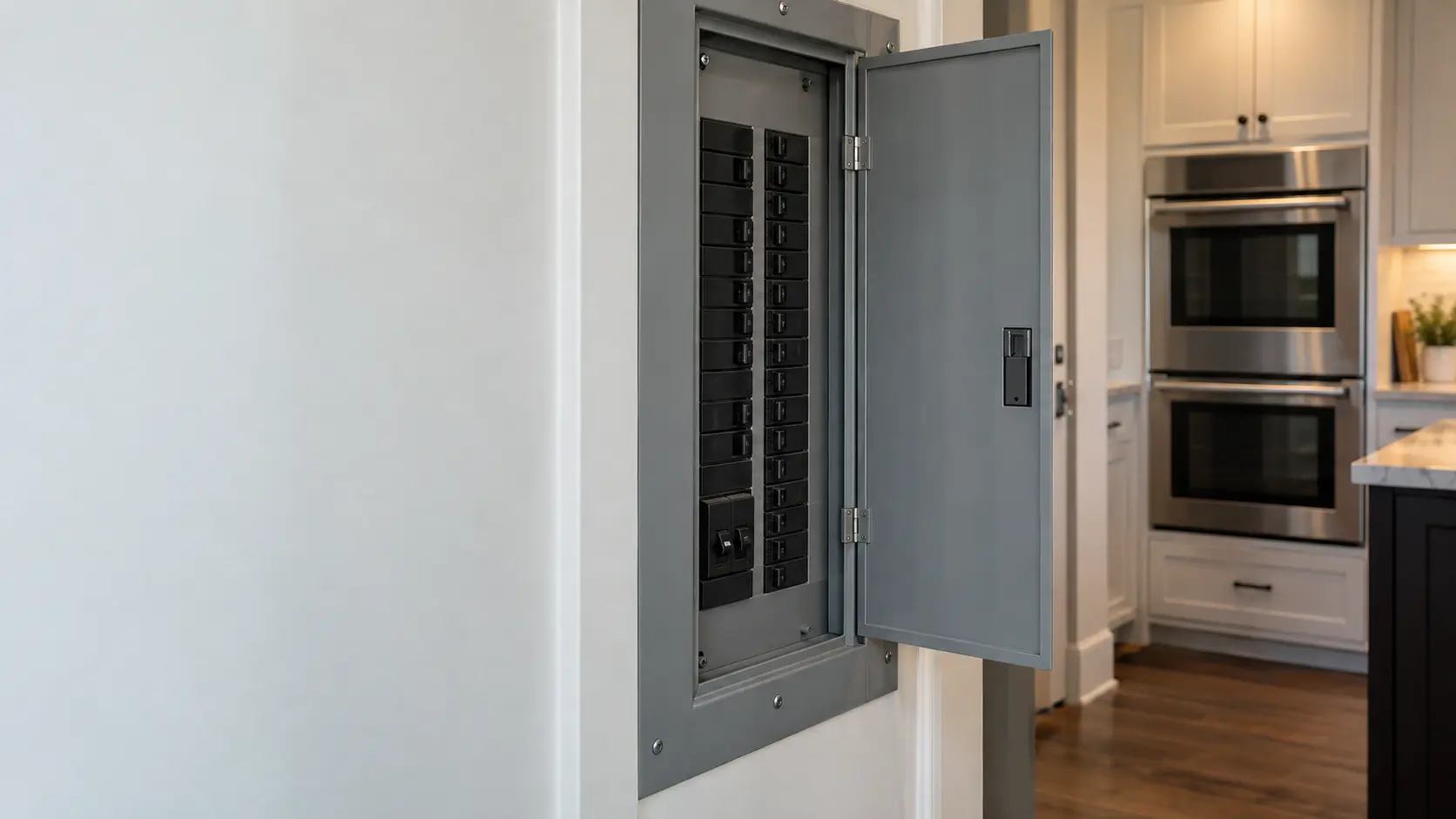
The breaker panel often settles the matter before the showroom does. On GE's published list, an electronic single wall oven of 27 or 30 inches is rated at 20 amps and the matching double at 40. A house wired for a single oven may need a new breaker and a heavier cable run before a double can go in, and the installation instructions for the exact model are the figure to trust.
A companion compact oven brings its own requirement. GE's built-in Advantium speed ovens call for either a dedicated 208/240-volt, 30-amp circuit or a dedicated 120-volt circuit on a 15- or 20-amp breaker, depending on the model. A gas wall oven needs a gas connection with its own shutoff and still draws power for its controls and igniters.
Source: GE Appliances — Appliance amp size — Amp sizes by product: electronic 27- and 30-inch single wall ovens 20 A, double wall ovens 40 A; GE Appliances — Advantium oven electrical requirements and breaker size — Built-in Advantium ovens need a dedicated 208/240 V circuit on a 30 A breaker, or a dedicated 120 V circuit on a 15 or 20 A breaker, by model
Preheating, cleaning and everyday use
A double oven changes small habits. Many owners preheat only the cavity they need, so the second one costs nothing on an ordinary weeknight. A compact companion oven, being smaller, is often the quicker choice for a single dish.
Cleaning runs one cavity at a time. GE notes that on its double ovens you cannot self-clean both cavities together, or bake in one while the other cleans, and that most models set to clean both will run one and then the other. Plan the cycle for a day when no baking is needed.
Gas or electric in a wall cabinet
An electric oven needs only the right circuit, which is why it can go almost anywhere a cabinet can be built. A gas wall oven suits a house where gas is already run to that wall; it uses an igniter and a bake burner rather than a hidden element, and any work on its supply line is a job for a qualified gas installer.
Source: GE Appliances — Self-cleaning oven does not clean — Double ovens can self-clean only one cavity at a time; most let you set both and then run one after the other; GE Appliances — Tips for self clean — On double ovens you cannot self-clean both ovens at once or bake in one while the other self-cleans
What each choice means at service time
Both designs use the same families of parts. The difference is how many of them there are and what they share.
| Question | Single | Double |
|---|---|---|
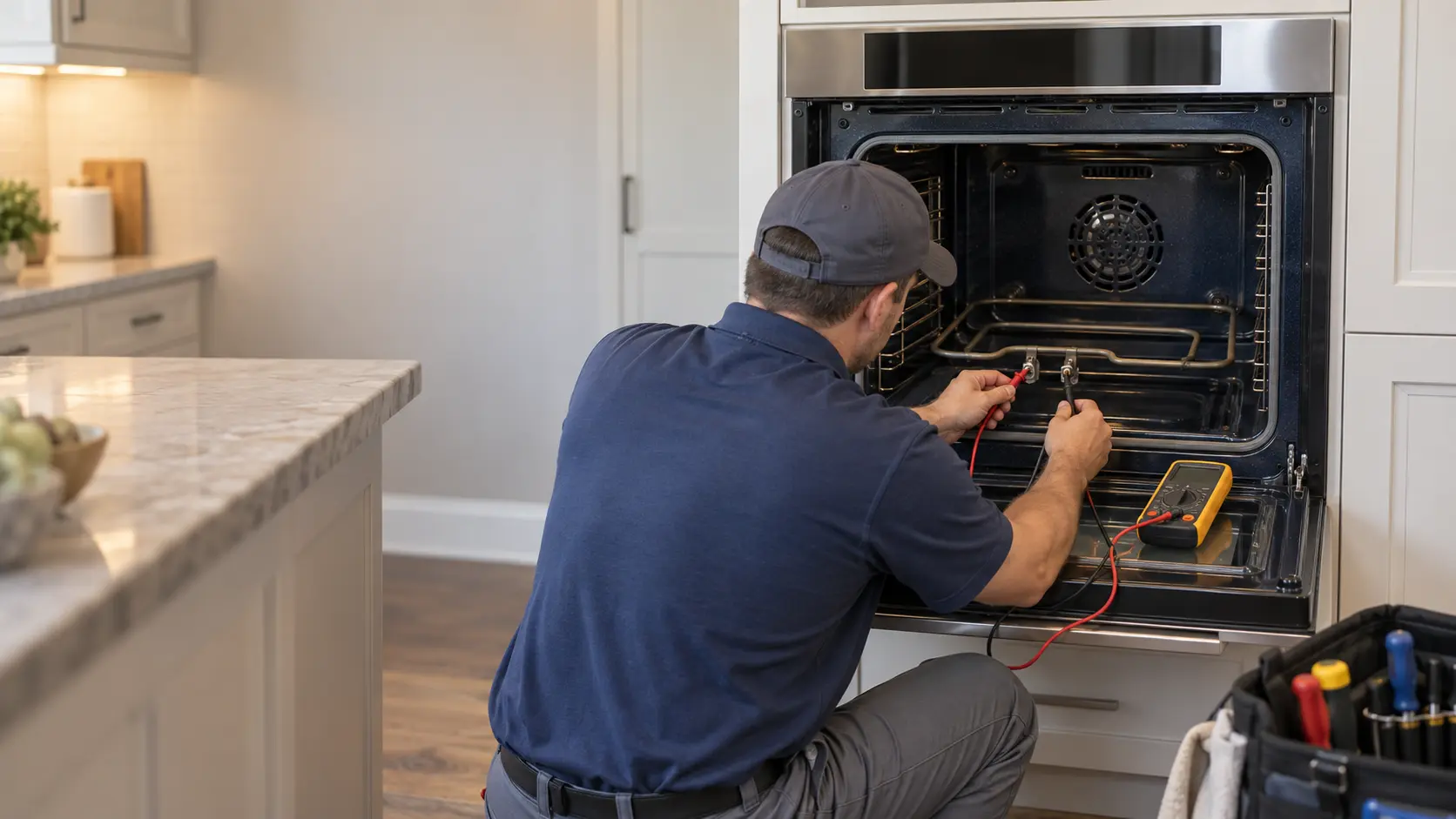
| Parts that can wear | One set of elements, one sensor, one door | Two sets of elements and sensors, two doors, one shared board |
| Effect of an element failure | No oven until it is replaced | The other cavity keeps cooking |
| Effect of a board failure | No oven | Neither cavity works |
| Pulling the unit from the cabinet | A two-person job | A heavier two-person job, often with the doors removed first |
| Swapping for a new model later | Many replacements fit the same cutout | Fewer models, and the circuit must match |